A Friendship Built to Be Broken: The Murder of Bernadine Montgomery
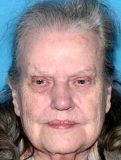
Bernadine Montgomery, known to those close to her as Bea, was eighty-four years old and living alone in a house in the 100 block of Palmora Boulevard in Leesburg, Florida, a small city in Lake County northwest of Orlando, in the summer of 2016. She used a walker to get around, stood five foot two, and weighed about a hundred and eighty pounds, a woman well into her later years who nonetheless lived independently in her own home. On June 15, 2016, she was last seen there. Nobody came looking for her for an entire week.
A Week of Silence
It wasn't until June 22 that a neighbor grew concerned enough to report Bernadine missing. When Leesburg police finally entered her home to check on her, they found bloodstains and other signs that something violent had happened inside those walls. Her blue 2005 Chevrolet, meanwhile, turned up abandoned near Lake Harris, just a short distance from her own house, as though whoever took it hadn't gotten far, or hadn't needed to.
Lieutenant Joe Iozzi, addressing the case publicly in its early days, described a shift in how investigators were approaching it, saying it had become evident that it was now a homicide investigation. That shift came directly from the physical evidence at the scene combined with the total absence of any explanation for where an eighty-four-year-old woman dependent on a walker could have gone entirely on her own.
A Man in Her Car, and a Man in Her Life
The first break in the case looked, briefly, like it might be the whole answer. A man named Jeremy Gentry was arrested after he was spotted driving Bernadine's Chevrolet. Gentry had a prior connection to her, having done contracting work on her home some months earlier, work for which he had allegedly overcharged her by thousands of dollars, a complaint Bernadine had chosen not to pursue further at the time. For a moment, investigators considered whether Gentry's financial history with her, combined with his possession of her car, pointed to him as the person responsible for her disappearance.
It didn't hold up. Gentry maintained he had been under the influence when he came across the car and had no knowledge of what had happened to its owner, and as detectives kept digging, Lieutenant Iozzi acknowledged publicly that it was becoming a little less evident that Gentry had any direct involvement in Bernadine going missing. He was ultimately only charged with grand theft auto for taking the vehicle itself, not with anything related to her death.
The real answer to what happened to Bernadine turned out to be far more calculated, and far closer to her than a stranger stealing an abandoned car. Investigators determined that two people, David Adam Mariotti and Tracie Jo Naffziger, had been regular presences in Bernadine's life for some time before she disappeared. As Lieutenant Iozzi put it, they were familiar with her as she was with them, coming and going from her house on a fairly frequent basis. To Bernadine's neighbors, and seemingly to Bernadine herself, this pattern likely looked like nothing more than an elderly woman with a couple of younger friends who checked in on her.
Prosecutors would later argue that this familiarity was never friendship at all, but a deliberate, months-long setup. Mariotti, they said, had spent that time cultivating a relationship with Bernadine specifically so he could exploit her kindness and get access to her money.
What Happened Inside the House
According to the account that eventually came out through the investigation and subsequent trial, the killing happened inside Bernadine's own home. Naffziger, who would later testify against Mariotti after entering a plea in her own case, described arriving to find Bernadine already dead or dying, with something wrapped around her neck that suggested she had been strangled. Naffziger said Mariotti told her they needed to move the body quickly, before neighbors who might be up and about noticed anything unusual happening at the house.
From there, according to Naffziger's testimony, the two of them drove Bernadine's body roughly forty-five minutes away to a wooded area, where they left it. Naffziger described her own role in blunt, uncomfortable terms during her testimony, saying she went through a lot seeing that body, and that she had been struggling with substance abuse at the time and felt forced into participating by Mariotti. Investigators would later connect that disposal site to the vicinity of the Ocala National Forest, not far from Palatka. Bernadine's remains were never recovered there or anywhere else.
In the aftermath, Naffziger also made repeated use of Bernadine's stolen credit cards, contacting the card companies multiple times to keep the accounts active so she could keep spending on them across Lake County. That trail of fraudulent charges became part of the evidence tying her, and by extension Mariotti, to the crime.
Two Different Paths Through the Legal System
Naffziger and Mariotti ended up facing the legal system in very different ways. Naffziger, who had a prior record that included drug possession, fraud, and theft charges, was held in the Lake County jail facing six fraud counts without bond in addition to the murder charge, which itself carried a fifty thousand dollar bond. Rather than go to trial, she eventually entered a no contest plea covering accessory after the fact to first degree murder along with the credit card theft charges, and she became the prosecution's key witness against Mariotti, describing what she said she witnessed inside Bernadine's house and during the drive to dispose of her body.
Mariotti, who had his own lengthy record including charges for larceny, dealing in stolen property, fraud, resisting arrest, and multiple methamphetamine offenses, chose to fight the case at trial. In April 2018, nearly two years after Bernadine disappeared, a jury convicted him of first degree murder and burglary.
A Life Sentence Decided by a Single Vote
Because Florida law allowed capital punishment for a first degree murder conviction like Mariotti's, the case proceeded to a penalty phase where the same jury was asked to decide whether he should be executed. During that phase, Mariotti's defense presented brain and behavior experts along with character witnesses who spoke about his troubled childhood and history of drug use, an effort to give jurors a reason to spare his life even after convicting him of killing an eighty-four-old woman who had trusted him.
It worked, though only barely. The jury deliberated and returned a vote of eleven to one in favor of the death penalty, a striking majority that nonetheless fell short of what Florida law actually required, which was unanimity. Because a single juror held out in favor of life imprisonment instead of execution, the death penalty could not be imposed, and the judge sentenced Mariotti to life in prison instead. Mariotti's defense attorney, addressing the outcome afterward, put it plainly: I would like to have more but since I only need one, I'm very satisfied. The defense also signaled its intention to appeal the underlying conviction itself, separate from the sentencing outcome.
A Conviction Without a Body
Bernadine Montgomery's case closed with a conviction, a life sentence, and a cooperating witness whose testimony filled in most of the remaining gaps in what happened to her. What it never produced was her body. The wooded area near the Ocala National Forest where Naffziger says she and Mariotti left her remains has never yielded anything, and more than three years after her disappearance, Bernadine has never been found and laid to rest.
What makes her case especially unsettling isn't a mystery of who was responsible, since that question was resolved definitively in a courtroom. It's the quieter, more corrosive detail sitting underneath the legal outcome, that the man convicted of killing her had spent months first pretending to be exactly the kind of person an isolated, elderly woman using a walker might reasonably welcome into her life, coming and going from her home so regularly that neither she nor her neighbors saw any reason for alarm, right up until the week nobody could find her at all.
Sources
- The Charley Project: Bernadine M. Montgomery
- Click Orlando: 2 charged with second-degree murder of Leesburg woman, cops say
- Fox News: Florida cops say disappearance of woman, 84, now a homicide probe
- WFTV: Woman describes helping dispose of body in Leesburg woman's killing
- WFTV: Man convicted of killing Leesburg woman, 84, sentenced to life in prison