Eighteen Inches of Soil: The Murder of Maria Guadalupe Barrientos
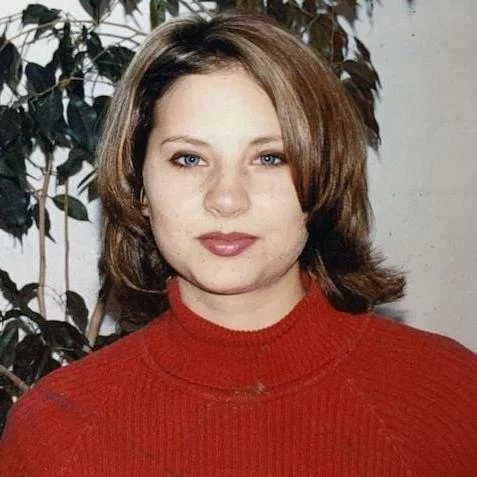
Maria Guadalupe Barrientos was forty three years old in June 1994, living in Sugar Land, Texas, and working as a nanny to support herself. She was of Mexican descent, five foot three, weighing a hundred thirty pounds, with red hair and brown eyes and pierced ears. Maria shared her home with her daughter, Brenda Vanessa Trejos, and her son-in-law, Frank Jose Trejos, both of whom were unemployed at the time and living with her. On June 10, 1994, Maria left her job around five in the afternoon, wearing a white shirt with pastel designs, green knit pants, and white canvas sneakers. She never came home. She has never been seen again.
A Missing Woman Nobody Rushed to Find
Frank told Maria's employer that she had left because she was angry with him over his failure to mow the lawn, an explanation that gave the appearance of an ordinary domestic tiff rather than anything more serious. Five days passed before Brenda and Frank reported Maria missing at all, and even then, investigators noted the couple made minimal effort to actually search for her themselves. Everything Maria would have needed for any kind of extended trip remained behind in the home, her money untouched, her bank account inactive, her bicycle still there, along with her Bible, the kind of total, sudden abandonment of daily life that read far more like something had happened to her than like a woman who had simply walked away angry over yard work.
When investigators searched the home, they found what appeared to be bloodstains on household items, along with four adult sized bloody footprints in the hallway. Maria's car turned up abandoned and unlocked in Houston on June 30, roughly three weeks after she vanished, with her purse, wallet, and keys still inside, along with blood found on the back floor mats. Despite all of that physical evidence pointing toward violence rather than a voluntary disappearance, the case went cold for years, without an arrest, without a confession, and without any resolution for Maria's family.
Asked to Move Out, and Killed Instead
The case finally broke open in 2001, seven years after Maria disappeared, when investigators conducted a follow up interview with Frank Trejos. During that interview, Frank confessed to killing his mother-in-law, describing how an argument between them had turned violent and how he had beaten and choked Maria to death. According to what he told investigators, the underlying dispute that led to the killing centered on money and responsibility around the household. Maria had reportedly asked Frank and Brenda, both unemployed at the time and contributing little to the home's expenses or upkeep, to move out on their own. Rather than leaving, Frank killed her.
After Maria's death, Frank confessed that he and Brenda placed her body in the bathtub and cut her wrists, an attempt to stage her death to look like a suicide. The wounds failed to bleed the way a genuine suicide attempt would have, since Maria was already dead by the time they inflicted them, and the couple abandoned that plan once it became clear it would not hold up to any real scrutiny. Instead, they decided to dispose of her body entirely. Brenda later gave her own confession, admitting that she had actively helped her husband both in the killing itself and in disposing of Maria's remains afterward, telling investigators the two of them had buried her in a field near Fulshear, in north Fort Bend County, Texas.
A Burial Site Erased by Time
Frank eventually led authorities to the location where he and Brenda claimed to have buried Maria, but by the time investigators arrived to search it, roughly eight years had passed since the burial itself. In the intervening years, fires had swept through portions of the area, trees had been cleared, and the ground had been plowed over and leveled, with an additional eighteen inches of soil added on top of the original surface at some point during that stretch. Despite an extensive search of the location, and despite cadaver dogs indicating the presence of human remains somewhere in that field, investigators were never able to actually locate Maria's body, the physical landscape having been altered too thoroughly in the years between her death and her son-in-law's eventual confession.
Convictions Without a Body
Frank and Brenda Trejos were formally arrested in January 2003, more than eight years after Maria's disappearance, and tried separately. At trial, Brenda offered a somewhat different account than the one she had reportedly given investigators earlier, claiming that she had only helped cover up her mother's murder after the fact rather than actively participating in the killing itself, insisting that Frank alone was responsible for Maria's death. The juries hearing each case did not fully accept that distinction in Brenda's favor. In February 2005, Brenda was convicted of murder and sentenced to eighty years in prison, a notably harsher sentence than her husband ultimately received. Frank was convicted separately and sentenced to forty five years.
Both convictions were secured entirely without Maria's remains ever being recovered, built instead on the confessions both Frank and Brenda eventually gave, along with the physical evidence collected from the home and vehicle back in 1994, evidence that had waited patiently in storage for nearly a decade before finally being matched to an admission of guilt.
A Grave Nobody Can Find
More than three decades after Maria Guadalupe Barrientos vanished, her body has never been located, buried somewhere beneath layers of soil, cleared trees, and burned ground that erased whatever specific marker might once have identified where Frank and Brenda actually left her. Both remain incarcerated for her murder, their convictions standing as confirmed legal fact even as the physical resolution her family has always wanted, an actual place to bring her home to, has never come. Maria had asked two unemployed adults living under her roof to take responsibility for their own lives and move out on their own. What she got instead was a staged suicide that didn't work, a shallow grave that time erased completely, and eight years of silence before anyone admitted what had actually happened to her.
What makes the eight year gap between Maria's disappearance and her son-in-law's eventual confession especially frustrating for investigators is how much physical evidence had already been sitting in their possession the entire time. The bloodstains found in the home. The bloody footprints in the hallway. The blood recovered from the floor mats of Maria's own car, abandoned just three weeks after she vanished. None of that evidence, gathered within a month of her disappearance, was ever enough on its own to bring charges against anyone, not without a confession tying it directly to a specific version of events. It took a follow up interview seven years later, one investigators pursued without any new physical breakthrough prompting it, to finally get Frank Trejos talking, and once he did, the case that had waited nearly a decade in cold storage came together within months.
For Maria's extended family, the convictions closed one chapter of an ordeal that had already stretched across the better part of a decade, while leaving open the one question that has never been answered: exactly where, within that reshaped, replanted field near Fulshear, their mother and grandmother's remains actually rest. Cadaver dogs confirmed that human remains existed somewhere within the search area, a scientific confirmation of what everyone already believed, but confirmation was never the same as recovery, and recovery, in Maria's case, never came.
Anyone with information about the location of Maria Guadalupe Barrientos's remains is asked to contact local Fort Bend County authorities.
Sources
- The Charley Project: Maria Guadalupe Barrientos
- Fort Bend Herald: Accused says she didn't kill her mother, says husband did
- FindLaw: Trejos v. State (2007)
- NamUs: Missing Person MP9123
- International Missing Persons Wiki: Maria Barrientos