Chopped Up: The Disappearance of Zachary Xerxes Ramsay
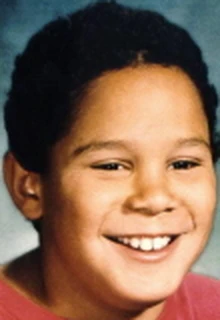
Zachary Xerxes Ramsay was ten years old on February 6, 1996, living with his mother in an apartment in the 400 block of north Fourth Street in Great Falls, Montana. He was a biracial boy, Black and white, with brown hair and brown eyes, facial dimples, a scar between his eyebrows and another on his arm. He stood four feet tall and weighed a hundred pounds, and though he normally wore eyeglasses, he was not carrying them that morning. At around 7:30, Zachary left home to walk to Whittier School, dressed in a blue denim jacket with green sleeves, a blue football jersey with his last name printed across the back in gold letters, stonewashed jeans, and black high top sneakers. He was walking through an alley near the 400 block of north Fifth Street when witnesses saw him. One family living along the route watched an off white four door car nearly strike him. Another witness saw him a little later, around 7:45, crossing north Sixth Street, apparently crying, with an obese adult man following behind him. Zachary never reached his classroom that day, and he has never been seen again.
A Neighbor Nobody Knew the Truth About
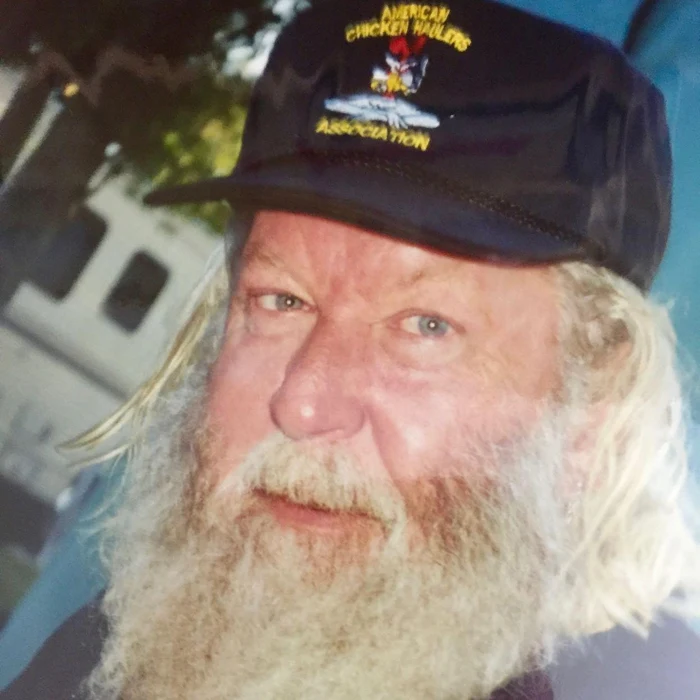
Among the people living near that alley was a heavyset man in his late thirties who worked as a short order cook, taking shifts at the kitchen on Malmstrom Air Force Base and later at a local Hardee's restaurant. He went by the name Nathaniel Bar-Jonah, though it was not the name he had been born with. He had been living in Great Falls for a few years by then, having moved out from Massachusetts to stay with his mother as a condition of a plea deal following an incident in 1991, when he had been arrested for attacking a seven year old boy in a car outside a post office, sitting on the child's chest until witnesses intervened. That was far from his first offense. Under his birth name, David Paul Brown, he had a long record in Massachusetts stretching back to childhood, including a 1977 case in which he impersonated an FBI agent to lure two boys out of a movie theater in Shrewsbury, drove them to a secluded spot, handcuffed them, and strangled and burned them with cigarettes, an attack serious enough that he believed at the time he had killed one of the boys. He was convicted of attempted murder and sentenced to eighteen to twenty two years, though psychologists later testified at a 1984 parole hearing that he no longer posed a threat, and a judge released him in 1991 despite Massachusetts having failed, in the court's view, to prove he remained dangerous. He legally changed his name that same decade, adopting Nathaniel Benjamin Levi Bar-Jonah, a choice he later explained by saying he wanted to experience discrimination as a Jewish person, despite having no actual connection to Judaism and coming from a family active in a Pentecostal church.
None of that history followed him to Montana. Sex offender registries at the time did not communicate well across state lines, and the man Zachary's neighbors knew simply as an odd, overweight cook did not appear on any list that would have warned Great Falls what he had already done to children in another state.
An Investigation That Could Not Get a Warrant
A local detective named Bill Bellusci focused on Bar-Jonah almost immediately after Zachary disappeared. Witnesses familiar with him placed him near a dumpster in the alley that morning, wearing a navy blue jacket that looked vaguely official, standing in roughly the same spot where Zachary would later be seen crying and followed. Bellusci requested search warrants to look into Bar-Jonah's home and belongings, but was turned down more than once. Without stronger evidence than a physical description and a neighbor's unease, there was little more investigators could do at the time, and shortly afterward Bar-Jonah moved out of his mother's house entirely, the case going cold for years.
It resurfaced because of an unrelated incident. On December 13, 1999, Bar-Jonah was spotted loitering outside an elementary school for the third time in a week, dressed again in a dark jacket and knit cap, carrying two cans of pepper spray, a toy gun, and a fake badge. Bellusci and the Montana attorney general's office charged him with impersonating a police officer and carrying a concealed weapon, a relatively minor pair of charges that nonetheless finally gave detectives grounds for a search warrant. What they found inside his home reopened the entire question of what had happened to Zachary Ramsay four years earlier.
What the Search Warrants Turned Up
Investigators found two coats, one fitted with a toy badge, along with a stun gun, a baseball cap reading Security Enforcement, a pulley mounted to the kitchen ceiling, albums filled with photographs cut from magazines and newspapers of children, documents about knots and restraints, and an article on autoerotic asphyxiation. They also learned Bar-Jonah had access to his mother's off white 1978 Toyota Corolla on the morning Zachary vanished, that his mother and brother had been away attending a funeral that week, and that he had not been scheduled to work that day or in the days surrounding it.
A second search turned up a handwritten list titled Lake Webster, containing the names of fifty four boys, several of them identifiable as youths connected to Bar-Jonah's life back in Massachusetts, including three he had already been convicted of abducting. Near the bottom of that list was the name Zackery Ramsey, followed by the single word died. Detectives also recovered dozens of newspaper clippings about the Ramsay disappearance that Bar-Jonah had apparently saved over the years, along with hundreds of thousands of photographs of children and undeveloped film. A former roommate told investigators he had once found clothing that matched what Zachary had been wearing the day he disappeared, along with a pair of bloodied gloves. Another former roommate said Bar-Jonah brought up Ramsay's name unprompted on more than one occasion, once mentioning him weeks before the boy ever vanished, and later telling the roommate that Zachary would never be found because he had been, in Bar-Jonah's words, chopped up with the pieces scattered.
Buried among his belongings were notebooks written in code. It took investigators months, working with the FBI, to decipher them. What the notebooks described, once decoded, included torture and, according to investigators, detailed cannibalistic fantasies, among them what were later described in court filings as recipes involving children, phrases like little boy pot pie and french fried kid, and passages referencing lunch served on the patio with roasted child. Detectives also learned that despite Bar-Jonah's usual grocery spending, which was substantial given his size, well over three hundred pounds, his financial records showed almost no grocery purchases for nearly a month after Zachary disappeared. Around that same period, he began hosting cookouts for neighbors, serving burgers, chili, spaghetti, meat pies, and casseroles. More than one guest later told investigators the meat had tasted unusual. When one woman complained that it did not taste right, Bar-Jonah told her he had personally hunted, killed, and butchered a deer for the meat, though records showed he owned no rifle and held no hunting license that year.
Investigators eventually dug up a section of the garage at a property Bar-Jonah had previously lived at, sifting through roughly two tons of dirt, and recovered twenty one fragments of human bone. The bones had been cut, smashed, and boiled, damage that badly degraded any DNA that might have remained, but testing that was possible determined the fragments belonged to an adolescent, not to Zachary. Investigators later learned that all of the sewer pipes beneath another home Bar-Jonah had lived in had been replaced by a subsequent owner, who explained the pipes had constantly been clogging.
Charges, a Mother's Testimony, and a Case That Fell Apart
On July 5, 2000, Montana prosecutors charged Bar-Jonah with the kidnapping and sexual assault of four boys and with the murder of Zachary Ramsay, and announced they intended to seek the death penalty. He pleaded not guilty to all of it. As the case moved toward trial, prosecutors pursued the counts involving three living boys separately from the Ramsay murder charge, ultimately convicting Bar-Jonah of kidnapping, aggravated assault, and sexual assault, including one incident in which he tortured a boy and hung him from the ceiling using the pulley investigators had found in his kitchen.
The murder charge connected to Zachary never reached a jury. Zachary's mother, Rachel Howard, was persuaded by Bar-Jonah's defense team in the days before trial to say publicly that she still believed her son might be alive somewhere, a statement that, whatever her own motivations for making it, undercut the prosecution's ability to pursue a murder conviction and led to those charges being dropped in October 2002 for insufficient evidence. During the broader trial, a woman named Mary Patrone, by then thirty six years old, recognized Bar-Jonah in the courtroom as the man who had tried to abduct her in Connecticut in 1974 when she was nine. The statute of limitations on that decades old attempt had long since expired, and no new charges could be brought over it.
In the end, Bar-Jonah was sentenced to 130 years in prison without the possibility of parole, a sentence connected entirely to his crimes against the boys who survived him, not to whatever happened to Zachary Ramsay. He maintained his innocence for the rest of his life. The Montana Supreme Court upheld his conviction and sentence in December 2004. He was found unresponsive in his cell at Montana State Prison on April 13, 2008, and an autopsy attributed his death to a heart attack brought on by severe arterial disease. He was fifty one years old.
A Legal Death Without a Body
Zachary's case has never been solved in any formal sense. No one has ever been convicted of his murder, no body has ever been recovered, and the bone fragments dug out of a Great Falls garage, while consistent in age with an adolescent victim, were never confirmed to be his. In January 2011, nearly fifteen years after his disappearance, a Montana court declared Zachary Xerxes Ramsay legally dead at the request of his father, a ruling that allowed his father to collect on a twenty thousand dollar life insurance policy taken out in Zachary's name. His mother, who had once testified in open court that she believed her son might still be alive, formally objected to the declaration.
Investigators in multiple states have long suspected Bar-Jonah in other unsolved cases as well, including the 1973 disappearance of seven year old Janice Pockett from Tolland, Connecticut, not far from where Bar-Jonah lived at the time, and the 1997 disappearance of fourteen year old Amanda Gallion from Gillette, Wyoming, a town Bar-Jonah is known to have passed through and stayed overnight in just before she vanished on her bicycle. None of those cases have been formally connected to him through evidence sufficient for prosecution, and like Zachary's, they remain open.
What is left of Zachary Ramsay's case is a set of circumstances almost too disturbing to summarize plainly. A ten year old boy walked toward his elementary school one February morning and never arrived. A neighbor with a hidden history of violence against children lived along his route and was seen standing near where the boy was last spotted crying. Years passed before anyone learned enough about that neighbor's past, his notebooks, his cookouts, or the list of names in his handwriting to understand what Great Falls had been living beside without knowing it. Zachary would be in his late thirties today had he lived. Whatever happened to him in that alley on the morning of February 6, 1996, no court has ever been able to say so with the certainty a conviction requires, and his mother's public hope that he was still alive somewhere, whatever led her to say it, closed the door on the only case that might have answered the question for good.
Sources
- The Charley Project: Zachary Xerxes Ramsay
- Wikipedia: Nathaniel Bar-Jonah
- The Washington Post: Cannibalism Alleged in Disappearance
- Missoulian: Allegations of cannibal slaying shock Great Falls community
- Billings Gazette: Father of Bar-Jonah's alleged victim seeks closure
- Fox News: Accused Cannibal, Convicted Sex Offender Dies in Prison
- Montana Right Now: Montana Murder Mysteries, Nathaniel Bar-Jonah Part Two