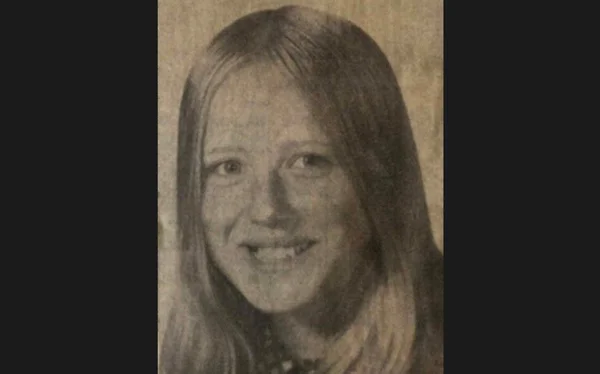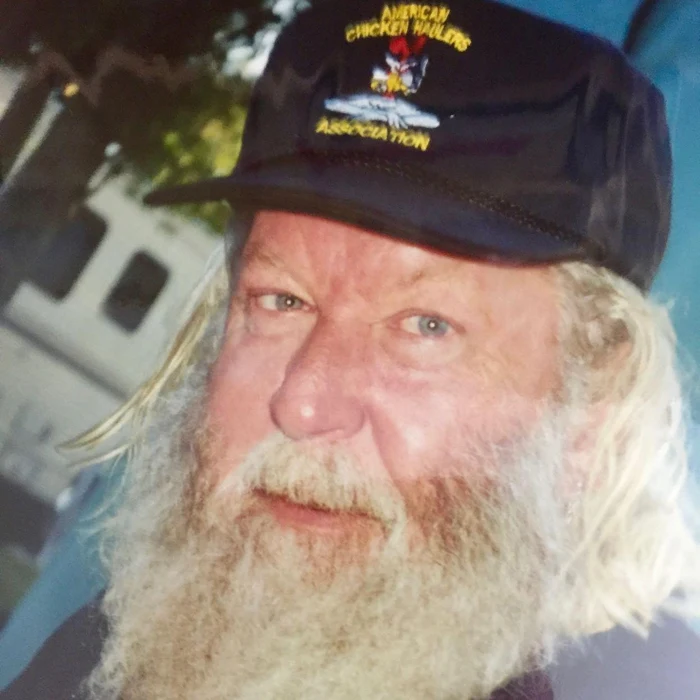
The Murder of Thomas Hayden Sr.
On January 18, 2012, a contractor named Anthony Suglia, known locally for picking up litter along the roads he drove, found something considerably worse than trash beside Schoolhouse Road near Davidsburg Run in Dover Township, Pennsylvania. It was a vacuum-sealed plastic FoodSaver bag, roughly a foot by a foot and a half, and inside it was a large section of human scalp with long gray hair still attached, tied back in what looked like a ponytail, along with pieces of a blood-stained bedsheet and pillowcase, tags still sewn into the fabric. Police processed what they could. DNA testing confirmed it was human blood. Database searches for a match turned up nothing. With no missing persons report anywhere that fit, the bag and its contents went into an evidence locker, where they sat for five years, waiting for a name.
A Man Nobody Reported Missing
The name, when it finally came, belonged to Thomas L. Hayden Sr., one of ten children from a military family in Leonardtown, Maryland. He'd worked a string of jobs over the years, mechanic, gas station manager, police officer, postal worker, before a workplace injury put him on disability. Family remembered him as a character, someone who rambled and didn't stay in one place too long. In 1998, he married a woman named Virginia Fogle, whom he'd met on an internet dating site, and his family did not take to her. His daughter Kim thought she was narcissistic. His brother Owens found her hard to take, full of herself.
By the fall of 2011, Thomas had gone quiet. His daughter Kim, trying to reach him, kept getting the same answer from Virginia: he doesn't want to talk to you. His brother Owens last heard from him the day after their brother Gary died of cancer in 2010. Concern built quietly over the following year among the people who knew him, his oldest friend Burris Rogers among them, but nobody filed a formal report. When Kim raised her worries to Owens during a visit, Virginia sent her a message on Facebook demanding to know why she was spreading lies that Thomas was dead.
It would be January 2017, more than five years after Thomas effectively vanished from his family's lives, before his daughter finally called Pennsylvania police and asked them to check on his welfare. That call was what connected two threads that had been sitting separately for half a decade: a missing sixty-something man from Dover Township, and an unidentified scalp that had been drying in a police garage since 2012.
What Virginia Told People, and What Wasn't True
Virginia's explanation for Thomas's absence, when she offered one, was that he had left Pennsylvania one night in 2011 to seek treatment for ALS and simply never returned. Investigators found no record that Thomas had ever been diagnosed with ALS, or any evidence that such a trip had ever happened at all.
What investigators did find was a pattern of behavior that looked considerably less like grief and considerably more like someone working to erase a person from the paperwork of their own life. Virginia had forged Thomas's signature on a deed transfer, allowing her to sell their home after he disappeared, along with a trailer they owned, both transactions built on a signature that wasn't his. She had purchased a .357 caliber handgun on October 4, 2011, right around the time investigators believe Thomas died, though she later told police she'd sold the gun and had no record of who bought it. And for years after his disappearance, Thomas's Social Security payments kept arriving in the couple's joint account, money that continued to be spent primarily in central Pennsylvania, where Virginia lived, long after the man it was meant to support had stopped needing anything at all. Investigators eventually tied more than $113,000 in fraudulently collected Social Security benefits to the account.
A Forensic Pathologist and a Theory Involving Pigs
DNA testing in 2017 confirmed what investigators must already have suspected: the scalp found in that FoodSaver bag five years earlier belonged to Thomas Hayden Sr. At a later preliminary hearing, a forensic pathologist testified that Thomas had likely died of a gunshot wound, based on microscopic bone particles recovered from the blood inside the bag. Beyond that scalp and those fragments, no other part of Thomas has ever been found.
The investigation eventually reached toward Virginia's own grandsons, brothers named Steven and Michael Harris who were minors at the time of Thomas's disappearance and were living in Austin, Texas by the time investigators caught up with them. Court records described Virginia as very close with Michael, close enough that she had reportedly given him a credit card issued in her missing husband's name. A search warrant filed in the case quoted a conversation attributed to Virginia and Michael that is difficult to read as anything other than a description of how to make a body disappear: that if you feed a person to pigs, they eat everything but the hair. Investigators sought DNA samples from both brothers in 2021. Neither Steven nor Michael Harris was ever charged, and as of the most recent public reporting on the case, investigators had been unable to locate them to collect the samples they were seeking.
More Than Sixty Charges
Virginia Hayden was arrested and arraigned in 2019, facing criminal homicide along with more than sixty additional counts covering forgery, theft, conspiracy, and tampering with public records, on top of a separate federal indictment for fourteen counts of wire fraud tied to the stolen Social Security payments. It was, by any measure, an enormous case to bring to trial, built almost entirely on circumstantial and forensic evidence rather than an eyewitness or a confession, anchored by a piece of physical evidence that had spent five years in an evidence locker before anyone knew whose it was.
Rather than take that case to a jury, Virginia pleaded no contest in September 2022 to third-degree murder and a single felony count of tampering with public records, the rest of the counts against her resolved or dropped as part of the agreement. York County Court of Common Pleas Judge Harry Ness sentenced her to six to twenty years in state prison, followed by seven years of probation, with credit for the 1,227 days she had already spent in custody since her 2019 arrest. She was seventy-one years old at sentencing.
What Was Never Found
Thomas Hayden Sr. has never been fully recovered. The scalp and the bloodstained bedsheet fragments found beside a rural Pennsylvania road in January 2012 remain the only physical trace of him that investigators have ever identified, five years spent unclaimed in an evidence locker standing in, in a strange and literal way, for the five years his own family spent not knowing what had happened to him either. Virginia's plea closed the criminal case. It did not produce a body, a full account of what happened that night in 2011, or any explanation beyond a discarded ALS story and a Facebook message accusing his own daughter of spreading lies. What's left is a scalp in a bag, a six-figure fraud that ran for years on a dead man's benefits, and a family that spent half a decade being told, by the person responsible, that he simply didn't want to talk to them anymore.
Sources
- The Charley Project — Thomas L. Hayden Sr.
- Washington Post — Human scalp found in FoodSaver bag baffled police. Now a grandmother has been charged with murder.
- Yahoo News — How a bloody scalp found on a rural PA road led cops to a killer
- True Crime News — Woman whose husband's scalp was found in bag on the side of the road gets up to 20 years in prison
- U.S. News & World Report — Woman Gets 6 to 20 Years in Presumed 2011 Death of Husband
- FOX43 — Woman accused of murdering her husband, concealing his disappearance is charged with illegally collecting his Social Security benefits
- Oxygen — Steven, Michael Harris Investigated In Thomas Hayden Murder
- Southern Maryland News — Wife of former St. Mary's resident pleads no contest to third-degree murder