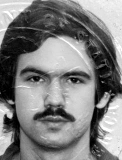
Someone Was Spending His Money: The Disappearance of Reeves Johnson
Reeves Kemp Johnson III was 31 years old, a Trinity College graduate who had studied philosophy and history, when he disappeared from his cabin in Kittery, Maine, in February 1983. What makes his case so unusual is not simply that he vanished, but that for roughly three weeks afterward, somebody else appeared to be actively impersonating him, draining his bank account, making strange purchases in his name, and at one point attempting to collect his final paycheck from a post office box while his own mother stood watching. More than forty years later, Reeves has never been found, and the person who spent those weeks pretending to be him has never been identified.
A Philosophy Graduate Turned Welder
Reeves grew up in Philadelphia, the second of three children born to Reeves "Kemp" and Barbara Johnson, and went on to study philosophy and history at Trinity College in Connecticut, including a semester abroad in Italy. By 1977, he had relocated from Pennsylvania to a cabin on Jewett Court in Kittery, Maine, where he worked as a welder at Donnelly Manufacturing across the state line in Exeter, New Hampshire. In 1981, he had also worked for a time as a dishwasher at the now-defunct Borderline restaurant on Route 1 near the Kittery Trading Post. Reeves suffered from severe hypoglycemia, a condition involving dangerously low blood sugar that could potentially become fatal if not carefully managed, and he had at some point in his past sought psychiatric treatment as well, details that would later shape some of the theories his own family developed about what might have happened to him.
A Hitchhiker Named Richard
In the weeks before his disappearance, Reeves had picked up a hitchhiker on December 26, 1982, a young man who identified himself as Richard and claimed to be heading toward Detroit or Ontario. Rather than moving on quickly, Richard ended up staying with Reeves for over a week, receiving food and money from him during that time. He eventually left on January 7, picked up by someone from Massachusetts while Reeves was away at work. Investigators later came to believe Richard may have taken a copy of Reeves's house key during his extended stay, and locating and questioning him has remained a priority for investigators ever since, though he has never been identified.
The Last Shift
Reeves was last seen at work on February 3, 1983. He failed to show up or call in the following day, an unusual lapse for someone who had held the same job for years. That same week, he also missed a customary phone call to his family back in Pennsylvania, a routine check-in that his sudden silence made all the more alarming in hindsight.
A Stranger at the Door
On February 4, the day after Reeves's last known shift, a young man with black hair, a mustache, and a black leather jacket knocked on the door of Reeves's cabin and was let inside. He left again a short time later on foot. Who this person was, and what happened during that visit, has never been established.
Someone Spending His Money
Beginning around February 9 and continuing through at least February 12, someone using Reeves's identity began making a series of unusual purchases. His bank account was drained to buy $146 worth of groceries at a store he did not normally frequent. Two pairs of thermal underwear were purchased in mismatched sizes, one small and one extra large, an odd detail difficult to explain under almost any innocent scenario. Car stereo equipment was purchased at a Radio Shack. Checks were written despite insufficient funds in the account, behavior investigators noted was entirely inconsistent with Reeves's own known financial habits. On February 10, withdrawals of $30 and $50 left only a few dollars remaining in the account, and bank tellers who handled those transactions identified the person making them as Reeves himself. On February 12 and 13, further Radio Shack purchases of speakers and car audio equipment totaling roughly $380 were made by check, continuing a spending pattern that looked nothing like the man his coworkers and family knew.
The Empty Cabin
On February 15, Reeves's father grew concerned enough to request a welfare check at the cabin. Police found the property abandoned, its pipes frozen, showing no signs that anyone had been living there for several days. A snowstorm on February 6 had left fresh snow with no tracks in it, suggesting the cabin had already been empty by that point. Missing from inside were a television, an acoustic guitar, a record player and amplifier, Reeves's entire record collection, all of his clothing, and his valuable welding equipment, the kind of comprehensive clearing out that suggested either a planned departure or a deliberate effort to make one look staged. Left behind, strangely, were a set of guitar strings Reeves had purchased on February 3, a stereo speaker box, a damaged set of speakers, and his own contact lenses, the last item particularly notable given how difficult daily life would be without them for someone who actually needed them.
The Car in Portsmouth
Also on February 15, Reeves's red 1972 Volkswagen was towed to an Exxon station in Portsmouth, New Hampshire. The mechanic there recognized a photo of Reeves and recalled that he had said the car needed repairs for a trip heading south. On February 21, someone identifying themselves as Reeves showed up to retrieve the vehicle, but left on foot after the mechanic refused to accept payment by check, refusing to release the car without cash in hand.
The Man at the Post Office
Perhaps the case's most chilling detail involves an incident at the post office. An unidentified man opened Reeves's post office box while Reeves's own mother happened to be watching. The man was described as having long reddish blond hair, a clean and neat appearance, standing around 5 feet 10 inches tall, and wearing an orange t-shirt, green overalls, and a red baseball cap. He took Reeves's paycheck from the box but left the rest of the mail behind. When he apparently noticed he was being photographed, he covered his face. When confronted about what he was doing, he claimed that Reeves lived with him in an apartment in Portsmouth. He fled the scene once Reeves's father arrived. The paycheck he took was never cashed and was eventually canceled. To this day, Reeves's family believes this unidentified man knows exactly what happened to their son and brother, though he has never been located or identified.
More Calls, More Checks
The strange activity connected to Reeves's identity continued even after the post office incident. On February 19, his checkbook was used again for $66 worth of groceries. On February 22, someone called Donnelly Manufacturing requesting that his final paycheck be mailed to his Kittery address. On February 23, someone claiming to be Reeves called the Exxon station in Portsmouth, offering to simply give them the Volkswagen outright to cover the cost of the repairs it needed, an offer that, if accepted, would have made the car disappear from the investigation entirely.
A Case Reopened Decades Later
Reeves's case went largely dormant for decades after the initial 1983 investigation failed to produce answers. That changed in October 2021, when Detective Brian Cummer of the Kittery Police Department took a fresh look at the file and issued a public call for assistance, emphasizing that every new piece of information brought investigators one step closer to understanding what had happened. The following month, Kittery police and Reeves's siblings partnered with Kristen Seavey, host of the true crime podcast Murder, She Told, producing a special episode dedicated to the case. That renewed attention paid off. While digitizing old case files, investigators discovered a 1978 letter referencing a girlfriend named Cheryl, a woman believed to have been in her twenties or early thirties during her relationship with Reeves and likely living somewhere in the Kittery, York, or nearby Maine and New Hampshire area at the time. She is not considered a suspect, but investigators believe she may hold information relevant to the case and would now be somewhere between her late sixties and early eighties. A separate dispatch log confirmed Reeves's earlier employment as a dishwasher at the Borderline restaurant in 1981, adding another thread investigators have tried to follow in locating former coworkers or acquaintances who might remember something useful. A $6,000 reward was announced in June 2022 for information leading to Reeves's recovery or whereabouts.
What the Family Believes
Given Reeves's severe hypoglycemia, his family has acknowledged the possibility that he could have died of natural causes if his condition went unmanaged for even a short period, a genuine medical risk that shadowed him throughout his adult life. At the same time, they have remained firmly convinced that the unidentified man who accessed his post office box, along with whoever spent those three weeks methodically draining his bank account and impersonating him at Radio Shack counters and bank windows, knows considerably more about Reeves's actual fate than natural causes alone would explain.
More than forty years after Reeves Kemp Johnson III disappeared from his cabin in Kittery, Maine, his case remains open, his Social Security number has shown no activity since 1983, and no one who knew him has reported a confirmed sighting of him since the week he vanished. Anyone with information is asked to contact the Kittery Police Department at 207-439-1638 or Detective Brian Cummer directly at bcummer@kitterypolice.com.
Sources
- The Charley Project: Reeves Kemp Johnson III
- WGME: New clues revive 1983 Kittery missing person case, public's help needed
- Murder, She Told: Reeves Johnson, Maine Missing Person
- Murder, She Told: Reeves Johnson, Inside the Investigation
- Websleuths: Reeves Kemp Johnson III, 31, Kittery, 3 Feb 1983
- Missing: Where is Reeves K. Johnson III? (Facebook)