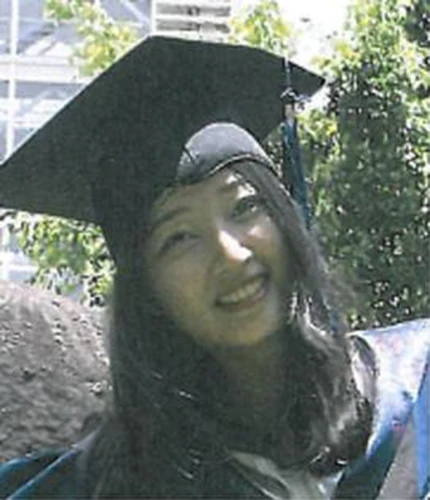
Thirteen Minutes to a Black Saturn: The Murder of Yingying Zhang
Yingying Zhang was born December 21, 1990, in Nanping, in China's Fujian province, and by the time she boarded a flight to the United States in April 2017 she had already built the kind of academic record that families sacrifice for. She graduated from Sun Yat-sen University in 2013 and went on to earn a master's degree from Peking University, one of the most competitive institutions in the country, in 2016. She arrived at the University of Illinois Urbana-Champaign as a visiting scholar to conduct research into photosynthesis and crop productivity, the kind of quietly important agricultural science that rarely makes headlines on its own. She was twenty six years old, engaged to be married that October, and in near constant contact with her parents back home, the sort of daughter who calls every week without being asked to. None of that ordinary, promising life survived past June 9, 2017.
A Missed Bus and a Car That Circled Back
That afternoon, Zhang was on her way to sign a lease for a new apartment when she missed the bus she needed. She walked instead to a different stop, at the intersection of North Goodwin Avenue and West Clark Street, and waited. Surveillance footage would later show a black Saturn Astra circling the area and pulling up to where she stood at 2:03 p.m. She got into the car. It was the last time anyone who loved her would ever see her again. When she failed to show up where she was expected and didn't answer calls or messages, friends grew worried enough to report her missing that same night, at 9:24 p.m., a remarkably fast response that nonetheless couldn't undo whatever had already happened to her in the hours before.
Investigators worked backward from the surveillance footage, focusing on the distinctive black Saturn Astra, eventually zeroing in on a small identifying detail, a cracked hubcap, that led them to Brendt Allen Christensen, a twenty eight year old former physics graduate student at the university. Christensen held an undergraduate degree in math and physics from the University of Wisconsin-Madison and had just finished a master's degree in physics at Illinois that same month. When investigators brought him in for questioning on June 15, he offered an explanation that would become horribly familiar in cases like this: he admitted giving an Asian woman a ride, he said, but claimed he had made a wrong turn and simply dropped her off afterward, unharmed, blocks from where he'd picked her up.
A Girlfriend, a Wire, and Nine Recordings
What actually unraveled Christensen's story wasn't physical evidence recovered from his apartment, at least not at first. It was his own girlfriend, Terra Bullis, who had started dating him in April of that year after meeting him online, and who agreed to wear a hidden recording device for the FBI. Over the course of June 2017, Bullis recorded Christensen nine separate times, capturing conversations that investigators would later describe as the emotional center of the entire prosecution. In one recording, made at a campus vigil held for Zhang while she was still officially only missing, Christensen can be heard describing to his own girlfriend, in detail, how he had brought Zhang back to his apartment and held her there against her will. In another, he called Zhang valiant, describing how hard she had fought against him, at one point claiming she was stronger than any victim he had ever had, and falsely telling Bullis that Zhang was his thirteenth victim, a claim investigators were never able to corroborate with any other case. Prosecutors would later say Christensen sounded proud, even excited, as he recounted what he'd done, laughing at points and comparing himself to Ted Bundy.
According to evidence presented at trial, Christensen had choked, raped, and stabbed Zhang inside his own bedroom before beating her with a baseball bat and ultimately decapitating her in his bathroom. It also emerged during the trial that Zhang had not been an isolated target of opportunity. Christensen had reportedly posed as an undercover police officer in a prior, separate incident, attempting to abduct another graduate student, Emily Hogan, using a similar approach before he ever encountered Zhang at that bus stop.
A Trial Where the Defense Admitted the Killing
When Christensen's federal trial began in June 2019, his own defense attorney opened by acknowledging, directly and without equivocation, that Christensen had killed Yingying Zhang. That concession reframed the entire proceeding, shifting the real fight in the courtroom away from the question of guilt and toward the question of what should happen to him because of it, since prosecutors were seeking the death penalty in a case that had drawn national and international attention, in part because of Zhang's nationality and the diplomatic weight her case carried between the United States and China. Jurors deliberated for less than two hours before finding Christensen guilty of kidnapping resulting in death, along with two separate counts of making false statements to the FBI during the investigation.
The sentencing phase told a more complicated story. Despite the recorded confessions, despite the physical evidence, and despite prosecutors pressing for execution, the jury ultimately deadlocked during its sentencing deliberations, unable to reach the unanimous agreement federal law requires to impose capital punishment. On July 18, 2019, Christensen was instead sentenced to life imprisonment without the possibility of parole, plus an additional ten years for the false statement convictions.
A Body Deliberately Hidden Where It Could Never Be Found
Perhaps the cruelest detail to emerge from the entire case came after the trial concluded, when prosecutors revealed what Christensen had disclosed through his own attorneys about what he did with Zhang's remains. He told them he had placed her dismembered body into garbage bags and disposed of them in the dumpster behind his own apartment complex. That dumpster, as it happened, was emptied on its ordinary municipal schedule within three days of the murder, and its contents were hauled, along with everyone else's routine trash from that period, to a landfill in Vermilion County. There, standard waste management procedure meant the material was compacted at least twice and eventually buried beneath an estimated thirty feet of additional waste. No recovery effort has ever been undertaken, and none is considered realistically feasible. Zhang's family, more than seven years after her murder, has no grave to visit, no physical place to mourn beyond the site of her disappearance itself, because the ordinary, indifferent machinery of a county landfill did what killers often hope for and rarely actually get: it erased the evidence of a crime completely, not through any particular cunning on Christensen's part, but simply through the mundane logistics of trash collection.
What Remains
Zhang's family, along with the university community that had briefly become her home, found ways afterward to build something out of what was left. A memorial garden was dedicated on October 11, 2018, at the very bus stop where she had once waited for a ride that never should have come. In August 2019, the family established the Yingying Fund with an initial gift of thirty thousand dollars, later joined by contributions from more than four hundred additional donors, intended specifically to support international students facing crises of their own, a fund born directly out of the isolation and distance that made Zhang's own disappearance so much harder for her family to navigate from thousands of miles away in China. Her father later said that the kindness shown to his family by the University of Illinois community during their ordeal was part of what inspired them to give something back to students in similarly vulnerable circumstances. Zhang's story went on to reach far beyond the courtroom in Urbana, becoming the subject of the documentary Finding Yingying, released in late 2020, and later featured on true crime programs including Investigation Discovery's See No Evil and Oxygen's Final Moments.
None of it changes the basic, unbearable fact at the center of the case. A twenty six year old woman who missed one bus, waited for another, and accepted a ride from a stranger who had circled back twice to reach her, never made it to her lease signing appointment, never made it home to China for her own wedding, and has no grave anywhere in the country where she died.
Sources
- The Charley Project: Yingying Zhang
- Wikipedia: Murder of Yingying Zhang
- South China Morning Post: Brendt Christensen bragged to girlfriend that he killed Chinese scholar Zhang Yingying
- ABC News: Chinese scholar killer heard confessing to killing her, compares himself to Ted Bundy on tape
- Illinois Public Media: Our Life Turned Upside Down, Family of Yingying Zhang Creates Fund to Help Others
- Fox News: Body of murdered U of Illinois student may be in landfill, new details from killer's attorneys suggest