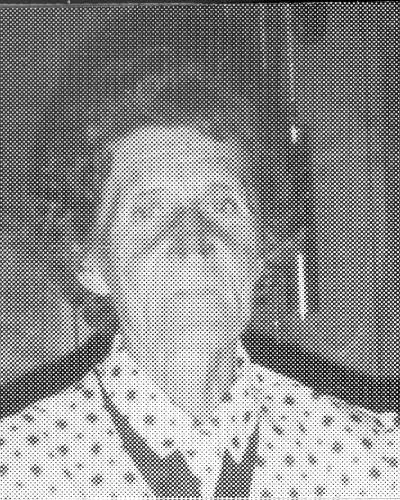
Two Years of Silence: The Disappearance and Murder of Harmony Montgomery
Harmony Renee Montgomery was five years old, blind in one eye, small for her age, and already carrying more instability in her short life than most people experience in decades, when her father beat her to death inside the family car on a December morning in 2019. Nobody reported her missing for almost two years. By the time anyone outside her immediate family understood that something was wrong, her body had already been moved, concealed, treated with lime, and eventually driven across state lines in a rented U-Haul and disposed of somewhere along a Massachusetts highway corridor that investigators have never been able to pinpoint. Her father was ultimately convicted of murdering her in 2024. In the summer of 2026, New Hampshire's highest court threw that conviction out entirely, ordering a new trial on the murder charge and leaving one of the most disturbing child welfare failures in recent memory without a settled legal ending.
A Childhood Passed Between Systems
Harmony's early life was shaped almost entirely by instability that adults created around her. Her mother, Crystal Sorey, lost custody of Harmony in 2014, when the child was only two months old, due to substance abuse issues. From there, Harmony spent years cycling through foster care, including stints in therapeutic foster placements meant for children with especially significant needs, which Harmony had. She was diagnosed with documented behavioral and emotional challenges and was blind in her right eye, conditions that would have required patient, attentive caregivers under the best of circumstances.
In February 2019, a Massachusetts court made the decision to transfer custody to her biological father, Adam Montgomery, despite the fact that Harmony had spent only about twenty hours in supervised visits with him over the preceding four years. It was a stunning gap between the amount of actual relationship a father and daughter had built and the amount of trust the legal system placed in that relationship when it handed a vulnerable five-year-old girl into his full-time care, in a different household, in a different state, without requiring any meaningful further review of him or his living situation.
Warning Signs That Went Unanswered
Almost immediately, the warning signs began. Starting in July 2019, family members and neighbors began repeatedly calling New Hampshire's Division for Children, Youth and Families to report that Harmony was being abused by Adam Montgomery and his wife, Kayla. What followed was, by later official accounts, a near-total institutional failure to respond appropriately. A caseworker assigned to investigate the reports failed to interview either Harmony or her father for weeks after receiving a report that the girl had been beaten. The pattern would repeat throughout 2019 and 2020: concerning reports coming in, and the state's response falling short of its own protocols at nearly every turn.
By the time anyone with real authority to intervene took the reports seriously enough to act decisively, it may already have been too late. In July 2021, Adam Montgomery's own uncle, Kevin, visited and reported seeing a visibly severe black eye on Harmony, with bruising that extended from her cheekbone across to her nose and temple. He reported it to the state. Rather than treating the injury as an urgent safety concern, the response reportedly focused on questioning the timeline of when the bruising had actually occurred, rather than on getting eyes on the child immediately. Harmony had, unbeknownst to everyone involved in that conversation, already been dead for roughly a year and a half.
The Morning of December 7, 2019
By the account eventually given in court by Kayla Montgomery, Adam's estranged wife and the prosecution's central witness, the family had been living out of their car, a Chrysler Sebring, in the weeks surrounding Harmony's death. On the morning of December 7, 2019, Harmony had a bathroom accident while they were in the vehicle. According to Kayla's testimony, Adam responded to that accident with a level of violence that had nothing proportional about it: closed-fist blows to Harmony's face and head, delivered in sets of three or four, repeated across three separate incidents within the span of just a few minutes. Kayla described an "evil" look on his face as it happened. Harmony did not survive the beating.
What followed was not panic or a desperate attempt to seek help. It was concealment, carried out over a period of months. According to Kayla's account, Adam kept his daughter's body in a bag, at one point removing her from it inside their Union Street apartment specifically to add lime, a substance intended to accelerate decomposition and reduce odor. He then stored her remains inside a freezer in that same apartment for months, into the spring of 2020. Finally, sometime around March 2020, he rented a U-Haul and drove overnight to what investigators have only ever been able to describe as an unknown destination, disposing of her body somewhere along the way. Toll records later recovered by investigators showed the U-Haul crossing Boston's Tobin Bridge three separate times in the early morning hours of March 3, 2020, twice northbound and once southbound, the last known physical trace connected to wherever Harmony's remains ultimately ended up. No search conducted since has ever recovered them.
Two Years of Nobody Asking
For almost two full years after that morning in the Sebring, no one outside the immediate family raised an alarm loud enough to trigger a real investigation into where Harmony actually was. It was not until November 18, 2021, that her mother, Crystal Sorey, contacted Manchester police to report that she had not seen or heard from her daughter since a FaceTime call all the way back in April 2019, months before Harmony was even killed. That report finally set a real investigation in motion. On December 31, 2021, police located Adam Montgomery, and it became immediately apparent that Harmony was not with him. On January 4, 2022, he was arrested, initially on charges of second-degree assault and endangering the welfare of a child tied to the 2019 abuse reports, charges that predated any confirmation that Harmony was dead at all.
It would take until October 2022 for prosecutors to formally charge Adam Montgomery with murder, once investigators had gathered enough evidence, much of it eventually coming from his own estranged wife, to build a homicide case around a child whose body had never been found. Kayla Montgomery herself faced separate charges of welfare fraud and receiving stolen property in connection with the case and ultimately served eighteen months, a sentence that reflected her own culpability in the aftermath even as her testimony became the prosecution's central tool for convicting Adam.
A Conviction, and Then Its Reversal
Adam Montgomery's trial took place in February 2024, drawing intense regional and national attention to a case that had already become a symbol of everything that can go wrong when child protection systems, family courts, and law enforcement all fail to communicate urgency to one another. The jury convicted him of second-degree murder, second-degree assault tied to the earlier 2019 abuse, falsifying physical evidence, abuse of a corpse, and witness tampering. In May 2024, he was sentenced to a minimum of 56 years to life in prison on top of an existing 32-year sentence he was already serving on unrelated weapons charges.
That appeared, for two years, to be the final chapter. It was not. In June 2026, the New Hampshire Supreme Court unanimously reversed the murder conviction, ruling that trying the second-degree murder charge alongside the earlier second-degree assault charge in a single proceeding had unfairly prejudiced the jury. The court's reasoning centered on the risk that jurors, having heard strong evidence that Adam struck Harmony in the head during the 2019 assault, would improperly infer that he must therefore have been the one who fatally struck her in the head months later in December, even though the two incidents legally required separate proof. The justices wrote that there was a significant risk jurors drew exactly that impermissible logical shortcut. Montgomery's other convictions, including abuse of a corpse, falsifying evidence, witness tampering, and the underlying assault charge, were left intact. Only the murder conviction itself, the charge that accounted for the vast majority of his sentence, was thrown out. New Hampshire's Attorney General's Office announced it intends to retry Montgomery on the murder charge, stating publicly that it remains confident in the evidence and the work of the investigators and prosecutors who built the original case.
What Remains
Harmony Montgomery's case became, and remains, a flashpoint for scrutiny of New Hampshire's child protective services system, with subsequent reporting and litigation revealing that she was one of at least nine children who died after prior contact with the state's Division for Children, Youth and Families since 2011. A lawsuit filed on behalf of her family and later reporting laid out, in granular detail, exactly how many opportunities existed to check on Harmony before December 2019 and how many of those opportunities were missed, delayed, or mishandled by a system that was, by its own design, supposed to be watching for precisely the kind of danger she was living in.
Harmony's remains have never been recovered, and as her father's legal case heads back toward a second trial on the charge that matters most, that fact has not changed. She would be eleven years old now. Her mother, her extended family, and the investigators who have worked this case for years are left waiting once again, this time for a new jury to hear largely the same evidence a different jury already found convincing, in the hope that this time the outcome will hold.
Sources
- The Charley Project: Harmony Renee Montgomery
- NBC News: Father's conviction in Harmony Montgomery's murder is overturned
- WBUR: N.H. Supreme Court reverses murder conviction for Harmony Montgomery's father
- Fox News: New Hampshire Supreme Court overturns Adam Montgomery's murder conviction in daughter Harmony's death
- NHPR: Father of Harmony Montgomery appeals his murder conviction to Supreme Court citing 'prejudice' in trial
- CBS News Boston: Adam Montgomery's estranged wife takes stand at murder trial as prosecution's key witness
- The Daily Beast: Adam Montgomery Had 'Evil' Look as He Beat Harmony Montgomery, Kayla Montgomery Testifies
- NH Business Review: Lawsuit reveals New Hampshire's child protective services failure to safeguard children after Harmony Montgomery's death
- Massachusetts Office of the Child Advocate: Investigative Report, Harmony Montgomery, May 2022
- A&E: Why It Took 2 Years to Report Harmony Montgomery Missing