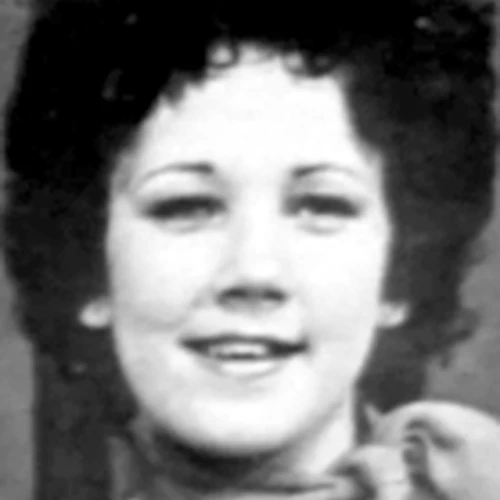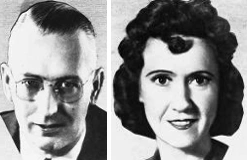
The Girl Scout Cookies Nobody Ate: The Disappearance of William and Margaret Patterson
On March 5, 1957, a neighborhood girl came by the Patterson home in El Paso, Texas, selling Girl Scout cookies. She remembered the visit clearly enough to describe it decades later. Margaret Patterson seemed very upset. Her husband, William, seemed unfriendly enough that the girl left as soon as she could. That evening, neighbors noticed unusual activity around the house. By the next morning, William and Margaret Patterson were gone, and in nearly seventy years since, neither one of them has ever been found.
A Prosperous, Troubled Marriage
William Patterson, known to nearly everyone as Pat, had met his wife Margaret in the early 1930s while working as a traveling salesman through Evansville, Indiana. The couple eventually settled in El Paso during World War II and built a genuinely successful life there. By the 1950s, Pat owned Patterson Photo Supply, a downtown business reportedly grossing around $20,000 a month, along with interests in a boat company and property across the border in Guaymas, Mexico. William and Margaret never had children, and Margaret doted instead on the couple's cat, a fixture in their household named Tommy.
Beneath that comfortable surface, the marriage had grown genuinely unhappy. William carried on at least one extramarital affair, reportedly involving a young woman he had given a Thunderbird as a gift, and by the time of the disappearance, he was also involved with a 20-year-old woman from Juárez, Mexico, named Estefana Arroyo Marfin. Margaret, by most accounts, dealt with the strain of her husband's infidelity through drinking, and neighbors and acquaintances described a couple that kept largely to themselves, with few close friends and little in the way of an active social life outside the business.
The Girl Scout Cookies
The neighbor who delivered that final, memorable visit was a woman named Jeri Cash, and her account of March 5, 1957, has remained one of the case's most quoted details across decades of retellings. She said Margaret seemed very upset during the visit, and that William seemed mean and unfriendly enough about her presence in the house that she left the cookies with Margaret and departed quickly. It was the last confirmed sighting of Margaret Patterson by anyone outside her immediate household.
A Car at the Garage and a Call in the Night
The following morning, March 6, William's prized Cadillac turned up at a local repair garage, dropped off at approximately 7:15 a.m. by someone who was not William himself, an unidentified stranger whose connection to the couple was never established. Separately, a business associate named Doyle Kirkland (in some accounts recorded as David Kirkland) said he received a phone call in the middle of the night, sometime around 3:00 a.m., from someone claiming to be Pat, who told him, "we are going away, I'll have to take Margaret away for a while."
Left Behind
Whatever departure that phone call was describing, it did not look like one anybody had actually planned for. Investigators who eventually gained access to the home found dirty dishes still sitting unwashed in the kitchen sink. Some of Margaret's clothing had been laid out on a bed, as if she had been getting ready to dress rather than pack to leave. No luggage appeared to be missing. The couple's bank accounts sat completely untouched. And Tommy, the cat Margaret was known to dote on constantly, had been left behind entirely, later found hungry and bedraggled by whoever eventually checked on the property. None of it fit the picture of two people who had calmly decided, of their own accord, to walk away from their life together.
Five Months of Silence
Perhaps the strangest detail in the entire case is how long it took anyone to formally report the Pattersons missing at all. An acquaintance named Cecil Ward did not report their disappearance to authorities until August 15, 1957, more than five months after the couple was last seen. That extended delay meant that whatever physical evidence might have existed at the house in the days immediately following March 5 and 6 had almost certainly been lost, disturbed, or degraded long before any investigator had reason to treat the property as a scene worth examining closely.
The Telegrams and Letters That Followed
In the weeks and months after the disappearance, a series of written communications arrived that were purportedly from William himself, each one raising more questions than it answered. On March 15, 1957, a telegram reached the couple's accountant, Herbert Roth, instructing him on how to manage the Pattersons' assets and specifically directing that a rival photographer named Doyle Kirkland be hired to run the photo supply business in William's absence. The telegram was signed W.H. Patterson, despite William's actual middle name being Durrell rather than anything beginning with H, a detail that immediately struck those who received it as odd.
A further letter arrived in June 1958, postmarked from Laredo, Texas, and dated May 29 of that year. It laid out detailed instructions for disposing of the couple's property and business interests, notably directing shares to people outside the family rather than to William's own living father and sister, an unusual choice for a man supposedly still alive and in control of his own affairs. The letter stated plainly that the couple would not be returning to El Paso and that by the time it was read, they would already be out of the country where no one could find them. Handwriting experts who examined the signature over the years were never able to reach a confident conclusion about whether it was genuinely William's or a forgery, leaving the letters exactly as ambiguous as everything else connected to the case.
The Mistress's Story
Estefana Marfin, William's mistress in Juárez, gave investigators an account that briefly seemed to offer real insight into William's state of mind in the disappearance's immediate aftermath. She said William had told her that when they come for me, I'll have to go in a hurry, a statement suggesting he anticipated some kind of confrontation or arrest. She later recanted significant parts of her account, denying at one point that she had ever received a letter from William that investigators believed had been sent to her in April 1957. A polygraph examination reportedly supported her later denials, leaving investigators without a clear sense of how much of her original story, if any, had been true.
Sightings in Mexico
In 1959, Sheriff Bob Bailey pursued reports out of Valle de Bravo, Mexico, where a taxi driver, an auto shop owner, and a hotel clerk each separately claimed to have identified the Pattersons passing through the area in September 1958. A hotel registration card had reportedly been signed Margaret M. Patterson, offering what might have been the single strongest piece of physical evidence supporting the theory that the couple was alive and living quietly across the border. That document, however, was later lost or discarded before it could be definitively authenticated, leaving the Mexico sightings, like everything else in the case, tantalizing but ultimately unprovable.
Blood on the Boat Propeller
The case's most disturbing development did not surface until 1984, twenty seven years after the Pattersons vanished. A man named Reynaldo Nangaray, an undocumented immigrant who had worked for the couple and later helped clean their house after their disappearance, came forward claiming he had witnessed blood in the garage at the time and had seen bloody sheets being removed from the property by a business associate. He also stated that he had found what appeared to be a piece of human scalp caught on the propeller of William's boat. Nangaray explained that fear over his own immigration status had kept him silent for nearly three decades. Before investigators could meaningfully verify or expand on his account, he died in a 1986 car accident, and the claims he raised were never independently confirmed through physical evidence.
Theories That Never Quite Fit
Over the decades, several competing theories have circulated about what actually happened to William and Margaret Patterson. William's own father, Luther Patterson, initially believed the couple had simply chosen to disappear and start over somewhere new, saying he always knew Pat and Margaret might take off like this someday, noting that his son had done similar things in the past. That theory struggles against the physical evidence left inside the house, since nothing about unwashed dishes, laid-out clothing, an abandoned cat, and untouched bank accounts suggests two people calmly executing a planned departure. Luther himself eventually changed his position over the following years, coming to believe, like most investigators, that his son and daughter-in-law were probably dead.
A more recent and considerably stranger theory emerged in 2022, when El Paso County Sheriff Leo Samaniego publicly suggested the possibility of Cold War espionage, noting that the way the couple got up and walked away from everything they owned suggested behavior consistent with an intelligence operative being ordered to abandon a cover identity on short notice. Some accounts connected to this theory claimed William had been seen photographing Fort Bliss, the nearby military installation, along with military shipments passing through the area. The FBI, when asked, reported having no records indicating the Pattersons had ever been treated as a national security concern. A more grounded theory, suggested by the Nangaray account, points toward violence inside the home itself, though no remains, confirmed forensic evidence, or surviving physical documentation has ever been recovered to support it definitively.
Still Unsolved
William and Margaret Patterson were formally declared legally dead in 1964, seven years after their disappearance, a legal designation that settled questions of estate and inheritance without ever answering the far more basic question of what actually happened to them. The El Paso Police Department has continued to treat the case as open, hoping that new information, or perhaps modern forensic techniques applied retroactively to whatever fragments of evidence remain, might finally resolve a mystery that has now stretched across nearly seven decades. What is certain is only this: on an ordinary afternoon in March 1957, a neighbor selling cookies for the Girl Scouts noticed something was wrong in that house, and by the next morning, whatever was wrong had already taken William and Margaret Patterson somewhere no one has ever been able to find.
Sources
- The Charley Project: William Durrell Patterson
- The Charley Project: Margaret M. Patterson
- Mental Floss: The El Paso Enigma, The Disappearance of William and Margaret Patterson
- Strange Company: A Vanishing in El Paso
- Texarkana Gazette: Couple's 1957 disappearance still an unsolved mystery in El Paso
- Washington Times: El Paso couple's 1957 disappearance still unsolved mystery
- Notorious Texas Crimes: The Mysterious Disappearance of William and Margaret Patterson