Missing for Eighteen Years Before Anyone Reported It: Walter Dunson
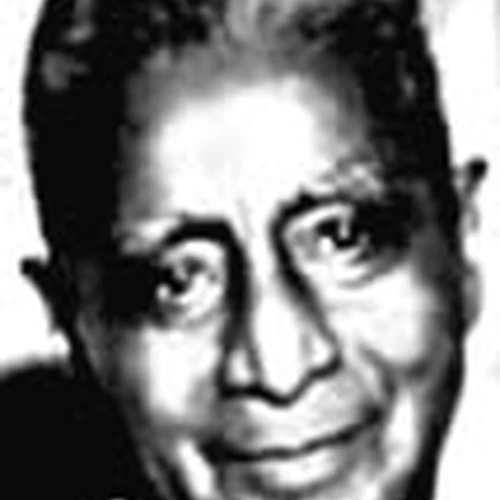
Walter Dunson was born July 2, 1900, in Marietta, Georgia, and eventually made his way to Cincinnati, Ohio, where he settled for the remainder of his life. He served in the First World War and later worked for decades at Oberhelman-Ritter, a now defunct iron foundry in the city's Camp Washington neighborhood, before retiring in 1970. Walter never legally married, but he fathered somewhere between eight and nine children over the course of his life. On June 5, 1998, according to an account given by his son Gary Adams, Walter was ninety seven years old and shopping with Gary at Findlay Market, a historic public market in Cincinnati's Over-the-Rhine neighborhood. Gary told police he stepped briefly into a butcher shop, and when he came back out, his father was simply gone.
A Story That Almost No One Could Confirm
Walter was reported wearing a light brown shirt, dark brown pants, black leather shoes, and a navy peacoat that day, carrying a black leather wallet with roughly fifteen dollars inside. Investigators working the initial missing persons report canvassed the market looking for witnesses who might have seen an elderly man wandering alone or in obvious distress. Almost none of the vendors or other shoppers at Findlay Market that day recalled seeing Walter there at all, a gap that, on its own, might simply reflect the ordinary limits of memory in a busy public market, but which took on considerably more weight once investigators began looking more closely at Gary's own account of his father's recent life.
A Trail That Went Cold in 1980
As detectives worked to build a fuller picture of Walter's life leading up to his reported disappearance, they found something disturbing: virtually no independent documentation of his existence extended past roughly 1980. Walter had not seen a doctor, filed an insurance claim, filled a prescription, held an active bank account, registered to vote, or checked out a library book in the eighteen years leading up to the day Gary claimed he vanished from the market. The most recent photograph investigators were able to locate of Walter dated back to 1973, a quarter century before his reported disappearance. According to Charley Project records on the case, the closest thing to independent evidence that Walter was still alive after 1980 came from a local pastor who reportedly recalled seeing him sometime before 1986, a single, secondhand recollection standing against an otherwise complete absence of documentation spanning nearly two decades.
Records further indicated Walter had been hospitalized on more than one occasion around 1980, treated for dementia and what investigators believed may have been a stroke, and that no hospital records existed for him as a patient anywhere after that period ended. Taken together, the evidence pointed investigators toward an unavoidable conclusion: Walter Dunson had most likely died sometime around 1985, thirteen years before his son ever reported him missing from a Cincinnati market.
A Letter That Arrived Four Days Before the Disappearance
The timing of Gary Adams's report to police took on particular significance once investigators traced it against Walter's Social Security records. Just four days before Gary claimed his father vanished at Findlay Market, the Social Security Administration had sent a letter to Walter's address requesting that he come in personally to verify he was still alive, a routine administrative check the agency periodically runs on elderly beneficiaries. Investigators concluded that letter had effectively forced Gary's hand. With a real verification requirement suddenly bearing down on a benefit arrangement that had apparently continued uninterrupted for well over a decade after Walter's actual death, Gary needed some explanation for his father's ongoing absence that wouldn't immediately expose how long he had already been collecting checks in a dead man's name.
A Conviction for the Fraud, Not the Disappearance
The Cincinnati investigation ultimately determined that Gary Adams had been misappropriating his father's Social Security benefits for roughly thirteen years, netting more than one hundred thousand dollars in payments intended for a man who had already died years before most of that money was ever collected. In the spring of 1999, Gary was convicted on twenty five separate counts of theft of public funds, and he was sentenced to twenty seven months in prison for the fraud. He was never charged with anything connected to his father's actual death, since investigators were never able to establish precisely when, where, or how Walter Dunson had died, only that the evidence overwhelmingly indicated he was already gone years before his son ever staged an elaborate disappearance to explain his absence.
A Case Built Entirely on What Was Missing
Walter Dunson's case stands out among missing persons investigations specifically because so little of it rests on any recovered physical evidence at all. There is no body, no crime scene, no forensic timeline connecting a specific date or location to his actual death. What exists instead is a documented absence, stretching back nearly two decades before anyone outside his own son ever reported him missing, an absence so complete across medical records, financial records, and civic records that investigators felt confident treating it as conclusive proof of death despite never locating Walter's remains or determining the specific circumstances that ended his life.
A Pattern Investigators Have Seen Before
Walter Dunson's case follows a pattern that has surfaced in a handful of other elderly missing persons investigations over the years, cases where a family member quietly continues collecting a deceased relative's government benefits for years, sometimes decades, before some external administrative trigger, a mandated in person verification, a routine audit, a computer system flagging an unusually long gap in contact, forces a decision between confessing to years of accumulated fraud or manufacturing a plausible cover story instead. What distinguishes Walter's case within that broader pattern is simply the scale of time involved. Thirteen years of collected benefits, and a documentary gap stretching back nearly two decades before anyone formally questioned his whereabouts, represents an unusually long run even among cases built around exactly this kind of concealment, a testament less to any particular sophistication on Gary Adams's part than to how easily an elderly, unmarried man with a large, informally connected family and no single consistent point of outside contact could simply stop appearing in anyone's records without triggering alarm for years at a stretch.
Presumed Gone, Still Formally Unresolved
More than a quarter century after Gary Adams reported his father missing from a Cincinnati market, Walter Dunson's actual fate remains formally unresolved even as investigators consider his death effectively certain. He is presumed to have died sometime in the mid 1980s, likely in his own home or somewhere connected to the ongoing health problems that had already hospitalized him repeatedly around that time, though no one has ever definitively established where his body ultimately ended up, if it was ever formally buried, cremated, or otherwise laid to rest at all. What remains documented, with unusual clarity for a case involving no forensic evidence whatsoever, is exactly how long a family member was willing to let that silence continue, and precisely what it took, a routine government letter asking a very old man to simply prove he was still alive, to finally force that silence into the open.
Sources