I'm Sure Her Heart's Not Beating: DonaMae Bourgeois Bayerl
DonaMae Bourgeois Bayerl was thirty eight years old, living with her husband, John H. Bayerl, and their two young daughters on Fennimore Lane in Muskego, Wisconsin. By every account from those who knew her, she was devoted to her girls. On May 6, 1979, according to the story John told police, the two of them had an argument, after which DonaMae left the house in the family car to cool off and clear her head. That part of his account was, at least in one sense, verifiable. The car did leave. It also came back. By that same evening, the vehicle was sitting in the garage exactly where it belonged. DonaMae herself was not with it. Her clothes remained in the house, untouched, and no sign of her turned up anywhere. John did not report her missing until May 9, three days later.
Blood in the Garage
When investigators eventually searched the Bayerl garage, they found bloodstains on the walls and on a bottle inside the family vehicle, later determined to match DonaMae's blood type. They also noticed something small but specific had gone missing from the garage door itself, a metal drift pin, the kind of hardware detail that would only draw attention if someone suspected it had been deliberately removed or damaged during whatever had actually happened there. Investigators also found John's behavior in the aftermath of DonaMae's disappearance genuinely suspicious on its own terms, noting he had done an unusually large amount of laundry in the days immediately following her vanishing, a domestic task that struck those who knew him as considerably out of character.
A Friend Who Kept the Letters
While John told police and their own daughters a story centered on an argument and a wife who simply left, DonaMae had spent years quietly building a very different, and far more detailed, record of her own. She maintained a close correspondence with one particular friend living in Michigan, writing to her somewhere between thirty five and forty letters a year, describing in that correspondence a pattern of spousal abuse she was living through at home. That friend kept the letters. Decades later, once investigators finally began taking a serious second look at the case, those letters offered something rare in a missing persons investigation this old, DonaMae's own voice, documented in her own handwriting over an extended period, directly contradicting the version of their marriage John had always presented publicly.
A Recorded Confession Thirty Years Later
The case's most damning piece of evidence did not surface until decades after DonaMae vanished, and it came not from any physical search but from John's own words, captured on a recorded phone call in 2009 with one of his and DonaMae's grown daughters. During that conversation, John told his daughter directly that something had happened, and that he was sure her mother's heart was not beating anymore, adding plainly that he did not think DonaMae was alive. It was an extraordinary admission to have on record, offered thirty years after he first told police she had simply driven off, and it became one of the central pieces of evidence prosecutors would eventually use against him.
An Arrest Four Decades Later
Detectives continued working the case quietly for years, pursuing multiple theories simultaneously, including the possibility that DonaMae had genuinely chosen to leave an abusive marriage of her own accord, a theory the department could not fully rule out given the documented history of abuse in her own letters. Detective Steve Westphal, who spent five years personally working the file, helped keep the investigation moving even as it stretched across decades without resolution, periodically reinterviewing family members and reexamining evidence that had sat largely untouched since the late 1970s. Muskego is a relatively small community, and the case had lingered in the background of local memory for so long that many residents who were adults in 1979 assumed, reasonably enough, that no resolution would ever come, that DonaMae's file would simply join the long list of Wisconsin missing persons cases that never get solved once the original investigators retire or pass away. In February 2019, nearly forty years after DonaMae disappeared, investigators finally arrested John Bayerl and charged him with first degree murder, a development that reportedly stunned some in the community who had either forgotten the case entirely or assumed, given how much time had passed, that it had gone permanently cold.
A Trial Built Entirely on What Was Left Behind
John went to trial in June 2019. He did not testify in his own defense, and his attorneys presented no witnesses of their own, instead arguing simply that prosecutors had failed to prove their case beyond a reasonable doubt. Prosecutors countered with a case built from the accumulated weight of decades old physical evidence and testimony, the bloodstains recovered from the garage back in 1979, the missing drift pin, John's own documented history of domestic violence, corroborated in court by testimony from two of his subsequent ex-wives describing similar patterns of abuse in their own marriages to him, and finally the 2009 recorded phone call in which he had all but confirmed to his own daughter that DonaMae was dead. After deliberating for more than five hours, the jury convicted John Bayerl of first degree murder. He was sentenced on August 30, 2019, to life in prison.
A Photograph Standing In for an Answer
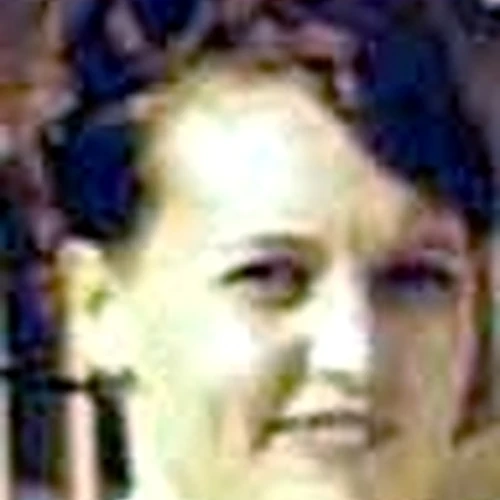
Long before John's arrest, forensic artists at the FBI laboratory in Quantico had produced an age progression image showing what DonaMae might look like at age seventy seven, working from old photographs of her alongside images of her parents, her sister, and her own daughter to construct the rendering. For DonaMae's daughters, Jodie Jarvis and Jackie Kort, that image came to represent something considerably larger than a forensic tool. Jackie described the photo as carrying real hope within it, hope for answers, and hope for closure, even though the rendering itself could obviously never actually be their mother, only an informed guess at what the passage of time might have done to her face had she lived.
No Body, Still, Even With a Conviction
Despite the conviction and the life sentence, DonaMae's actual remains have never been found, and John has continued to maintain his innocence, refusing to disclose where he left her body even after a jury found him guilty of killing her. That refusal has left DonaMae's daughters with the same fundamental gap so many families of murder victims without recovered remains are forced to live with, a legal resolution to their mother's death without any physical place to actually grieve her. Investigators have periodically returned to the property around the Bayerl home and surrounding areas of Muskego over the years, hoping additional searches informed by newer forensic techniques might eventually succeed where earlier ones failed, though as of the conviction no such search has produced results. The absence of remains has also meant that DonaMae's own death certificate and the practical, ordinary rituals that typically follow a loss, a funeral, a burial plot, a headstone with her name on it, remain either incomplete or symbolic in nature, built around an empty grave rather than an actual resting place.
Justice Without a Grave
More than four decades after DonaMae Bourgeois Bayerl vanished from her own Muskego home, the man responsible for her death is finally serving a life sentence for it, convicted largely on the strength of evidence collected at the time and a confession he never intended to make, delivered almost casually to his own daughter on a phone call thirty years after the fact. What DonaMae's daughters received, in the end, was validation of everything their mother had documented in her own letters years before either of them were even born into the family, proof that the story their father told them their entire lives had been a lie from the very beginning.
Sources
- The Charley Project: DonaMae Bourgeois Bayerl
- TMJ4: Forensic photo gives hope to daughters of mom missing since 1979
- TMJ4: Jury finds John Bayerl guilty in 40-year-old murder of his wife
- Madison.com: 40 years after wife disappeared from Muskego home, former Wisconsin man convicted of killing her