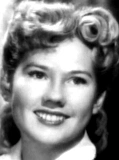
The Woman Who Vanished from the Swamp: The Disappearance of Audrey Alta Moate
On the morning after Thanksgiving in 1956, a hunter working the marshy edge of Lake Pontchartrain near Frenier Beach, Louisiana, came across a blue 1953 Nash Rambler parked in a spot where he had noticed it, seemingly occupied by a couple, the evening before. He assumed nothing of it at first. When he passed by again the following day and the car was still there, he looked closer and found a man's body slumped in the back seat, killed by a shotgun blast fired through the rear window. The dead man was Thomas Adolph Hotard Sr., a 46-year-old engineer, Scoutmaster, and father of two. His companion that night, a 31-year-old divorced mother named Audrey Alta Moate, was nowhere to be found. Nearly seventy years later, she still hasn't been.
A Two-Year Affair, and a Life Already Complicated
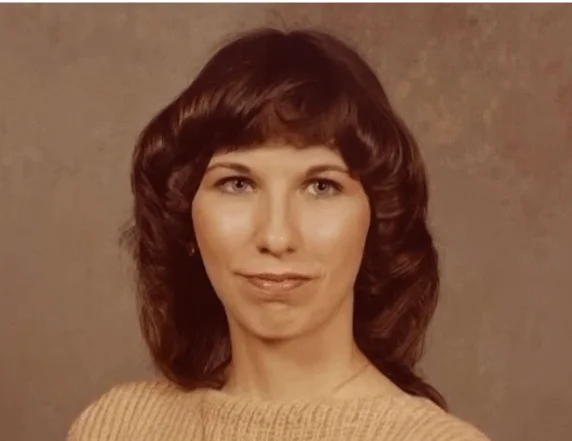
Audrey Moate worked as a buyer at the Kaiser Aluminum plant in Gramercy, Louisiana, a job that put her in a stable, respectable position even as her personal life had already been through significant upheaval. She was divorced, raising three children on her own, blonde, bespectacled, and by the time of her disappearance had been carrying on a relationship for roughly two years with Thomas Hotard, a married man with children of his own. Affairs of this kind, quiet and carefully hidden, were common enough in any era, but Audrey's situation held an additional secret that would not come fully to light until years later: she had, at some point during the affair, secretly given birth to a daughter, Jacqueline, while publicly claiming she was traveling to Missouri for mental health treatment. Evidence uncovered long afterward suggested she had never actually left the area during that stretch at all. The child's birth certificate listed Thomas Hotard as the father.
By November 1956, Audrey and Thomas had settled into whatever rhythm a long-running affair between two people with existing families can settle into, one that involved stolen evenings together, including the one that took them out to a quiet stretch of shoreline near Frenier Beach the night after Thanksgiving.
The Scene at Frenier Beach
What investigators pieced together from the scene painted a picture of sudden, brutal violence. Thomas Hotard had been shot in the back with a sixteen-gauge shotgun loaded with birdshot, killed at close enough range to leave no ambiguity about intent. Inside and around the car, investigators found a scattering of women's clothing, shoes, and eyeglasses, along with the partial contents of a purse strewn nearby, as though someone had either been forced out of the vehicle in a hurry or had fled it under her own power in a state of total disarray.
The physical evidence around the car told an even more specific story. Bare female footprints led away from the vehicle and into the surrounding woods, spaced unusually far apart in a pattern consistent with someone running rather than walking. Separately, a set of male boot prints was found roughly five feet from the car in a configuration suggesting a struggle had taken place there. Investigators also recovered a set of car keys lying on the ground nearby that did not belong to Hotard's Nash Rambler at all. Those keys were later matched to the ignition of Audrey's own Oldsmobile, raising the unanswered question of how her car keys had ended up on the ground at a crime scene involving a different vehicle entirely. A single motorcycle tire track was also documented at the scene, never conclusively tied to anyone.
Whatever happened in those woods that night, in whatever order the violence unfolded, it ended with one person dead in the car and another gone so completely that decades of searching swampland, wooded terrain, and waterways around Lake Pontchartrain never turned up so much as a single confirmed trace of her remains.
Suspects Who Were Never Charged
Investigators pursued several threads over the following years, each promising and each ultimately inconclusive. One of the most disturbing candidates was Edmond Joseph Duhe, a man who had actually volunteered to help search for Audrey in the aftermath of her disappearance, a detail that would prove chilling in hindsight. In 1959, Duhe was arrested in connection with the shooting of a different woman, Leonie Martinez, in a crime bearing similarities to what had happened at Frenier Beach. When police searched his belongings, they found a black cloth purse in the trunk of his car matching the description of Audrey's missing purse, along with pornographic materials and, more unsettlingly, multiple additional women's purses at his residence, items whose origins were never fully explained. Duhe failed two separate polygraph examinations regarding the Moate case specifically, yet he was never formally charged in connection with either Audrey's disappearance or Thomas Hotard's murder. He died in 2003, taking whatever he knew with him.
Audrey's ex-husband, George Moate, also drew scrutiny as a person of interest, particularly after newspaper reporting years later raised questions about the strength of the alibi that then-Sheriff Percy D. Hebert had publicly described as unshakable. That alibi was never as thoroughly tested in public record as the sheriff's confidence in it suggested it should have been.
A far stranger theory surfaced decades later, in 1989, when claims emerged suggesting that a local couple, Ernest Acosta and his wife Caroline, had actually killed both Hotard and Moate at their own home, with Ernest later helping to conceal Audrey's remains by hiding her body inside an old fish trap, or by some accounts a sunken Civil War-era cannon, submerged in the surrounding swamp. This theory has never been verified, and it sits awkwardly against the established physical evidence tying Hotard's death directly to the scene at Frenier Beach rather than to a private residence elsewhere. Investigators have never been able to reconcile the two accounts, and the swamp theory has remained exactly that, a theory, never confirmed by any recovered remains.
The Call That Changed Everything
Roughly two weeks after Audrey disappeared, on December 6, 1956, her former mother-in-law received a phone call from a voice she recognized. According to her account, the caller said, "Mom, this is Audrey. I'm in very bad trouble, and I need help." When pressed for her location, the line went dead. The call was traced to a neighborhood near the French Quarter in New Orleans, and Sheriff Hebert himself reportedly said afterward that he was beginning to believe Audrey Moate might actually be alive.
That belief gained further support from a string of sightings in the days that followed. Two waitresses at Cafe du Monde reported that a disheveled woman matching Audrey's description had come in one Wednesday night, ordered food, and then abruptly left after noticing the two of them examining a newspaper with her photograph in it. Separately, a New Orleans housewife named Marie McKay positively identified a photograph of Audrey as a woman who had come to her home the following afternoon asking about renting a room and using the telephone, noting that the woman's hair appeared to have been recently cut and dyed with a reddish tint, a change consistent with someone trying to alter her appearance to avoid recognition.
Working against the theory that Audrey had simply run off to start a new life, however, was her own financial trail. Her bank savings account sat completely untouched after her disappearance, and an uncashed payroll check from her job at Kaiser Aluminum was never redeemed. Someone planning a clean escape typically finds a way to access money eventually. Audrey never did, at least not through any account investigators were ever able to trace.
A Daughter, and an Unanswered Question
Seven years after Audrey vanished, when authorities or family members finally accessed her safety deposit box, they found only one item inside: Jacqueline's birth certificate, naming Thomas Hotard as the father. That detail confirmed the affair beyond any doubt and gave investigators a fuller picture of just how much of her life Audrey had been hiding behind a fairly ordinary public existence as a working single mother. Jacqueline was eventually raised by relatives after Audrey's own mother relocated to Oregon with her, and the little girl grew up without her biological mother, a mother whose fate was never confirmed one way or the other. Audrey's mother died in the 1980s. Jacqueline survives today, still without a definitive answer about what actually happened to the woman who gave birth to her in secret and then disappeared less than a year later.
A Case the Public Never Forgot
The disappearance of Audrey Moate and the unsolved murder of Thomas Hotard became one of Louisiana's most enduring cold cases, aided in part by a segment on the television series Unsolved Mysteries that introduced the story to a national audience decades after it happened. Journalists and amateur investigators have periodically revisited the case in the years since, most notably through a multi-part newspaper series examining archival records and interviewing surviving witnesses and their descendants, without ever producing the one piece of evidence that would finally settle things: Audrey's remains, or definitive proof that she lived on somewhere under a different name.
The St. John the Baptist Parish Sheriff's Office still lists the case as active. Nearly seventy years after that Thanksgiving weekend at Frenier Beach, no one has ever been charged with killing Thomas Hotard, and no one has ever confirmed what became of Audrey Alta Moate, whether she died in those woods alongside her lover, was murdered elsewhere and hidden by someone else entirely, or somehow survived long enough to make one desperate, unanswered phone call from a city she then vanished from completely.
Sources
- The Charley Project: Audrey Alta Moate
- Unsolved Mysteries Wiki: Thomas Hotard and Audrey Moate
- Unsolved.com: Kiss of Death
- L'Observateur: Column explores unsolved St. John Parish mystery: Audrey Moate's fate unknown 64 years after disappearance
- L'Observateur: What really happened to Audrey Moate? (Part 4 of 5): Evidence suggests Audrey Moate lived
- L'Observateur: Many graves dug in search for Audrey Moate
- True Crime Diva: Bayou Mystery: What happened to Audrey Moate?
- DoeNetwork: 2323DFLA - Audrey Alta Moate