Someone Is Trying to Kill Me: Tammy Lynn Leppert
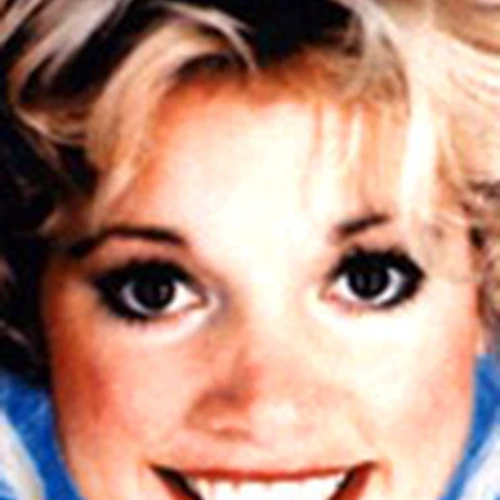
Tammy Lynn Leppert was born February 5, 1965, and began competing in beauty pageants at the astonishing age of four. By the time she was a teenager, she had entered nearly three hundred pageants and won roughly two hundred eighty titles, a career that eventually carried her to the cover of CoverGirl magazine in October 1978. She parlayed that early success into modeling and small acting roles, appearing in Little Darlings in 1980 and, in 1983 alone, in both Spring Break and Brian De Palma's Scarface, where she played the girl who distracts a lookout car during the film's infamous chainsaw scene. At eighteen years old, living in Rockledge, Florida, with her mother, modeling agent Linda Curtis, Tammy appeared to be a young woman with a genuinely promising career ahead of her.
A Change in Behavior No One Fully Explained
In the weeks leading up to her disappearance, those closest to Tammy noticed a marked shift in her behavior, one that, in hindsight, reads as a series of urgent, unheeded warnings. She told her own mother that someone was trying to kill her. She grew visibly paranoid about food, refusing to eat or drink from anything that had already been opened, insisting instead on food and drink she could personally verify had not been tampered with. A friend, Rick Adams, later said Tammy had told him she believed she had witnessed something she should not have seen, though she reportedly never specified exactly what that something was.
A Beach Trip That Never Happened
On July 6, 1983, Tammy left her Rockledge home before noon, telling her mother she planned to spend the day at Cocoa Beach with a friend named Keith Roberts. The two of them never actually made it to the beach. According to Roberts, the pair argued while driving, and he ended up dropping Tammy off in a parking lot near a well known local landmark called the Glass Bank, close to an Exxon station in Cocoa Beach. Investigators never treated Roberts himself as a serious suspect in her disappearance, though Tammy's own mother reportedly harbored fears about him regardless.
Surveillance footage from the area captured Tammy standing alone in the parking lot afterward. From there, she walked to a nearby public telephone and began making calls, first to her aunt, Ginger Kolsch, at her aunt's workplace, and separately to a friend named Ron Abeles. Neither person was available to actually take the calls when Tammy tried to reach them. She left messages for both of them that were later described as urgent in tone, though the specific content of what she said in those messages has never been made fully public. Those calls were the last confirmed activity anyone has ever traced to Tammy Lynn Leppert. She was never seen again.
Serial Killers Working the Same Ground
What makes Tammy's disappearance particularly unsettling, beyond the eerie premonitions she voiced in the weeks before, is the sheer proximity of documented predators actively operating in the same region of Florida during that exact period. Christopher Wilder, an Australian born serial killer eventually linked to at least twelve murders across the United States, was active in Florida at the time Tammy vanished, and his established method involved luring young women, often models or aspiring actresses, with promises of magazine photography work, a pattern that lined up unsettlingly well with Tammy's own career and appearance. Tammy's family pursued legal action connected to Wilder at one point, though they eventually abandoned that effort after developing their own doubts about whether he was actually involved in her specific case. Investigators themselves never established any direct link between Wilder and Tammy's disappearance.
A second individual investigators considered was John Crutchley, a convicted kidnapper and rapist who became known in true crime circles as the Vampire Rapist, and who was separately suspected of killing as many as thirty women over the course of his life. Crutchley died by suicide in prison in 2002, having never been definitively connected to Tammy's case either, leaving investigators with two documented predators who were geographically and temporally plausible suspects without ever producing the physical evidence needed to formally tie either one to what happened to her.
A Detective's Strange Phone Calls
Years after Tammy disappeared, a detective named Harold Lewis, who had worked on her case, reportedly received two separate, mysterious phone calls from an unidentified woman claiming that Tammy was actually still alive and was pursuing a nursing degree somewhere. Investigators were never able to trace or verify the caller's identity, and nothing about her claims was ever substantiated. The calls have remained one of the case's stranger, unresolved footnotes, neither confirmed as a genuine lead nor definitively dismissed as an outright hoax.
A Mother's Theory About Drugs and Money
Linda Curtis spent years after her daughter's disappearance developing her own working theory about what had actually happened, one rooted less in the serial killer angle investigators pursued and more in her daughter's specific, paranoid behavior in the weeks before she vanished. Curtis came to believe Tammy had somehow gained knowledge of local drug trafficking and money laundering operations in the area, and that whatever she had seen or learned was serious enough to get her killed to keep her quiet. Curtis never lived to see her theory confirmed or disproven. She died in 1995, still searching for answers about her daughter twelve years after Tammy disappeared. Tammy's sister has continued pursuing the case in the years since, keeping the investigation active well past the point where many similar cases from the era have simply gone cold and stayed there.
Evidence Lost to Poor Record Keeping
Compounding the case's difficulty, Tammy's own dental records were eventually lost due to what investigators have described as poor record keeping practices at the facilities that once held them, a loss that has directly complicated any future identification effort should remains ever be discovered that might plausibly belong to her. Her fingerprints suffered a similar fate. Despite these gaps, DNA analysis connected to the case has reportedly been completed using other available samples, giving investigators at least one modern forensic tool to work with if new remains or evidence ever do surface.
A National Audience, No National Answer
Tammy's case reached a considerably wider audience in September 1992, when the television series Unsolved Mysteries profiled her disappearance, introducing her story to a national audience nearly a decade after she vanished. That exposure produced renewed tips and public interest at the time without ultimately producing the breakthrough her family was hoping for. Age progressed images have since been created showing what Tammy might look like today, now in her sixties, a rendering built entirely from photographs of the teenage beauty queen and actress she was the last time anyone confirmed seeing her.
Still Gone
More than four decades after Tammy Lynn Leppert made a series of frantic, unanswered phone calls from a Cocoa Beach parking lot, she has never been found, and no one has ever been charged in connection with whatever happened to her. What remains is a case built around a young woman who seemed to sense her own danger clearly enough to voice it directly to the people closest to her, warning of poison, warning that she had seen something she should not have, only to have those warnings go unheeded until the moment she disappeared completely, leaving behind nothing more than a beauty queen's résumé, a small role in one of the era's most famous films, and a mother who spent the rest of her own life trying, and failing, to learn what had actually happened to her daughter.
Sources
- The Charley Project: Tammy Lynn Leppert
- Wikipedia: Tammy Lynn Leppert
- Grunge: The Bizarre Case Of Tammy Lynn Leppert's Disappearance
- All That's Interesting: Scarface Actress Tammy Lynn Leppert Disappeared In 1983, And She Hasn't Been Seen Since
- Vintage News Daily: The Disappearance of "Scarface" Actress Tammy Lynn Leppert in 1983