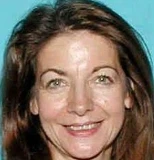
Nine Buckets of Concrete: The Murder of Sylviane Finck-Lozada
Sylviane Finck-Lozada was fifty one years old in July 2011, living on Springlake Drive off Bluebonnet Boulevard in East Baton Rouge Parish, Louisiana, with her husband, Oscar A. Lozada, and their four year old daughter. Born in Belgium, Sylviane stood five foot four, weighed a hundred twenty pounds, with brown hair and green eyes. She had spent thirteen years teaching French and Spanish at Brusly High School in nearby West Baton Rouge Parish, earning national board certification and completing a doctorate in 2009, the kind of long, dedicated career that made her a fixture in her students' and colleagues' lives well beyond an ordinary job.
Behind the professional accomplishment, Sylviane's marriage to Oscar had become troubled in ways that were already documented before she disappeared. In December 2010, roughly seven months before she vanished, Sylviane called police to report that Oscar had thrown things at her during an argument. Later that same month, she went to the hospital seeking treatment and told medical staff there that her husband had pushed her down, official records that would later stand as clear, contemporaneous evidence of the danger inside a marriage that, to outside appearances, may have looked far more ordinary.
A Call to Belgium, Then Silence
On July 5, 2011, Sylviane spoke by phone with family members back in Belgium, an unremarkable, ordinary check-in call with relatives across the Atlantic. It was the last confirmed contact anyone outside her household ever had with her. Investigators later determined that the very next day, July 6, surveillance video from a Lowe's store on South Mall Drive in Baton Rouge captured Oscar walking into the store with his young daughter, where he purchased fifteen bags of concrete mix and nine five gallon buckets complete with lids and luggage locks, an unusual and specific combination of purchases for a man whose wife had just gone missing without any public explanation yet offered.
Four days after Sylviane was last heard from, on July 9, 2011, Oscar and the couple's daughter boarded a flight from Baton Rouge to Dallas, Texas, and from there continued on to Venezuela, Oscar's native country. He did not return, and for years afterward, the specifics of where he had gone and what he had actually done remained maddeningly unclear to investigators working a case with no body, no witnesses, and a husband who had simply vanished across an international border with the couple's only child.
Blood in Nine Places
Crime scene investigators who processed the family's garage in the aftermath of Sylviane's disappearance found what would become central evidence in the case: suspected blood in at least nine separate areas throughout the space. When that blood was tested at the Louisiana State Police Crime Lab, it was confirmed to belong to Sylviane. Combined with the timing of Oscar's concrete and bucket purchases at Lowe's, made within twenty four hours of his wife's last confirmed contact with anyone, investigators developed a working theory that would eventually prove accurate almost to the letter, that Sylviane had been killed inside her own garage and that her body had been dismembered and encased in concrete for disposal.
For seven years, that theory remained just a theory, unconfirmed by any recovered remains and unpursuable in any meaningful legal sense with its primary suspect living freely somewhere outside American jurisdiction. A dedicated detective with the East Baton Rouge Parish Sheriff's Office continued working the case quietly during that stretch, an investigation that persisted even as Venezuela descended into the political and economic crisis that, by around 2016, prompted a mass exodus of people fleeing the country, Oscar reportedly among them as he relocated to Mexico.
An International Manhunt Ends
Mexican authorities eventually located and arrested Oscar Lozada in September 2018, seven years after Sylviane disappeared, and transferred him into the custody of the Maverick County Sheriff's Office in Eagle Pass, Texas, clearing the way for his extradition back to Louisiana to face charges. His arrest and extradition also brought resolution to a second, deeply personal thread of the case: the recovery of his and Sylviane's daughter, by then nearly a teenager, who had spent essentially her entire childhood outside the United States with the father investigators believed had killed her mother. She was returned to Baton Rouge, and her extended family in Europe traveled to Louisiana as custody proceedings began.
On October 5, 2018, following extensive questioning by East Baton Rouge Parish Sheriff's Office detectives, Oscar Lozada confessed. Over the course of a taped interrogation that ran roughly five and a half hours, Oscar admitted to strangling Sylviane during an argument. According to the confession, he then used circular and reciprocating saws to dismember her body inside the family's own garage while their four year old daughter slept inside the house, unaware of what was happening only steps away. He disposed of her remains inside buckets filled with the concrete he had purchased at Lowe's the day after her death, then dumped those buckets into waterways somewhere between Baton Rouge and New Orleans, a disposal method calculated enough that, more than a decade later, Sylviane's remains have still never been recovered.
A Confession Fought Over in Court
Oscar's defense team challenged whether that confession could even be used against him at trial, and the matter eventually reached the Louisiana Supreme Court, which ruled in November 2019 that the confession was admissible. That legal fight delayed the case for years beyond Oscar's initial 2018 arrest, and it was not until February 2023 that his murder trial finally began in East Baton Rouge Parish. Over the course of a week long trial, prosecutors built their case around the taped confession, the blood evidence recovered from the garage, the timing of the concrete and bucket purchases, and testimony from witnesses that included Sylviane's best friend and former colleague, neighbors, her sister, and Detective Michael Birdwell, who had led the original investigation back in 2011. The defense, for its part, offered a comparatively brief case, urging jurors to scrutinize the prosecution's evidence independently rather than accept it at face value.
On February 10, 2023, the jury found Oscar Lozada guilty of second degree murder and obstruction of justice. He was sentenced to life in prison without the possibility of parole, a conviction secured entirely without ever recovering Sylviane's body, built instead on forensic evidence from the garage where she died and on Oscar's own detailed, hours long account of what he had done to her.
More than a decade after that final phone call to her family in Belgium, Sylviane Finck-Lozada's case stands as one of the rarer instances in which a presumed homicide victim's killer was fully identified, confessed, tried, and convicted, even though her actual remains were never found. Her students, her colleagues at Brusly High School, and her family were left with a conviction and a life sentence, but never with a grave.
Anyone with any remaining information related to the case is asked to contact the East Baton Rouge Parish Sheriff's Office at 225-389-5577.
Sources
- The Charley Project: Sylviane Finck-Lozada
- WAFB: EBRSO: Oscar Lozada confesses to murder of wife in 2011
- WAFB: La. Supreme Court rules Oscar Lozada confession can be used during trial
- WAFB: Closing arguments, jury deliberation begin in Oscar Lozada trial
- WBRZ: Inside the arrest of Oscar Lozada, recovery of daughter
- The Advocate: Oscar Lozada convicted in killing and dismembering of wife
- The West Side Journal: Oscar Lozada confesses to 2011 murder of Brusly High teacher