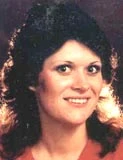
Eight Unaccounted Hours: The Disappearance of Sheree L. Warren
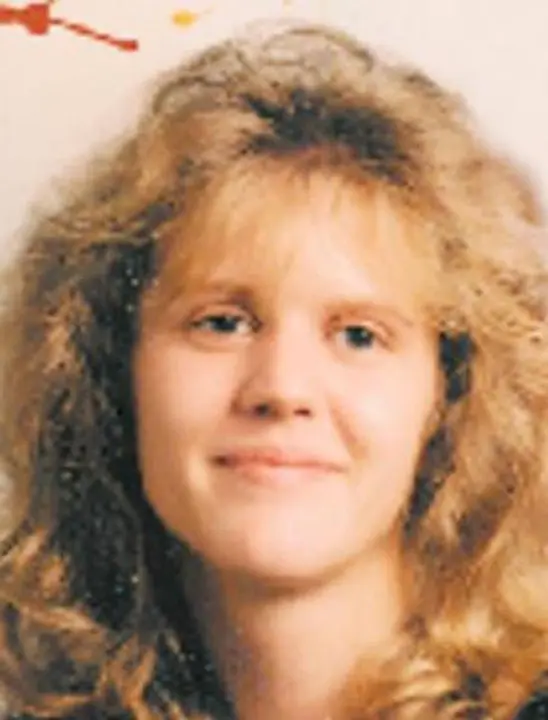
Sheree L. Warren, born Sheree Sorensen on February 6, 1960, was twenty five years old in October 1985, working in management training at the Utah State Employees Credit Union in Salt Lake City and living with her parents in Roy, Utah. She stood somewhere between five foot four and five foot seven, weighed around a hundred ten pounds, with dark brown hair, hazel eyes, and a chipped upper front tooth. Sheree had separated from her husband, Charles Warren, and the two were in the middle of a custody dispute over their three year old son. People who knew her described her as kindhearted and generous, a woman navigating a difficult divorce while also dating another man, Cary Hartmann, a reserve police officer with the Ogden Police Department.
On the evening of October 2, 1985, Sheree left work around 6:30, intending to meet Charles at a nearby car dealership so she could drive him to Ogden, part of the ordinary logistics of co-parenting during a separation. She never arrived. She also never made it home to her parents' house in Roy that night. Her maroon 1984 Toyota Corolla, license plate VSW649, vanished right along with her.
Two Men, Two Stories
Investigators quickly identified two obvious people to question: the estranged husband Sheree had been on her way to meet, and the boyfriend she had been seeing during the separation. Charles Warren told police he had actually cancelled their planned meeting that evening in order to go for a jog instead, an alibi investigators were never able to independently verify. His first wife, whom he would go on to remarry not long after Sheree's disappearance, corroborated his account of his whereabouts that night, though police found the timing of that remarriage suspicious enough that her corroboration did little to ease their doubts about him. Both Charles and Cary Hartmann initially agreed to submit to polygraph examinations, but both men ultimately withdrew their cooperation before the tests were completed.
Hartmann offered his own account, telling investigators he had overheard some kind of verbal dispute between Sheree and Charles around the time she disappeared. Separately, two women later told investigators they recalled overhearing a loud argument involving Hartmann and Sheree around the same period, followed by a loud thump and then silence, a detail that, if accurate, pointed suspicion squarely back at Hartmann rather than away from him. Investigators also discovered a troubling gap in Hartmann's own work timecard, showing eight unaccounted hours on October 3, the day after Sheree vanished, a window of time that would have been more than enough to make the roughly four hundred mile drive to Las Vegas.
A Car Found Four Hundred Miles Away
More than a month after Sheree disappeared, her Toyota Corolla turned up at the Aladdin Hotel and Casino in Las Vegas, showing clear signs of having been parked there for an extended period. The discovery deepened the mystery rather than resolving it. Nothing about Sheree's life or plans suggested she had any reason to travel to Las Vegas on her own, and investigators were left trying to explain how her car had covered that distance without her, whoever had driven it there having apparently abandoned it in a location designed to suggest she might have simply run off on her own.
A Boyfriend Who Turned Out to Be a Serial Rapist
In the years that followed, Cary Hartmann's own history caught up with him in ways that cast his connection to Sheree's disappearance in an increasingly dark light. In 1987, he was convicted on charges including first degree felony aggravated sexual assault and aggravated burglary, connected to a series of sexual assaults against women in the Ogden area during the 1980s, and he later accepted a plea deal admitting to rape in a separate case as well. A witness who knew Hartmann personally also told investigators they had seen him trespassing on private property in the mountains near Causey Reservoir on October 6, 1985, just four days after Sheree vanished, a sighting that would eventually make that stretch of mountain terrain one of the most closely scrutinized locations in the entire investigation. Hartmann has denied any involvement in Sheree's disappearance and was never charged in connection with her case.
Hartmann spent more than thirty years in prison connected to his sexual assault convictions before being released in May 2019 after completing a sex offender treatment program. At his parole hearing, he told the board that pornography had been what he called his drug of choice, explaining that it preceded and fueled his pattern of cruising for women and selecting victims. A clinical social worker who evaluated him at the time assessed him as presenting a below average risk of reoffending. That assessment did not hold. In April 2024, Hartmann, then seventy five, was returned to custody after a parole violation, having reportedly bypassed content filters on his television and cellphone and purchased a laptop specifically to access pornography before returning it, behavior that directly violated the terms of his release.
A Third Name in the File
Sheree's case has also intersected with one of Utah's more notorious killers. Douglas Lovell, who pleaded guilty and was later convicted at trial and sentenced to death for the 1985 murder of Joyce Yost, a woman he killed specifically to prevent her from testifying against him in a rape case, was questioned by investigators in connection with both Sheree's disappearance and the separate 1983 disappearance of another Utah woman, Theresa Greaves. Lovell has maintained his innocence in both cases, and investigators reportedly found him cooperative during questioning, though nothing connecting him directly to Sheree's disappearance was ever substantiated. Theresa Greaves's own remains were eventually located and identified in 2015, nearly thirty two years after she vanished, a resolution that has not yet come for Sheree.
A Mountain Searched, and Searched Again
Investigators have periodically returned to the mountains surrounding Causey Reservoir over the decades, driven by the belief that Sheree's remains may have been left somewhere in that terrain, consistent with the sighting of Hartmann trespassing there days after she vanished. Roy City Police conducted a day long search of a specific, suspicious site near the reservoir based on renewed leads, but the search turned up no evidence connecting it to Sheree's case. Richard Moss, who had trained Sheree at the credit union before her disappearance, spoke afterward about what a discovery, even a grim one, would still mean for the case, saying he hoped investigators could find a body somewhere, someway, sometime, because without one there was only so much more the case could ever accomplish.
Sheree's family had her formally declared legally dead in 1990, five years after she vanished, though her case has never been closed and remains actively investigated to this day, featured prominently in KSL's investigative podcast series COLD. Charles Warren, her estranged husband and one of the case's two original suspects, died in 2022 without ever facing charges connected to her disappearance. Cary Hartmann remains incarcerated on his parole violation, a documented and convicted predator whose exact role, if any, in what happened to Sheree Warren on that October evening in 1985 has never been proven in any courtroom.
Anyone with information about Sheree L. Warren's disappearance is asked to contact the Roy City Police Department.
Sources
- The Charley Project: Sheree L. Warren
- The Cinemaholic: Sheree Warren, What Happened to Her? Is She Dead or Alive?
- KSL: Suspect in Utah cold case back in prison on unrelated parole violation
- FOX13 Now: Nothing found at suspicious site during 1985 cold case investigation, Roy police say
- CBS News: Genealogist finds family of murder victim Theresa Greaves, found slain after 32 years missing
- The Charley Project: Joyce Lynn Yost