The Phone Booth Call: The Disappearance of Kimberly Alice King
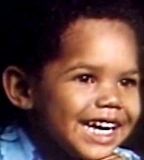
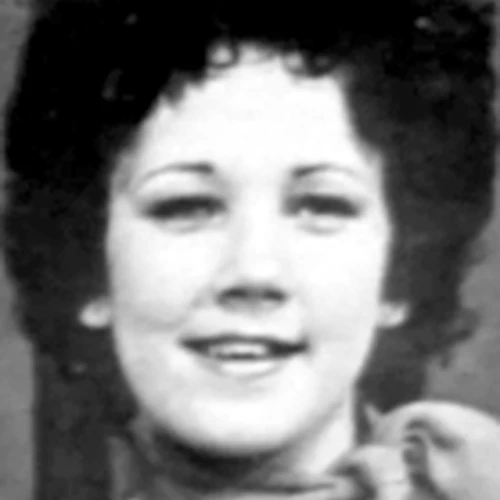
Kimberly Alice King, known to her family as Kim, was twelve years old in September 1979, living in Warren, Michigan. She stood five foot five, weighed a hundred five pounds, with blonde hair and blue eyes, a small gap between her upper front teeth, and a peg shaped upper incisor. On the evening of September 15, 1979, Kim was staying overnight at a friend's house directly across the street from her grandparents' home. Around eleven that night, she called her sister from an outdoor payphone, telling her she had snuck out of her friend's house and was calling from a phone booth she described as only a short walk away. One witness would later place her location several miles from that description, a discrepancy investigators were never able to fully resolve. Kim never returned to her friend's house that night, and she has never been seen or heard from again.
A Case That Took Decades to Reclassify
In the immediate aftermath of her disappearance, investigators initially treated Kim's case as a possible runaway situation, a common early classification for a missing preteen last known to have deliberately left where she was supposed to be. That classification did not hold up over time. Investigators eventually determined Kim had no history of running away or the kind of behavioral pattern that classification would typically require, and her case was formally reclassified as a non-family abduction with foul play strongly suspected. Unconfirmed reports at various points suggested she might have traveled toward Grand Rapids, Michigan, though nothing ever substantiated those leads.
A Suspect Who Died With Other Victims' Jewelry
For years, investigators focused significant attention on a man named David Norberg, who lived just two streets away from Kim's family at the time she vanished. Norberg's name had also surfaced in connection with the notorious, still unsolved Oakland County child killer case, a series of child murders that terrorized the Detroit metro area between 1976 and 1977. Norberg died in a car accident in 1981, and in the aftermath of his death, jewelry allegedly belonging to victims connected to the Oakland County killings was reportedly found among his personal belongings, a discovery that deepened suspicion around him considerably even without any formal charges ever being filed. In 1999, investigators exhumed Norberg's remains specifically to run DNA comparisons against a single strand of unidentified hair recovered from Timothy King, one of the confirmed Oakland County victims. When results came back in November 2002, Norberg's DNA did not match that hair sample, and while investigators acknowledged the result excluded him from that specific piece of evidence, they stopped short of ruling him out entirely from either the Oakland County killings or Kim's disappearance specifically, given that Kim's own remains had never been recovered to test against him directly.
A Convicted Killer's Boasts
The case's focus shifted dramatically in 2018, when investigators identified a new central suspect: Arthur Ream, a man already serving a life sentence for the 1986 murder of thirteen year old Cindy Zarzycki. Ream had lured Cindy to an Eastpointe Dairy Queen by promising to take her to a surprise birthday party for his son, whom Cindy had been dating, then killed her and buried her in a wooded area of Macomb Township. He eventually helped investigators locate her remains, drawing them a map and personally guiding them to the burial site, while claiming her death had been an accident during a sexual assault, saying she had fallen down an elevator shaft in a warehouse.
While serving that life sentence, Ream reportedly boasted to fellow inmates about having killed between four and six other people over the years, comments that eventually reached investigators and prompted them to look specifically at Kim King's case, given that Ream had been out on parole on the exact date she disappeared in September 1979. In 2018, and again in 2019, police conducted extensive excavations of the same wooded Macomb Township property where Cindy Zarzycki's remains had been found, searching specifically for evidence connected to as many as seven other potential victims, Kim King's case chief among them. Those searches never turned up any additional remains.
Warren Police Detective Sergeant Jim Twardesky, who reopened Kim's case in 2017 and continued investigating it in the years since, has said he remains absolutely convinced that Ream was responsible for Kim's disappearance and death, even without physical evidence confirming it. In 2022, Ream himself sent a letter to Kim's sister, Konnie Beyma, directly denying any involvement, writing that he hoped she would understand that he had nothing to do with her sister's disappearance. Beyma has said she has struggled ever since with whether that letter reflected genuine innocence or simply another manipulation from a man who had already proven capable of murdering a child and lying about the circumstances for years afterward. Speaking about her own uncertainty, Beyma described Ream's involvement as a very strong possibility, even a probability, while acknowledging she does not know with complete certainty.
Dying With the Answer
Arthur Ream died of cancer in a Michigan prison in August 2024, taking with him whatever specific knowledge he actually held about Kim King and the other victims he had claimed responsibility for in conversations with fellow inmates. His death effectively closed off what had become, in recent years, investigators' clearest remaining path toward a confession or a location for Kim's remains, leaving her case exactly where it has sat for the better part of forty five years: strongly suspected, publicly tied to at least one documented, convicted child killer, and completely unresolved.
Kim's sister has said she remains relieved that detectives have continued investigating despite the lack of any final resolution, and has publicly appealed for anyone with knowledge of comments Ream may have made about Kim over the years to come forward, even now that he is no longer alive to be questioned directly. Kim King would be in her late fifties today had she lived. Her case remains open with the Warren Police Department, a phone booth call to her sister on an ordinary September night in 1979 still standing as the last confirmed trace of a girl two separate suspected killers, one dead in a 1981 car crash with other victims' jewelry in his possession and one who died in prison decades later still boasting about bodies he never fully accounted for, have both been connected to without either case ever reaching a courtroom.
What makes Kim King's case especially difficult to close, even compared to other cold cases connected to Ream, is the sheer number of years and suspects layered on top of one another. Investigators spent decades focused on David Norberg, a neighbor with a plausible connection to a documented series of child murders, before DNA testing eventually complicated that theory without ever fully eliminating him. Only after that did Ream's name enter the case at all, arriving nearly forty years after Kim vanished, based not on physical evidence tying him to her specifically but on secondhand accounts of boasts made to other inmates. Two credible theories, spanning two different men and roughly two different decades of investigative focus, have left Kim's family with more possible explanations than any one family should have to hold at once, and still no confirmed answer to any of them.
Anyone with information about Kimberly Alice King's disappearance is asked to contact the Warren Police Department at 810-574-4700.
Sources
- The Charley Project: Kimberly Alice King
- WXYZ Detroit: Family of suspected victim says there's no closure in Arthur Ream's death
- Fox News: Convicted killer and prime suspect in Michigan girl's disappearance bragged about other murders, cops
- Inside Edition: What Happened to Kimberly King? Cops Ramp Up Search for 12-Year-Old Girl Missing Since 1979
- The Detroit News: Macomb site search puts new focus on child killer
- The Resource Center for Cold Case Missing Children's Cases: Kimberly Alice King