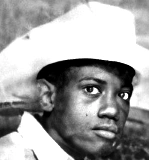
There Was Nowhere Else to Put It: The Disappearance of Shannon Verhage
Shannon Dale Verhage was 11 months old when she disappeared from Cedar Springs, Michigan, on June 3, 1997, along with her 19-year-old mother, Rachel Timmerman. Rachel was picked up that day by a man she and her family believed was going by the name Delbert, and the two of them left saying they would return in a couple of hours for dinner. They never came back. What followed was the murder of a young mother who was only two days away from testifying against her own accused rapist, the recovery of her body from a lake chained to cinder blocks, and a legal case so unusual in its details that it produced the first death sentence handed down by a federal court sitting inside a state that had abolished capital punishment more than a century and a half earlier. Shannon herself has never been found.
An Accusation That Set Everything in Motion
In August 1996, Rachel Timmerman reported to authorities that a man named Marvin Charles Gabrion II had sexually assaulted her, an alleged attack that occurred after Gabrion drove her away from a card game and forced two other passengers, a man named Wayne Davis and Gabrion's own nephew, out of the vehicle. Gabrion was arrested and charged with rape, and Rachel was set to testify against him at trial.
Two Days Before Court
Rachel and Shannon disappeared on June 3, 1997, just two days before Gabrion's trial on the rape charge was scheduled to begin. Rachel had told her family she was going on a date with a man called Delbert. In the days that followed, letters arrived that appeared to be written in Rachel's own handwriting, addressed to her family, the prosecutor, and the presiding judge, claiming that she had fabricated the rape allegation entirely and wished to have the charges dropped. Her family initially believed these letters were genuine, and for a time, no formal investigation into her disappearance was launched at all.
A Body in Oxford Lake
That changed on July 5, 1997, when fishermen discovered Rachel's body in Oxford Lake. She had been weighted down with cinder blocks, her face wrapped in duct tape, and according to the coroner's findings, she had drowned while still alive at the moment she was submerged. Shannon was nowhere to be found, and despite extensive searching in the weeks and years that followed, she never has been.
Evidence That Pointed Directly at Gabrion
Investigators moved quickly once Rachel's body was recovered, and the physical evidence they gathered pointed unmistakably toward Marvin Gabrion. Padlock keys matching those used to secure the cinder blocks were found at his residence, along with concrete blocks bearing identical paint markings. A search of his campsite turned up bolt cutters, chain, duct tape, and components from a baby bottle, items that connected him directly to both the method of Rachel's murder and to the presence of an infant at the scene.
A Handyman Who Vanished Too
Suspicion also fell on Gabrion's own handyman, John Weeks, believed by investigators to have helped arrange the fatal meeting between Rachel and Gabrion under the guise of a date. Weeks himself disappeared under suspicious circumstances not long afterward, with Gabrion reportedly the last person known to have seen him alive in June 1997. Weeks has never been found.
A Pattern That Extended Further
Gabrion's connection to disappearances did not end with Rachel, Shannon, and John Weeks. He had been living in the home of a man named Robert Allen and cashing Allen's Social Security checks up until 1997, despite Allen having vanished back in 1995, a scheme that eventually led to Gabrion's conviction for Social Security fraud and a five year federal sentence in 1998. Wayne Davis, the family friend who had witnessed events connected to the rape allegation and who was scheduled to testify at Gabrion's original trial, disappeared himself in February 1997, with his body eventually surfacing in Twinwood Lake in July 2002. Gabrion has remained the prime suspect in the disappearances of both Allen and Davis, along with John Weeks, though he was never formally charged in connection with any of those three cases.
A Trial Marked by Outbursts
Gabrion's 2002 trial for Rachel's murder featured extensive testimony describing a documented history of violence on his part, including prior physical and sexual assaults, along with accounts from two separate witnesses whose homes were set on fire following altercations with him, and another woman who described Gabrion pointing a rifle at her and her young child. Gabrion's own behavior in the courtroom proved just as disruptive, including an incident in which he punched his own defense attorney in the face, part of a pattern of conduct that ultimately totaled 40 separate major infractions during the proceedings. When Gabrion requested to represent himself, the presiding judge denied the request specifically due to his disruptive conduct, a decision later affirmed on appeal.
A Legally Unprecedented Death Sentence
Rachel's murder carried a legal significance that extended well beyond Gabrion's own guilt or innocence. Michigan had abolished capital punishment all the way back in 1846, one of the earliest jurisdictions in the world to do so. However, because Rachel's body had been discovered within the federally owned Huron-Manistee National Forests, federal prosecutors retained jurisdiction and the ability to pursue the death penalty under United States law regardless of Michigan's own longstanding prohibition. When Gabrion was sentenced to death in 2002, he became the first person sentenced to death by a federal court sitting within a state that did not itself allow capital punishment, a distinction unmatched since the federal death penalty had been reinstated in 1988.
A Confession to Fellow Inmates
While incarcerated following his conviction, Gabrion reportedly told two fellow inmates that he had killed baby Shannon specifically because, in his own words, there was nowhere else to put her, a chilling admission that offered the closest thing to an explanation the case has ever produced for what happened to the youngest victim, even as it provided no actual information about where her remains might be located.
A Death Sentence That Went Back and Forth
Gabrion's death sentence did not move through the appeals process smoothly. In 2011, a three judge panel on the federal appellate court overturned the sentence, reasoning that jurors should have been informed that Michigan's own state prosecution would have precluded any possibility of capital punishment had the case been tried there instead of federally. That reversal did not stand. In 2013, the full Sixth Circuit Court of Appeals, sitting en banc, reinstated Gabrion's death sentence, and he remained on federal death row for over a decade afterward, held first at the United States Penitentiary in Terre Haute before eventually being transferred to the United States Medical Center for Federal Prisoners in Springfield, Missouri.
A Commutation on the Eve of Christmas
On December 23, 2024, President Joe Biden commuted Marvin Gabrion's federal death sentence to life imprisonment without the possibility of parole, one of 37 federal death row commutations issued that same day. Rachel's father, Tim Timmerman, spoke publicly in the aftermath, expressing anger not necessarily at the substance of the decision itself but specifically at its timing. Speaking to a Grand Rapids television station, Timmerman said the timing felt despicable, explaining that as the family of a victim, he felt Biden had offered what amounted to a Christmas gift to the perpetrators of murder while offering only additional pain to the families of the victims left behind. Timmerman clarified that he did not necessarily disagree with the decision to commute the death sentence itself, but that the choice to announce it in the days immediately before Christmas compounded an already painful anniversary for his family.
Still Missing
Nearly three decades after Shannon Dale Verhage disappeared alongside her mother on a June afternoon in rural Michigan, she has never been found, and her case remains one of the most quietly devastating threads within a broader story that has already produced one of the most legally unusual death penalty cases in modern American history. Marvin Gabrion remains alive today, serving life without parole rather than facing execution, having never disclosed where Shannon's remains might actually be, leaving her family, like the families of Robert Allen, Wayne Davis, and John Weeks before them, with a conviction that answered the question of who was responsible without ever answering the question of where their loved one actually is.
Sources
- The Charley Project: Shannon Dale Verhage
- Wikipedia: Marvin Gabrion
- ClickOnDetroit: Michigan girl still missing 25 years after mother murdered, found dead in lake, Killer on death row
- WOODTV: Victim's father angered at 'despicable' timing of death sentence commutation
- Fox17: Presidential commutation spares life of man convicted of brutal 1997 murder
- Death Penalty Information Center: First Federal Death Sentence in Non-Death Penalty State Overturned
- FindLaw: United States v. Gabrion II (2011)
- FindLaw: Death Sentence Upheld in Marvin Gabrion Case