Envelopes Full of Sand: The Disappearance of Evelyn Scott
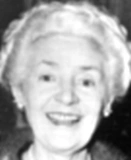
Evelyn Throsby Scott was 63 years old, a wealthy widow with nearly a million dollars to her name, when she disappeared from her Bel Air home on May 16, 1955. Her husband's explanation was almost absurdly mundane: the two of them had gone out to test drive a new car that afternoon, and while he ran a quick errand to buy tooth powder, she simply vanished. She left behind her eyeglasses and her denture plate, both items she genuinely could not do without on a daily basis. She also, unbeknownst to almost everyone at the time, left behind a husband who had already spent months quietly emptying her bank accounts and forging her signature. Her case would go on to become the first conviction for murder in American legal history secured without a body ever being found.
A Wealthy Widow and a New Husband
Evelyn had been born in 1892 and had, by the time she met a man named Robert Leonard Ewing Scott at a society gathering, already accumulated considerable personal wealth as a widow. The two married in Mexico in September 1949, and Evelyn brought a substantial fortune into the marriage, money that would end up funding a lifestyle far beyond what Ewing could have supported on his own.
A Marriage of Control and Theft
Over the six years that followed, Ewing gradually took over management of Evelyn's finances, a process that acquaintances and later investigators would come to understand was considerably darker than ordinary spousal financial management. Multiple people who knew the couple reported seeing bruises on Evelyn during the marriage, and Ewing himself would later admit to having struck her. Behind the scenes, he was doing something even more damaging to her long term security: forging her signature and systematically draining her assets. During those six years, records eventually showed Evelyn had cashed out roughly $223,000 worth of securities and drawn approximately $180,000 in income from her estate, money that, rather than supporting her own life, was being funneled through Ewing's control with her name attached to transactions she had never actually authorized.
The Day of the Tooth Powder
On the afternoon of May 16, 1955, Evelyn and Ewing went out together to test drive a new car, an entirely unremarkable errand for a well-off couple in 1950s Los Angeles. According to Ewing's account, he left her briefly to go buy tooth powder, and when he returned, she was gone. She had been wearing a tan suit, a small hat, and her gold wedding band that day. What she had not taken with her were her eyeglasses or her denture plate, containing five false teeth, items essential to her daily functioning that no one voluntarily leaving on a trip, however sudden, would reasonably leave behind.
A Husband Who Wouldn't Report Her Missing
What followed Evelyn's disappearance was, in retrospect, almost as suspicious as the disappearance itself. Ewing never filed a missing persons report for his own wife. When friends and relatives began asking where Evelyn had gone, he offered a shifting set of explanations, telling some that she had simply run off on her own and telling others that he had placed her in a sanitarium to treat what he described as her alcoholism. By July 1955, just two months after Evelyn vanished, Ewing had already begun a relationship with a divorced woman named Harriet Livermore, moving on with striking speed for a man whose wife had supposedly just disappeared under mysterious circumstances.
The matter did not become public until March 5, 1956, nearly a year after Evelyn vanished, when her brother, E. Raymond Throsby, grew concerned enough about her prolonged and unexplained absence to file a petition seeking guardianship over her estate. That legal filing was what finally brought Evelyn's disappearance to the attention of police and set a real investigation into motion.
Envelopes Full of Sand
Once investigators started examining Evelyn's financial affairs, the scope of what Ewing had been doing became clear almost immediately. When authorities opened her safe deposit boxes, expecting to find the valuables and documents such boxes typically hold, they instead found envelopes carefully filled with sand, a crude but effective trick meant to disguise, for as long as possible, the fact that the actual contents had already been removed and liquidated. Investigators determined that a dozen or so bank accounts and safe deposit boxes connected to Evelyn had been effectively looted over the preceding months.
Dentures in a Neighbor's Yard
A search of the Scott property and its surrounding landscaped grounds turned up physical evidence that made the case for foul play considerably harder to dismiss. Inside the home's incinerator, police found metal snaps from women's undergarments that had been burned. On an adjoining lot next door, carelessly buried beneath a pile of leaves, investigators discovered a set of false teeth and a pair of eyeglasses, later positively identified as belonging to Evelyn Scott, along with medication she took for her diverticulitis condition. The items that Evelyn would never have left behind voluntarily had, it appeared, simply been discarded and hastily hidden rather than packed for any trip.
Charged, Then Gone
In April 1956, Ewing Scott was formally charged with grand theft and forgery connected to the financial crimes uncovered during the investigation, thirteen separate counts in total. Released on bail while those charges proceeded, he made the decision that would ultimately seal his fate: he fled the country, crossing into Canada in 1957 rather than face trial. He was finally apprehended on April 9, 1957, while attempting to cross back into Canada, and it was at that point that a murder charge was added to the existing counts of theft and forgery already pending against him.
A Historic Trial Without a Body
Evelyn Scott's remains had never been found, and by the time Ewing faced trial, none ever would be. What made the case remarkable, and what has kept it studied in American legal circles ever since, was that prosecutors moved forward anyway, building their case entirely on circumstantial evidence: the forged signatures, the drained accounts, the sand-filled deposit boxes, the burned clothing fragments, and the personal items Evelyn would never have abandoned, all pointing toward the same conclusion even without a body to examine. The trial concluded with Ewing's conviction on charges connected to Evelyn's murder, and he received a sentence of life imprisonment in 1959. His appeal, which specifically challenged the sufficiency of the corpus delicti, the legal requirement that a crime actually be proven to have occurred before someone can be convicted of committing it, was rejected by the appeals court in December 1959, formally establishing the case as the first conviction for murder in United States legal history obtained without the victim's body ever being recovered. He was transferred to San Quentin State Prison to begin serving his sentence in 1960.
Prison, Release, and a Confession
Ewing Scott spent close to two decades in prison, at one point refusing an opportunity for parole in 1974 rather than accept the conditions attached to it. He was finally released in 1978, by then well into his eighties, still publicly insisting on his own innocence and continuing to maintain that his wife was not actually dead at all. That public stance would eventually crack, though only privately and only near the very end of his life. Journalist Diane Wagner, researching a book about the case that would eventually be published as Corpus Delicti, interviewed Ewing extensively during the 1980s, and according to her account of their final conversation in 1984, he finally confessed to her that he had killed Evelyn by striking her in the head with a rubber mallet, and that he had buried her body in the desert roughly six miles east of Las Vegas, Nevada. That confession, offered decades after the crime to a journalist rather than to any court, has never been independently confirmed, and no search of the area he described has ever recovered Evelyn's remains. Ewing Scott died in 1987 at the age of 90, taking whatever full truth he possessed to his own grave.
Still Missing
Evelyn Throsby Scott has never been found, not in the desert outside Las Vegas, not anywhere else investigators have ever searched in the seventy years since she vanished on what was supposed to be an ordinary afternoon spent test driving a new car. Her case remains a foundational reference point in American legal history, cited in the decades since as the precedent establishing that a murder conviction can stand on circumstantial evidence alone, without a body, so long as that evidence is compelling enough to eliminate any reasonable doubt. It is a strange kind of legacy for Evelyn to have left behind, more remembered today for the legal principle her disappearance helped establish than for the life she was living before her husband decided that a set of forged signatures and a hastily buried pair of dentures would be enough to make her vanish for good.
Sources
- The Charley Project: Evelyn Throsby Scott
- Wikipedia: Robert Leonard Ewing Scott
- DoeNetwork: 2476DFCA - Evelyn Throsby Scott
- Justia: People v. Scott, California Court of Appeal
- FindLaw: People v. Scott (1959)
- Websleuths: Evelyn Throsby Scott, 63, Los Angeles, 16 May 1955