So Where's Peter? The Twenty-Year Search for Peter Boy Kema
For nearly twenty years, people across Hawaii saw the question on bumper stickers before they knew anything else about the case behind it: "So where's Peter?" It became a kind of shorthand, a civic reminder stuck to the backs of cars on the Big Island and beyond, asking about a six-year-old boy named Peter Kema Jr., known to almost everyone as Peter Boy, who had vanished sometime in 1997 and was never seen again. What the bumper stickers didn't say, because nobody outside his family knew it yet, was that Peter Boy had most likely already been dead for years by the time most people started asking.
A Childhood of Documented Abuse
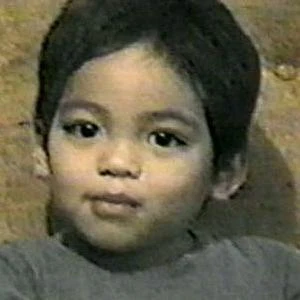
Peter Boy was born in Hilo, Hawaii, on May 1, 1991, into a household that state authorities already had reason to worry about. He was one of four children raised by Peter Kema Sr. and Jaylin Kema at their home in the Nanawele Estates subdivision, and from infancy, according to records later compiled by Hawaii's Department of Human Services, Peter Boy suffered abuse worse than what his siblings experienced. Medical records documented multiple fractures when he was still a baby, including spiral fractures, the kind of injury caused by twisting a limb rather than a simple fall. In 1991, those injuries were serious enough that the state actually removed him from his parents' custody. He was returned to them in 1995.
What happened in the years after that return, according to accounts his siblings later gave investigators, went well beyond ordinary neglect. Peter Boy was beaten regularly. He was shot with a pellet gun. He was handcuffed and tied up with rope. He was made to sleep outside, or on the floor of a bathroom or closet, without bedding. During family car trips, he was reportedly forced into the trunk, covered with a blanket, sometimes in extreme heat. His grandfather, Jimmy Acol, would later describe treatment that included being put in a trash bag and forced to eat feces. Of the four Kema children, Peter Boy consistently took the worst of it, for reasons that were never fully explained even after the truth of what happened to him finally came out.
A Story That Didn't Add Up
His siblings last saw Peter Boy alive in June 1997. His parents did not report him missing until six months later, in December 1997, and the explanation they eventually gave investigators was strange from the start. Peter Kema Sr. said that in August 1997, he and Peter Boy had traveled from the Big Island to Honolulu, on Oahu, where the two of them were homeless and living in A'ala Park. According to Kema Sr., unable to care for the boy any longer, he had given Peter Boy to a woman he called "Auntie" Rose Makuakane, reportedly a lauhala weaver, in an informal adoption arrangement, on August 19, 1997.
Investigators could never find any trace of this woman. She wasn't registered as a lauhala weaver anywhere on the islands. Phone directories turned up nothing. None of the Kema family's actual relatives had ever heard of her. There were no airline records confirming that Kema Sr. and his son had even flown to Oahu together in the first place. And the handwritten custody letter Kema Sr. produced, supposedly documenting the handoff, was dated September 11, more than three weeks after the date he claimed the handoff itself had occurred. Neither parent, in the months and years that followed, showed much apparent urgency about tracking down the woman they said now had their son.
Two Decades as the Only Suspects
For the better part of twenty years, that was where the case stood. Investigators had no real doubt that Peter Kema Sr. and Jaylin Kema knew far more than they were saying, and the documented history of abuse made the shape of what likely happened fairly easy to guess at. But guessing was not proof. Without a body, without a confession, and without physical evidence tying either parent to a specific criminal act, prosecutors did not have a case they were confident they could win, and the passage of time worked against them in a specific legal way: for the lesser charge of manslaughter, statute of limitations concerns loomed, while a murder charge without a body was an enormous gamble for any district attorney's office to take to trial. So the case sat, unresolved, technically a missing persons investigation, while both parents continued living their lives and Hawaii kept asking, on bumper stickers and awareness posters, where Peter was.
The Confession
The break came in 2016, nineteen years after Peter Boy disappeared. Investigators secured enough new evidence, largely built from renewed pressure and interviews, to bring the case in front of a grand jury, and in April 2016 both Kema Sr. and Jaylin Kema were formally charged with murder. Facing that charge, Jaylin was the first to change course. In December 2016, she pleaded guilty to manslaughter and, in doing so, finally told investigators what had actually happened to her son.
According to Jaylin's account, Peter Boy had developed a severe wound on his arm, an injury Jaylin said her husband had caused, that went untreated and became infected. The infection developed into septicemia, a systemic blood infection that, left unaddressed, is capable of killing quickly. Jaylin told investigators she avoided taking Peter Boy for medical care because she was afraid that a doctor would ask questions about the injury, questions that would have exposed her husband as its cause and potentially led to her own arrest as well. Peter Boy died from the untreated infection, at home, sometime around the period his siblings had last reported seeing him alive. The elaborate story about Auntie Rose and the handoff in Honolulu had been invented afterward, to explain his absence without admitting he was gone for good.
At her sentencing in June 2017, Jaylin told the court: "I know I deserve the punishment of imprisonment. For far too long, I kept a secret of the abuse of my children, especially Peter Boy." She was sentenced to a year in jail, time she had effectively already served, along with ten years of probation, a resolution that struck many observers, including members of Peter Boy's own extended family, as strikingly light given what she had admitted to concealing for two decades.
Where the Body Went
Peter Kema Sr. held out for several more months before entering his own guilty plea in April 2017, to manslaughter and first-degree hindering prosecution. As part of his plea agreement, he was required to lead investigators to wherever he had disposed of his son's remains. He took police and prosecutors to a remote stretch of the Puna coastline near MacKenzie State Recreation Area on the Big Island, and told them that after Peter Boy died, he had attempted to cremate the boy's body, that the attempt had been unsuccessful, and that he had ultimately placed what remained inside a cardboard box and set it adrift in the ocean. Extensive searches of the area turned up nothing. Peter Boy's remains have never been recovered.
Kema Sr. was sentenced to twenty years, with a minimum term of roughly nineteen years before parole eligibility, later adjusted downward slightly by the Hawaii Paroling Authority. He remains incarcerated. Jaylin Kema did not serve much of her sentence in any meaningful sense at all: she died in January 2019 of kidney failure, less than two years after her plea.
A System That Had Already Failed Him Once
What makes Peter Boy's case land differently than a simple story of parental violence is the fact that the state had already intervened once, in 1991, when his infant fractures were serious enough to warrant removing him from the home, and had still returned him to that same home four years later, where the abuse resumed and eventually killed him. His siblings, now adults, filed a wrongful death lawsuit against the state of Hawaii years later, arguing that Child Protective Services had been negligent in reunifying the family despite clear indicators of danger. That case has moved slowly through Hawaii's courts; as of mid-2026, nearly a decade after it was filed, it remains unresolved, with a settlement conference scheduled for the end of July 2026 and a civil trial set to follow in September if no agreement is reached beforehand. An appeals court has already ruled that the siblings had standing to sue despite the years that had passed, given that they were minors at the time of Peter Boy's death and that the death itself had been actively concealed until 2016. Their attorney has pointed to the broader institutional culture behind the decision to return Peter Boy to his parents in the first place, noting that family reunification was treated as the system's top priority at the time, a philosophy that Hawaii's child welfare policy has since shifted away from, at least on paper, in the years following this case.
None of it brings Peter Boy back, and none of it answers the question that so many people spent two decades asking on the backs of their cars without ever getting a real answer. He was six years old the last time his siblings saw him. He spent much of his short life being beaten, restrained, and denied basic care by the two people responsible for protecting him, and he died from a wound that, treated normally, would not have killed a child at all. He was failed by his parents first, and by the systems meant to catch exactly this kind of failure second, and somewhere off the Puna coast, in water that has never given him back, is wherever his father decided to leave him.
Sources
- The Charley Project — Peter J. Kema Jr.
- Hawaii News Now — The search for Peter Boy: A 20-year murder mystery, a family who never gave up
- Hawaii News Now — 'Peter Boy' Kema's mother pleads guilty in 1997 death of son
- Hawaii News Now — Jaylin Kema, mother of 'Peter Boy' Kema, dies
- CBS News — Peter Kema case: Father of Hawaii boy missing for 2 decades is sentenced
- CBS News — "Peter Boy" case: Father leads police to where he says missing boy's remains located
- Honolulu Civil Beat — Father Of Hawaii Boy Missing For Two Decades Is Sentenced
- The Garden Island — Lawsuit filed by siblings of 'Peter Boy' Kema drags on