The Candy Lady: What Happened to Helen Brach?
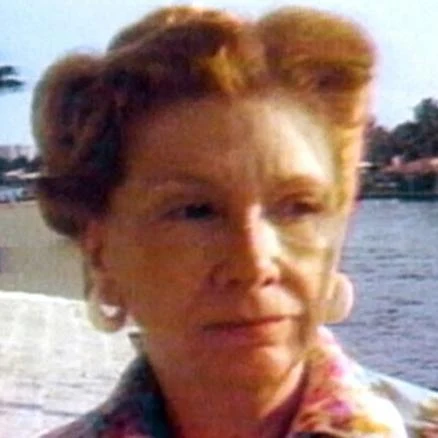
Helen Voorhees was born on a small farm in Unionport, Ohio, in 1911, and there was nothing about her early life that suggested she would one day be worth an estimated twenty million dollars. She married young, was divorced by twenty-one, and eventually found work at a country club in Palm Beach, Florida, the kind of job that put her in daily contact with a wealthier world than the one she'd grown up in. It was there that she met Frank Brach, heir to the E.J. Brach and Sons candy company, one of the largest confectioners in the country. They married, split their time between Glenview, Illinois and Florida, and when Frank died in 1970, Helen inherited his fortune. She spent the years afterward doing what a lot of wealthy, childless widows do: she gave money away, especially to animal welfare causes, established a foundation in her own name, and lived a comfortable, relatively private life. Then, on February 17, 1977, at sixty-five years old, she disappeared, and nearly fifty years later nobody has ever been convicted of whatever happened to her.
The Last Day Anyone Saw Her
Helen's final confirmed movements were almost aggressively mundane. She had gone to the Mayo Clinic in Rochester, Minnesota for a routine checkup and was told she was in good health. Afterward, she stopped into a gift shop in the Zumbro Hotel, bought some cosmetics and towels, and was overheard telling a shop assistant she was in a hurry because her houseman was waiting for her. That offhand comment is the last confirmed thing Helen Brach is known to have said. After that, she essentially disappears from every independent record. Her houseman and chauffeur, a man named Jack Matlick, later claimed he picked her up at O'Hare Airport and drove her home to Glenview, and that she stayed there for several quiet days making no phone calls before he drove her back to the airport for a flight to Florida. Investigators would later find no record that Helen Brach ever boarded a flight out of O'Hare that day, or any day around then, at all.
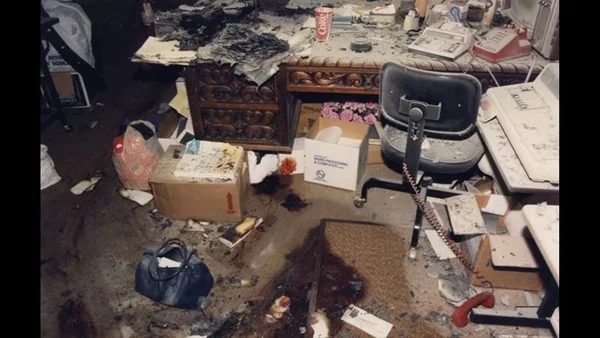
Matlick did not report her missing until March 9, more than two weeks after she was last seen. In the days before that report, he had the carpet in her home replaced, arranged for rooms to be repainted, and had her pink Cadillac professionally cleaned, waxed, and shampooed. He also, by his own admission, destroyed Helen's personal diaries. None of this proved he had done anything to her directly, but it was the kind of behavior that made him the immediate and obvious focus of suspicion, a role he occupied on and off for years even as the investigation eventually moved in an entirely different direction.
The Horse Con
While Matlick's odd behavior drew early scrutiny, the far more consequential thread investigators eventually pulled on involved a man named Richard Bailey. Bailey ran horse stables outside Chicago and had a long, well-practiced reputation, at least among people who later came forward to describe it, as a con artist who specifically targeted wealthy, older widows and divorcees with more money than knowledge of the horse business. Helen, recently widowed and an established animal lover, was close to an ideal mark. She and Bailey became romantically involved, and through that relationship, and through deals arranged with Bailey's brother Paul, Helen bought a series of horses at wildly inflated prices. In one 1975 transaction alone, she paid $98,000 for three horses that were, by later independent appraisal, worth closer to $20,000. Bailey secretly took a cut of that sale without her knowledge. In total, investigators eventually estimated Helen had been swindled out of roughly a quarter of a million dollars through these arrangements.
In the weeks before she disappeared, Bailey and his associates were reportedly pressuring Helen for another round of investment, this time around $150,000, in additional horses. An independent appraiser Helen consulted advised strongly against it, directly contradicting the numbers Bailey's own trainer had given her. People close to the case believe Helen had begun to suspect she was being cheated, and that she may have said as much, or threatened to go to authorities about it, not long before she vanished. If true, that threat would have put her directly in the path of people with a very concrete motive to make sure she never followed through on it.
The Horse Mob
Bailey's world connected to something considerably darker than a single con man running a straightforward grift. Investigators eventually tied him to Silas Jayne, a Chicago-area horse trader and stable owner who ran what came to be known, informally but accurately, as the horse mob, a loose network with documented ties to organized crime and a long history of violence, including a prior murder connected to a bitter feud with his own half-brother years earlier. Jayne's operation reportedly specialized in exactly the kind of insurance fraud, inflated sales, and intimidation that had been used against Helen, and by the mid-1980s, when investigators reopened the long-dormant case, that connection became the center of everything.
Bailey was eventually indicted, and in the early 1990s, prosecutors pursued charges that included conspiracy to murder Helen Brach, alongside racketeering and fraud counts tied to the broader horse-swindling operation. He was convicted in 1994, but notably, not of murder or of conspiracy to commit it, only of the underlying fraud and racketeering. He was nonetheless sentenced to thirty years, a term the judge at sentencing suggested reflected the weight of the murder-related evidence even without a formal conviction on that count. Bailey always maintained that sentence was excessive and unjust, and he spent decades appealing it, without success, before eventually being released in July 2019 at the age of ninety. He later published a memoir in 2022 titled "Golden Tongue: The Innocent Man that Killed Her?" continuing to insist he had nothing to do with Helen's death. He died in a Florida hospital in August 2023, at ninety-three, having never told anyone, if he in fact knew, exactly what happened to her.
A Confession Nobody Could Fully Verify
The most detailed account of Helen's actual death came not from Bailey but from a man named Joe Plemmons, a horseman with his own connections to the same Chicago stable world. In 2005, nearly thirty years after Helen vanished, Plemmons told authorities that he had been the one who shot her. According to his account, he received a call directing him to a stable in Tinley Park, where Kenneth Hansen, a man who worked for Silas Jayne, and Hansen's brother Curt, described as a mob enforcer, told him he needed to shoot Helen Brach or be killed himself. Plemmons said he shot her twice, and that her body was afterward driven to a steel mill near Gary, Indiana, and incinerated in a blast furnace that, by some accounts, operated only that one unusual time in the days immediately following her disappearance.
Plemmons also told investigators that when he lifted Helen's body, a ruby ring slipped off her finger, and that he had kept it for nearly thirty years before finally turning it over to authorities as part of his confession. Some of Helen's friends who examined the ring believed it resembled jewelry she had owned. But investigators were never able to definitively confirm, through DNA or any other forensic means, that the ring had actually belonged to her, and the Cook County state's attorney's office ultimately declined to bring charges based on Plemmons' account alone. No body was ever recovered from the site he described, or anywhere else. Plemmons has continued to live, unprosecuted, in Florida in the years since.
Fifty Years Without an Answer
Helen Brach was formally declared legally dead in May 1984, with the date of her death set, for legal purposes, as the day she was last seen in that Rochester gift shop. Jack Matlick, who many investigators continued to view with suspicion for the rest of his life even after attention shifted toward the horse mob, died in a Pennsylvania nursing home in February 2011. Silas Jayne, the man at the top of the network investigators believe ultimately ordered Helen's killing, died in 1987, having never been charged in connection with her case at all. A former federal prosecutor who worked the case, reflecting on it decades later, put the unsatisfying truth about as plainly as it can be put: unfortunately, we will never know for certain what happened.
What's left is a set of pieces that mostly point in the same direction without ever quite locking together into something a court could call proof. A wealthy widow who trusted the wrong man with her money. A horse-trading network with documented ties to organized crime and a demonstrated willingness toward violence. A houseman who behaved, by any reasonable account, exactly like someone with something to hide, even if what he was hiding was never clearly established. A jailhouse informant's confession, complete with a ring nobody could authenticate, that solved the case for some investigators and satisfied absolutely no one in a courtroom. And at the center of all of it, a woman who spent her final known hour in an ordinary gift shop, buying towels, mentioning she was in a hurry, never suspecting that this small, unremarkable comment would end up being one of the last things anyone would ever hear her say.
Sources
- The Charley Project — Helen Marie Voorhees Brach
- Wikipedia — Helen Brach
- ABC7 Chicago — Helen Brach, candy heiress who vanished in 1977, mystery goes to grave after Richard Bailey dies at 93
- ABC7 Chicago — Helen Brach case: Richard Bailey, sentenced in 1977 unsolved disappearance, murder of Chicago candy heiress released from Florida prison
- Post Bulletin — Candy heiress Helen Brach was last seen alive in Rochester. What happened to her?
- Grunge — The Mysterious Disappearance Of Helen Brach The Candy Lady
- Criminal Element — Unwrapping the Disappearance of Helen Brach