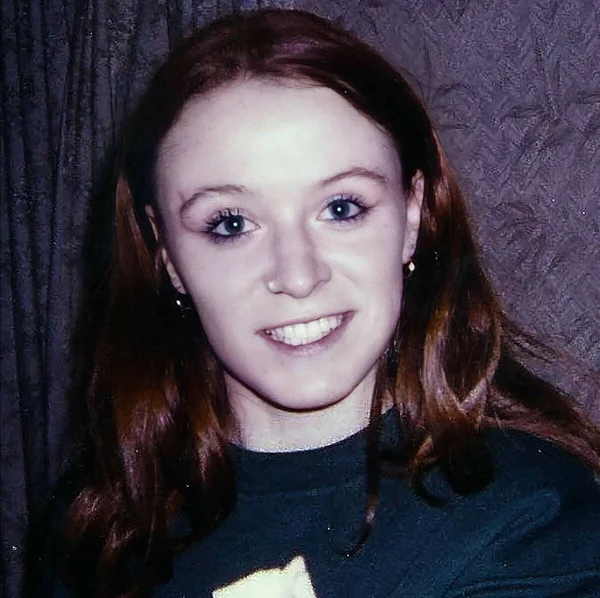
Three Months of Pretending to Be Her: Monica Moynan
Monica Day Moynan was twenty two years old, known to friends as Moni, living in Holly Springs, North Carolina, and working as a waitress at a restaurant in nearby Fuquay-Varina when she disappeared in early April 2019. She was raising two daughters, three years old and an infant, was training to become a doula, and had started a small side business selling elderberry syrup. At the time she vanished, Monica believed she was pregnant again, a belief later confirmed when investigators found a positive pregnancy test during a search of her apartment.
Monica had met Brian Sluss when she was seventeen years old. He was thirty two at the time, already married with children of his own, and had reportedly misrepresented his age to her when they first met. The relationship that followed was documented, repeatedly, as abusive. In May 2016, Monica obtained a domestic violence protective order against Sluss, and in the years that followed he was arrested multiple times for violating that order and for separate assault charges. In January 2019, just months before Monica disappeared, Sluss pleaded guilty to assault on a female connected to a 2017 incident in which he had allegedly choked her. Monica's best friend, Alex Wilson, later testified that Monica had described that specific incident to her directly, telling her she saw the lights go out while Sluss was choking her, and that she believed she had nearly died.
A Mother Who Noticed the Silence
Monica's own mother, Melanie Tucker, lived about an hour away and stayed in regular contact with her daughter by text, though the two of them had last actually seen each other in person in March 2019. When Tucker found herself unable to arrange a visit throughout April, May, and into the following months, she grew increasingly concerned, and eventually reached out to Monica's apartment complex directly. The property manager told her something alarming: no one at the complex had actually seen Monica since late March. What had looked, from a distance and through text messages, like an ordinary if slightly quiet stretch for a busy young mother turned out, once someone finally looked closely, to be something considerably darker.
A Digital Impersonation That Lasted Months
What made Monica's case unusually difficult to untangle in its early stages was that her digital presence did not simply go silent when she disappeared. Investigators eventually determined that Brian Sluss had continued using her phone, driving her car, and actively posting to her Instagram account and texting her friends while pretending to be her, sustaining the illusion that Monica was still alive and simply going about her life for roughly three months after she had actually vanished. Digital forensics later revealed a telling shift in the account's activity during this period, with internet searches moving away from the kinds of things Monica herself had been researching, doula training among them, toward pornography, alongside charges on her credit cards connected to dating site subscriptions Sluss had apparently taken out in her name.
Blood, Bleach, and a Play Mat
When police finally searched the apartment where Monica had been living with Sluss and their children, they found physical evidence that shifted the entire investigation. Traces of blood were discovered on the kitchen tile floor, positioned beneath a children's play mat that appeared to have been placed there specifically to cover the area. The smell and residue consistent with bleach suggested a deliberate cleanup effort had taken place at some point after whatever had happened in that kitchen. Investigators ultimately identified the blood recovered from the scene as belonging to Monica herself. No body was ever found, then or since.
A Law Written for This Exact Situation
Brian Sluss was arrested in May 2020 and charged with murder, but the case he faced relied on a relatively new and specific piece of North Carolina law. Known as Britny's Law, the statute was signed by Governor Roy Cooper in 2017, named after Britny Puryear, a twenty two year old woman killed by a former partner in 2014. The law allows prosecutors to establish the elements of first degree murder in cases involving a domestic partner when the defendant already has a prior conviction for domestic violence against that same victim, effectively using a documented history of abuse to help satisfy the premeditation and intent requirements that first degree murder charges typically demand. Because Sluss had already pleaded guilty earlier that same year to assaulting Monica in the 2017 choking incident, prosecutors were able to bring him to trial as the first person charged under Britny's Law specifically for a domestic violence related first degree murder.
Sluss went to trial in early 2022, and in his own testimony admitted to having struck Monica on several occasions during their relationship, though he continued to deny responsibility for her death or disappearance. Prosecutors built their case around the blood evidence, the bleach cleanup, Monica's abrupt and total silence beginning in late March and early April 2019, and the months long digital impersonation that followed, arguing the entire pattern made sense only if Sluss had killed her and then worked deliberately to delay anyone realizing she was gone. In April 2022, a jury convicted Brian Sluss of first degree murder, making the case the first successful murder conviction in Wake County history secured without a recovered victim's body. He was sentenced to life in prison. His ex-wife, Jarlyn Lisbeth Sluss, was separately charged in connection with the case for accessory after the fact and obstruction of justice, reflecting prosecutors' belief that she had played some role in helping conceal what happened after the fact.
A Warning History That Went Unheeded
What makes Monica's case land with particular weight is how thoroughly documented the danger already was before she ever disappeared. This was not a relationship where warning signs emerged only in hindsight. Monica had gone to court and obtained a formal protective order against Sluss years before her death, a legal step that required her to affirmatively state, under oath, that she believed him capable of harming her. He had been arrested multiple times for violating that same order, and had separately pleaded guilty to physically assaulting her in an incident her closest friend says left Monica believing she was going to die during it. Every one of those data points existed in official records well before April 2019, distributed across court files, police reports, and a guilty plea entered just months before she vanished. None of it, on its own, was enough to prevent whatever happened in that kitchen, a reality that speaks less to any single system failure than to how difficult it remains, even with a fully documented history of abuse on record, to intervene before a pattern of violence escalates into its final, most devastating outcome.
Still Not Found
More than five years after Monica Moynan disappeared from her Holly Springs apartment, her body has never been located, and the child she was carrying at the time was never born. What remains is a legal record built almost entirely around the absence and disruption she left behind rather than any physical trace of her death itself, a kitchen tile that would not fully hide what had happened to it, a set of social media accounts that kept moving long after the person behind them had stopped, and a specific piece of legislation, written years earlier in memory of a different young woman killed under similar circumstances, that finally gave prosecutors a path to hold someone accountable even without the one piece of evidence a murder case traditionally requires.
Sources
- The Charley Project: Monica Day Moynan
- WRAL: Life in prison, Ex-boyfriend found guilty of murdering 23-year-old Holly Springs mother
- CBS 17: Britny's Law in NC and its impact on the Monica Moynan case
- ABC11: Jury finds Brian Sluss guilty of first-degree murder involving domestic violence in the death of Monica Moynan
- Oxygen: Brian Sluss Convicted Of Murdering Monica Moynan