The Calls From California: Laureen Rahn and the Shadow of Bear Brook
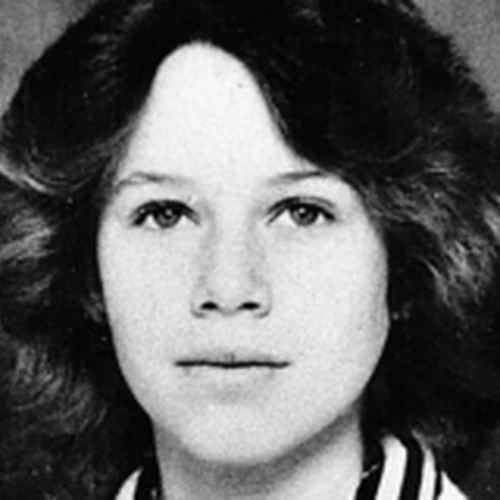
Laureen Ann Rahn was fourteen years old, living with her mother, Judith Rahn, in a third floor apartment on Merrimack Street in Manchester, New Hampshire, when she disappeared sometime after midnight on April 27, 1980. Laureen was in the middle of spring break from Parkside Junior High School, where she was, by most accounts, a good student, described by relatives as a happy, outgoing girl. One aunt offered a more complicated assessment years later, calling her an angel who had, for a while, fallen in with the wrong crowd, spending time on the streets, talking about running away, and experimenting with marijuana and alcohol during the period leading up to her disappearance.
An Ordinary Spring Break Night
On the evening of April 26, Judith Rahn went out to attend a tennis match, leaving Laureen home alone as requested for the holiday break. That night, Laureen invited two friends over, a boy and a girl, and the three of them spent the evening drinking beer and wine together in the apartment. Around 12:30 in the morning, the boy heard voices out in the hallway and left through the back door, apparently believing Judith was returning home and not wanting to be caught there. The girl stayed behind.
When Judith actually got home after 1:15 a.m., she found something was off immediately. Every lightbulb in the hallway had been unscrewed. The apartment door was unlocked. The back door stood open. Walking into Laureen's bedroom, she saw someone in the bed and assumed, in the dark, that it was her daughter. It was not. It was the female friend who had stayed behind, heavily intoxicated and unable to recall many details from earlier that night, who told Judith that Laureen had moved out to the couch at some point, taking her pillow and blanket with her. Laureen was not on the couch. Laureen was nowhere in the apartment at all.
Everything Left Behind
What made the scene so immediately unsettling to investigators was what Laureen had not taken with her. Her purse remained in the apartment. So did her money, her clothing, and a new pair of sneakers she had recently gotten for her birthday. There was no sign of a struggle anywhere in the apartment. Police initially treated the case as a probable runaway, a reasonable working theory given Laureen's documented history of talking about leaving and her recent behavioral troubles, but that classification did not hold as days passed with no contact and no sign of her turning up anywhere on her own. The case was eventually reclassified as a suspected non-family abduction, a designation it has carried ever since.
A bus company employee later claimed to have sold a ticket to a girl matching Laureen's description around the time she vanished, and a driver initially identified her photograph as a passenger, though he later expressed uncertainty about that identification when pressed further. Neither lead ever developed into anything concrete.
Calls From Nowhere
Roughly six months after Laureen disappeared, beginning October 1, 1980, Judith Rahn started receiving a string of collect or charged calls to her phone line originating from motels in Santa Monica and Santa Ana, California, places with no known connection to the family whatsoever. One of these calls reportedly connected to a hotline serving teenagers, one that a physician later associated with the number initially denied any knowledge of, before eventually telling investigators that numerous young women and runaways had passed through his wife's home over the years, and that Laureen may have been among them. He mentioned the name of Annie Sprinkle, a sex educator and former adult film performer, as someone who might have relevant information, though investigators were never able to establish any actual connection between Sprinkle and the case.
Throughout 1981, Judith began receiving a different, more disturbing pattern of calls, arriving at almost exactly 3:45 in the morning, with whoever was on the other end saying nothing at all before hanging up. These silent calls continued for years, intensifying specifically around each Christmas season, until Judith eventually changed her phone number entirely to make them stop. Separately, Laureen's aunt reported receiving repeated calls from a young girl asking to speak with someone named Mike, a nickname that, within the family, only Laureen had ever used for her cousin.
A Possible Voice From 1986
In 1986, six years after Laureen disappeared, a childhood friend of hers named Roger Maurais received a phone call from a woman identifying herself as Laurie, or Laureen, telling him she was his former girlfriend, referencing a relationship the two of them had actually had around age twelve. Whether that call genuinely came from Laureen herself or from someone else entirely, whether cruel or mistaken, has never been resolved. It joined a short list of unconfirmed sightings connected to the case over the years, including a 1981 report placing her at a Boston bus terminal and a 1988 report describing a woman resembling her working as a sex worker in Anchorage, Alaska.
An Investigator, a Motel, and the Name Dr. Z
One of the more unsettling threads investigators developed over the years came from Karole Jensen, an investigator with an organization called Wings for Children, who discovered that one of the California motels connected to the mysterious 1980 phone calls may have doubled as a filming location used by a child pornographer known only by the alias Dr. Z. Jensen was never able to establish a confirmed link between that filming operation and the teen hotline the calls had also connected to, leaving the Dr. Z lead as a genuinely disturbing possibility that nonetheless never fully closed the loop back to Laureen specifically.
That name would resurface, unexpectedly, in a completely different context years later, tied to one of the most notorious unidentified killers in New England history. Terry Peder Rasmussen, a man who used numerous aliases throughout his life including Bob Evans and, notably, Dr. Z, has been connected to a cluster of murders known collectively as the Bear Brook case, in which the remains of four female victims were discovered in barrels in Allenstown, New Hampshire between 1985 and 2000, one of them later identified as Rasmussen's own biological daughter. Rasmussen has also been named a suspect in the disappearance of Denise Daneault, a 25 year old woman who vanished from a Manchester bar just two blocks from Laureen's own residence in June 1980, only weeks after Laureen herself disappeared. Rasmussen lived roughly a mile and a half from Laureen's home at the time. He eventually pleaded guilty to murdering his wife in California in 2003 and died in prison in 2010, and investigators believe he may be responsible for six or more murders and disappearances across multiple states, a pattern that has never been fully mapped even now, more than a decade after his death.
Whether the Dr. Z connected to the California filming location Jensen investigated is the same Dr. Z alias later used by Rasmussen has never been definitively established, and the overlap remains one of the case's most tantalizing, unresolved threads rather than a confirmed link.
A Cluster of Manchester Cases
Laureen's disappearance sits within a broader, unsettling cluster of missing and murdered young women connected to the greater Manchester area during roughly the same period. Rachael Garden disappeared just one month before Laureen, in March 1980, similarly aged and similarly described, from a nearby town. Shirley McBride, fifteen, vanished from Concord in July 1984 and was eventually declared legally dead twelve years later without ever being found. Elizabeth Lamotte, seventeen, disappeared from a youth development center in Manchester in April 1984; her body was later found in Tennessee showing signs of beating and stabbing, though she was not formally identified until November 2018, more than three decades after her death. None of these cases has been formally connected to Laureen's disappearance with certainty, but taken together, they paint a picture of a period and a region that saw a genuinely alarming concentration of young women vanishing or turning up dead within a relatively compact stretch of years.
A Mother's Belief
Laureen's mother eventually relocated to Florida after remarrying in the years following the disappearance. Judith Rahn has said publicly that she believes the October 1980 phone calls originating from California were genuinely made by her daughter, a belief that, if true, would mean Laureen was still alive at least five months after she vanished, however uncertain her circumstances may have been by that point. That belief has never been confirmed, but it has clearly shaped how the family has understood the case ever since, less as a closed tragedy than as an open, ongoing search for a daughter who may, at some point after leaving that apartment, have still had a voice of her own to use.
A Renewed Appeal, Forty Six Years Later
In May 2026, New Hampshire's Cold Case Unit formally renewed its public appeal for information in Laureen's case, releasing a new FBI age progressed image depicting what she might look like today at sixty years old. Senior Assistant Attorney General R. Christopher Knowles, who leads the unit, told reporters that the department's commitment to bringing Laureen home remained steadfast, and that investigators were now able to deploy forensic technologies that would have been unimaginable back in 1980. He was careful to note, though, that science alone was not enough to solve a case like this one, adding that relationships and loyalties tend to shift considerably over the course of four decades, and that the unit was specifically hoping someone who may have stayed silent in 1980, out of fear, loyalty, or simple uncertainty, might be willing to come forward now. Investigators are actively seeking to hear from former neighbors who lived near the Merrimack Street apartment at the time, along with former classmates and anyone who socialized with Laureen in the weeks before she disappeared.
Still Missing
More than four and a half decades after Laureen Rahn vanished from her own bedroom during spring break, her case remains open, still shaped by an unusual combination of hard physical absence, a purse and shoes left untouched, and a long trail of unexplained phone calls and half confirmed sightings that have never resolved into anything definitive. Whether those calls truly came from Laureen herself, whether the Dr. Z lead from a California motel genuinely connects back to one of New England's most prolific unidentified killers, or whether the answer lies somewhere entirely separate from either thread, the New Hampshire Cold Case Unit is, forty six years later, still actively asking the public for the one piece of information that might finally connect them.
Sources
- The Charley Project: Laureen Ann Rahn
- Wikipedia: Disappearance of Laureen Rahn
- New Hampshire Department of Justice: Laureen Rahn
- New Hampshire Public Radio: Cold Case Unit seeks public info in Laureen Rahn disappearance
- Union Leader: Cold Case Unit calls for tips in 1980 Manchester disappearance