The Cameras Went Dark an Hour Before He Did: Mark Douglas Jackson
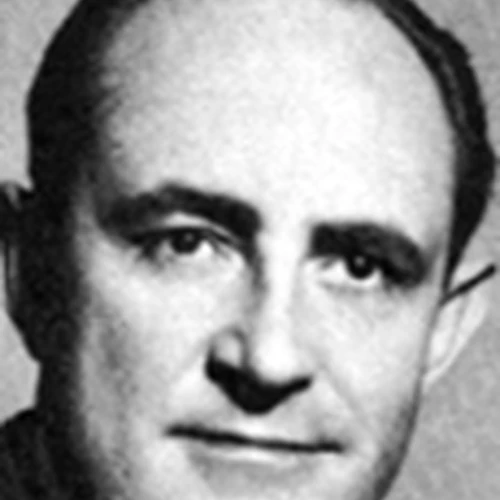
Mark Douglas Jackson was 35 years old, a marketing executive at Home Diagnostics Center who held degrees in both engineering and business administration. He lived at Drake Towers, an apartment building in the 1800 block of North Andrews Avenue in Fort Lauderdale, Florida, and by most accounts kept himself in good shape, enjoying regular workouts and time spent out dancing at local clubs. On June 26, 2004, a friend named John Bass flew in from North Carolina to visit him. The two men went out together that night to a dance club called the Coliseum in nearby Hollywood, Florida, and returned to Mark's apartment at 4:15 in the morning on June 27. Bass told investigators he went to sleep around five. When he woke up at eleven that same morning, the lights and television in the apartment were still on, but Mark was gone.
A Note With No Contents Released
Mark had left a note behind before he left, though its actual contents have never been made public by investigators, a detail that has fueled speculation for years without ever being resolved either way. What is known is what he left along with that note, and what he apparently took with him. His house keys remained in the apartment. So did his access card for the building, his cell phone, his prescription medication, and his car, still parked exactly where it should have been. His wallet and his passport, however, were missing, along with, presumably, whatever cash he may have been carrying. It was an unusual combination of items to take and leave behind, one that pointed neither cleanly toward a spontaneous walk nor toward a longer planned trip, since a passport paired with an abandoned car and a missing phone suggested something considerably more deliberate than simply stepping out for air, even as the note itself implied Mark expected to return.
Cameras That Stopped Working at the Worst Possible Moment
One detail in particular has anchored nearly every theory anyone has ever developed about what happened to Mark Jackson. The surveillance cameras covering Drake Towers malfunctioned roughly one hour after Mark and John Bass arrived back at the building that night, meaning the system was already down well before Bass says he fell asleep and hours before Mark would have left the apartment the next morning. Whatever camera footage might otherwise have shown investigators exactly when Mark left, whether he walked out alone, whether anyone else was with him, or whether he left through the building's main entrance at all, simply does not exist. Investigators have never established whether the equipment failure was a coincidence or something more deliberately timed, and the gap in the footage has remained one of the case's central, unresolved frustrations for two decades.
Adding another layer of unease to the timeline, someone accessed Mark's email account and listened to messages on his cell phone voicemail at 8:40 that same morning, hours after Bass says Mark had already left the apartment and was nowhere to be found. Whether that access was performed by Mark himself, checking in remotely from wherever he had gone, or by someone else entirely with access to his accounts, has never been determined either.
No Money Moved, No Trace Found
In the weeks and months that followed Mark's disappearance, investigators monitored his financial accounts closely and found no activity whatsoever, no credit card charges, no bank withdrawals, nothing suggesting Mark himself was still accessing money anywhere in the country. His employer described his sudden, unexplained absence as completely uncharacteristic of the man they knew professionally, someone reliable enough that simply vanishing without a word ran counter to everything they understood about him. During the search of his apartment, investigators also discovered fourteen small vials containing residue of GHB and methamphetamine, substances associated in that era with the local club and party scene, a detail that complicated the picture of Mark's private life without ever definitively explaining what had actually happened to him.
Based on everything gathered in the initial investigation, authorities came to believe Mark likely left his apartment that morning of his own free will, genuinely intending to return shortly afterward, only to have something happen to him very soon after he stepped out, possibly even before he made it out of the building entirely. Investigators have stated they believe Mark is most likely still somewhere in the Fort Lauderdale area, whether alive or not, rather than having traveled any real distance from where he was last confirmed to be.
A Building With a Troubling History
Mark's disappearance was not, disturbingly, the first time someone had vanished from Drake Towers under similarly unexplained circumstances. Years earlier, in 1988, two other men, Barry Alan Block and David George Rhodes, had disappeared from the same building, both cases sharing a strange set of similarities with what would happen to Mark more than a decade and a half later: all three men were gay, and all three left behind personal belongings in a manner that suggested neither a planned departure nor any clear evidence of violence at the scene. No connection between the three disappearances has ever been formally established by investigators, and the years separating them make any direct link difficult to substantiate, but the pattern itself has remained a persistent point of unease for anyone who has looked closely at the building's history.
That unease deepened further once investigators, in the years following Mark's disappearance, began looking into Steven Lorenzo, a man who was living in relatively close proximity to Drake Towers around the time Mark vanished. Lorenzo, working alongside an accomplice named Scott Schweikert, was later convicted in connection with the torture and murder of two other men, Jason Galehouse and Michael Wachholtz, both lured to Lorenzo's home in Tampa in December 2003 with the promise of drinks and bondage before being drugged with GHB and killed. Schweikert eventually pleaded guilty and testified against Lorenzo, who was ultimately sentenced to death in 2023, nearly two decades after those murders. Investigators reportedly explored whether Lorenzo or people connected to him might have had any involvement in Mark's disappearance as well, given the geographic proximity, the timing, and the shared presence of GHB in both situations. No evidence has ever been found conclusively tying Lorenzo to Mark's case specifically, and no charges connecting the two have ever been filed.
Still Unaccounted For
More than two decades after Mark Douglas Jackson walked out of his Fort Lauderdale apartment sometime between 5 and 11 a.m. on June 27, 2004, he has never been found, and the note he left behind has never had its contents shared publicly by the investigators who read it. What remains documented is an hour long gap in a building's camera footage that began before anything else in this story happened, an early morning email login nobody has ever explained, a stack of drug vials that opened one disturbing line of inquiry without ever closing it, and a building with an unsettling pattern stretching back to 1988 that has never been resolved into anything more concrete than a coincidence investigators have never been able to rule out.
Sources
- The Charley Project: Mark Douglas Jackson
- Wikipedia: Steven Lorenzo
- BuzzFeed News: A Florida Man Who Asked For The Death Penalty After Murdering Two Gay Men He Lured To His Home Was Sentenced To Death