The Stolen Truck Story: What Happened to Christian Ferguson
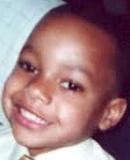
Christian Taylor Ferguson was nine years old, and he could not speak, could not swallow food safely, and could not survive more than about a day without a precise combination of medications that kept a rare metabolic disorder from poisoning his own blood. He needed constant, careful care simply to stay alive. On the morning of June 11, 2003, his father called police in St. Louis, Missouri, to report that their SUV had been stolen from outside a pay phone, with Christian still strapped inside. The vehicle turned up two hours later, abandoned, its contents mostly untouched. Christian was gone. Nineteen years later, his father was convicted of murdering him. Christian's body has never been recovered.
A Fragile Life
Christian was born with citrullinemia, a rare inherited disorder that prevents the body from properly breaking down and clearing protein waste, allowing ammonia to build up to toxic levels in the bloodstream if it isn't managed. The condition nearly killed him within his first three days of life, and for years afterward doctors believed that with careful dietary management and medication, he could live something close to a normal childhood. That changed in 2001, when Christian suffered a seizure that put him into a coma and left him with severe brain damage. After that, he could no longer speak or swallow on his own. He walked unsteadily when he walked at all, needed to be fed through a gastric tube, wore diapers, and required six different medications every day just to keep his body chemistry from turning against him. He was, in every practical sense, entirely dependent on the adults around him for his survival.
Christian's parents, Dawan Ferguson and Theda, had separated in 1997, and their marriage was annulled the following year. Both accused the other of neglecting Christian at different points. In 1999, Dawan was awarded full custody, with Theda retaining visitation rights. Over the following years, Theda repeatedly raised allegations that Christian was being neglected in his father's care, allegations that courts considered but ultimately did not find sufficient grounds to act on, even as home health workers who were part of Christian's care documented troubling conditions, including instances of Christian being left alone for hours at a time, tied to a bed. By early 2003, Theda had been denied access to her son for roughly three months. On June 9, just two days before Christian disappeared, a court ordered Dawan to comply with a visitation schedule that would have restored Theda's access to her son beginning June 14.
The Morning of June 11
According to Dawan's account, he had pulled the family's 1999 Ford Expedition over near a pay phone at Skinker and Page in St. Louis sometime around 6:00 to 6:30 that morning to call Christian's doctor, leaving the engine running and Christian inside while he stepped out to make the call. When he returned, he said, the SUV and his son were gone. He reported the vehicle stolen. It was recovered roughly two hours later, abandoned near Ferguson, Missouri, with valuables still inside. There was no trace of Christian.
Investigators found the story difficult to accept almost from the outset. Dawan had a working cell phone on him, which made the need to stop at a pay phone at all seem unnecessary and strange. He gave police accounts of that morning that shifted and did not fully line up with each other, and when asked to take a polygraph examination, he refused. Meanwhile, a search of the Ferguson home turned up physical evidence that painted a far darker picture of Christian's final period alive than the carjacking story allowed for. Investigators found urine-stained clothing and bedding, along with a large liquid stain soaked into Christian's mattress. His medications, the ones that kept his body from slowly poisoning itself, had not been picked up from the pharmacy since late April, more than a month before he disappeared. And his gastric feeding tube, the device that delivered the nutrition his brain-damaged body could no longer take in on its own, was recovered bearing tool marks, marks consistent with the tube having been forcibly removed rather than properly detached.
What His Sister Saw
The most damning account of what actually happened that morning came years later from inside the family itself. Christian's sister, Lin, who shared a bedroom with him, eventually testified that she had witnessed her father wrap Christian in a blanket and carry him out of the house in the early morning hours, not smuggle him out to a waiting stolen car, but carry him away directly. She described hearing sounds like a struggle from elsewhere in the house around that time, followed by a sudden silence where Christian's moaning, a sound he made frequently given his inability to speak, abruptly stopped and did not resume. A stepsister, Deshonda Linwood, separately corroborated observations about just how severely Christian's physical condition had deteriorated in the period before he vanished.
A witness who came forward during the long investigation that followed told authorities that Dawan had, at some point, admitted that Christian was already dead before he ever picked up the phone to call 911 that morning, and that he had told this witness the boy's body had been buried in the foundation of a house that was under construction at the time. That detail, along with everything else investigators had gathered, painted a scenario in which Christian's disappearance was never a crime committed by a stranger at all, but the final act in a slow deterioration that had been unfolding inside his own home for months, hidden from view until it could no longer be explained away.
Sixteen Years to an Indictment
Despite the mounting evidence, it took an extraordinarily long time for the case to move to formal charges. Dawan Ferguson was not indicted for murder until October 2019, sixteen years after Christian disappeared, and notably just one month after his then-wife had filed for divorce from him, a timeline that suggests new information or renewed cooperation from someone close to him may have finally given prosecutors what they needed. He was held without bond as the case proceeded toward trial. His defense maintained that the evidence against him was circumstantial and insufficient, built around a story that had never been fully disproven rather than a confirmed homicide. That argument did not ultimately prevail. In July 2022, nineteen years after Christian was last seen alive, a jury convicted Dawan Ferguson of first-degree murder. He received a mandatory sentence of life in prison without the possibility of parole. Christian's remains, wherever they may be, have never been located, and no part of the conviction produced the one thing his mother had spent nearly two decades hoping for: a place to finally bring her son home to.
A Mother's Long Advocacy
Theda Wilson has spent the years since her son's disappearance transforming her grief into public advocacy rather than letting it remain private. She founded a nonprofit called Looking For An Angel, dedicated to helping reunite missing children, particularly children with disabilities and special needs, with their families. She has also worked directly with Missouri lawmakers to establish what would become known as the CTF Alert, a proposed emergency notification system named for her son that would be triggered when a person with disabilities goes missing or fails to appear for a critical medical appointment, the exact kind of gap in the system that swallowed any early, urgent search for Christian himself. Speaking about her son, Theda has said that he was her miracle child, someone who blessed her even through the difficulty of his birth, and that although he is not physically with his family anymore, his story continues to speak loudly on behalf of children like him. She has said she would not wish what she has been through on any other parent, and has continued to hold memorials and public events marking the anniversary of his disappearance, including a gathering on the twentieth anniversary in 2023 that coincided with renewed public efforts to formally establish an alert system in his name.
What Remains
Christian Ferguson's case sits at an unusual intersection in the world of missing persons cases. There has been a conviction. There has been, in the eyes of a jury, an answer to the question of who was responsible for his death. And yet the most basic fact of any missing persons case, the location of the person who disappeared, remains entirely unresolved. Christian is not missing in the sense of an open mystery about what happened to him; a court has already determined that. He is missing in the far more painful sense that his mother, his sister, and everyone who loved him have never been given the chance to lay him to rest. His story has become part of a broader push to build systems that might protect other disabled children from disappearing into the same kind of prolonged, undetected neglect that consumed the final months of his life, largely unnoticed by anyone positioned to intervene until it was already too late.
Sources
- The Charley Project: Christian Taylor Ferguson
- Trace Evidence: The Disappearance of Christian Ferguson
- Trace Evidence: The Disappearance of Christian Ferguson, Update
- FOX 2 Now: 20th Anniversary of Christian Ferguson's disappearance marks launch of alert system for missing disabled individuals
- First Alert 4: Gone 21 years later: Mom of Christian Ferguson continues crusade for alert system
- International Missing Persons Wiki: Christian Ferguson
- Block Parole: Christian Ferguson
- Change.org: Bring Prosecution for Those Responsible for Christian Ferguson's Disappearance