The Disappearance of John Iverson
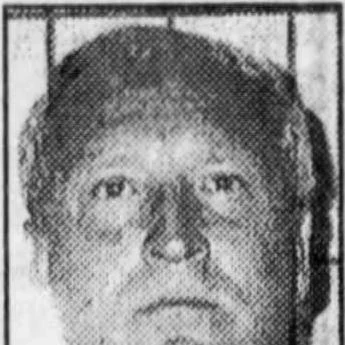
Among the people who care about high end audio equipment, John Gordon Iverson has never really disappeared at all. His amplifiers, built under the company name Electron Kinetics, are still traded, discussed, and admired decades later by audiophiles who consider him one of the more gifted solid state amplifier designers of his generation. Iverson himself is a different story. On the evening of January 4, 1991, the forty-two-year-old engineer was, according to his live-in girlfriend, kidnapped at gunpoint from his own home in Lake Havasu City, Arizona by a machinist he had recently hired. He has never been found, and the story of what actually happened that night has never stopped contradicting itself.
A Difficult, Brilliant Man
By every account, Iverson was not an easy person to be around. He was a heavy drinker with a reputation for crude prejudice against minority groups and a well-known habit of telling elaborate, fabricated stories about his own life and career, the kind of embellishments that made people who knew him casually wonder how much of anything he said could be trusted. He was also, without much dispute, genuinely talented, the kind of engineer whose products earned real respect in a notoriously particular hobbyist community. Those two things, the fabrication and the real ability, sat next to each other his entire adult life, which makes the mystery of his disappearance considerably harder to untangle than it might otherwise be. With Iverson, it was never entirely safe to assume any given story was true.
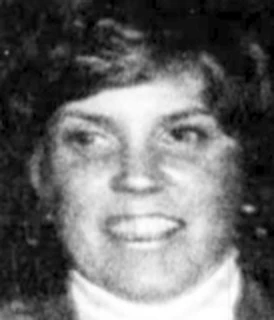
His personal life by 1991 was a mess by any measure. He'd married a woman named Kathleen Munro in 1987, only for the two of them to divorce quickly afterward for financial reasons that were never made public, a decision made stranger by the fact that Iverson transferred all of his personal assets into Munro's name around the same time. Despite the divorce, the two continued living together. He was on probation after a 1990 conviction for stealing telegraph wire, owed back taxes to the IRS, was facing the possibility of a business audit, and was, by multiple accounts, in the middle of serious ongoing arguments with Munro, arguments serious enough that he had reportedly begun considering leaving her.
The Night of the Alleged Kidnapping
On January 4, 1991, a machinist named Jack Weber came by the home Iverson shared with Munro. According to Munro's account, Weber had come to deliver finished work and collect payment. Sometime after Iverson arrived home that evening, Weber allegedly returned, this time wearing gloves and carrying a gun, and told Munro that he had Iverson bound and gagged in his van outside. He demanded money. Munro said she handed over four thousand dollars in cash and wrote a check for another twenty-five hundred. Weber then left, supposedly taking Iverson with him. That was, as far as Munro's story went, the last anyone saw of him.
Four months later, in April 1991, Jack Weber turned himself in to authorities, and the story he told bore almost no resemblance to Munro's. According to Weber, there had been no kidnapping at all. He claimed Iverson had actually approached him about building a new kind of weapon, one that didn't require live ammunition, and that the two of them had agreed Weber would delay full payment for his work until they could test the device together out in the Arizona desert. Weber said the two of them had spent several nights together in his van, and that Iverson himself had proposed the idea of the two of them separating for a while afterward, specifically to avoid drawing attention to a probation violation Iverson would otherwise have been exposed to by being seen with him. In Weber's telling, Munro and Iverson had conspired together to frame him for a kidnapping that never happened.
Two Stories, Neither One Solid
Investigators were left holding two accounts that were, in the words of one writer who later examined the case, equally outlandish. Munro's story required believing that a machinist calmly walked into a home, took four thousand dollars in cash and a check on top of an armed kidnapping, and simply vanished along with his hostage. Weber's story required believing that a professional engineer had hired him to build a functioning weapon that fired without live ammunition, then orchestrated an elaborate cover story about his own kidnapping specifically to protect a machinist from scrutiny over a probation technicality.
Physical evidence did little to settle the question either way. Investigators found a damaged table and traces of blood inside Iverson's motor home, though nothing about the stain conclusively established when it had gotten there or whose blood it actually was. Munro failed an initial polygraph examination, then passed a second one administered by an examiner she had personally selected, a result police considered unreliable given the circumstances. With no independent witnesses to corroborate either version, and no way to reconcile the two accounts, the case against Weber eventually collapsed. All charges against him were dropped.
A Quick Departure
What happened after the investigation stalled did little to reassure Iverson's family that Munro's version of events had been the honest one. Less than two months after Iverson disappeared, Munro liquidated her assets, the very assets Iverson had transferred into her name before their divorce, and moved to California. Iverson's relatives, already skeptical of her account, took her sudden departure as one more reason to doubt that a masked, armed kidnapper had ever really taken him anywhere at all. Neither Munro's nor Weber's whereabouts in the years since have been widely documented, and neither one has ever offered a fuller account than what came out in the initial investigation.
Three Ways to Read It
The theories that have circulated around Iverson's disappearance over the decades tend to sort into a few familiar shapes. Some who have studied the case believe he staged his own kidnapping and walked away from his life entirely, using the chaos of the moment to escape probation, unpaid taxes, a possible business audit, and a relationship that had clearly soured. Others suspect Munro and Weber were involved together in whatever actually happened to him, whether that meant an affair, a financial motive, or something else entirely, with the kidnapping story serving as cover rather than as truth. A third possibility, less dramatic but no less plausible given everything else about his life, is simply that something went wrong between three people with a documented history of dishonesty, and that the truth of it died, quite literally, with whichever version of events never made it into any official record.
Still Missing
John Gordon Iverson would be in his mid-seventies today. His name endures in a corner of the audio world that has largely forgotten the strange circumstances of his disappearance, remembered instead for amplifiers that collectors still track down and restore. The man himself has not surfaced, dead or alive, in over three decades. What's left is a contradiction nobody has ever resolved: a wildly implausible kidnapping story, an equally implausible counter-story about a gun that needed no bullets, a blood stain nobody could date, and a woman who cashed out and left town before anyone could ask her too many more questions.
Sources
- The Charley Project — John Gordon Iverson
- Strange Company — The Strange Case of John Gordon Iverson
- The Charley Project Blog — Let's Talk About It: John Iverson
- 411 Gina — Missing: John Gordon Iverson
- NamUs — Missing Person #MP14602