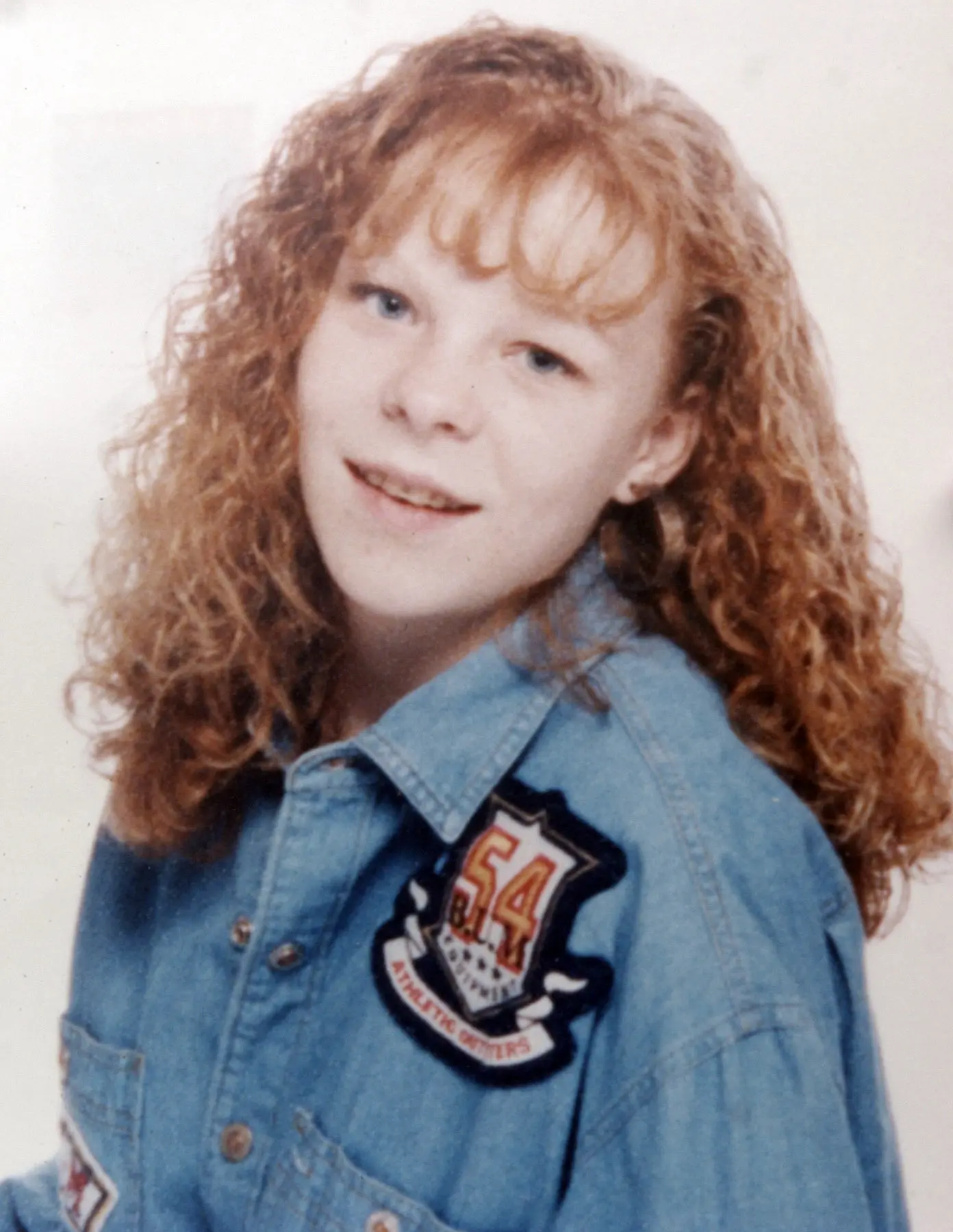
The Disappearance and Murder of Kiplyn Davis
Kiplyn Davis was the kind of teenager who filled a room. Born on July 1, 1979, in Provo, Utah, she grew up in Spanish Fork as the third of four children in a close-knit Mormon family. Her younger sister Karissa adored her and tagged along to almost everything she did. Friends described Kiplyn as a social butterfly, someone naturally warm, someone people were drawn to. She had naturally curly red hair, blue eyes, a face full of light freckles, and a future she was genuinely excited about. She wanted to be a kindergarten teacher. She was on the verge of getting her driver's license. Her older sister's wedding was coming up, and she had plans for the weekend. On the morning of May 2, 1995, she left for school. She was fifteen years old and a sophomore at Spanish Fork High School. She never came home.
A Morning Argument and an Ordinary Day That Wasn't
The morning Kiplyn disappeared began with a minor argument with her parents, the kind of friction that is unremarkable in most households and in most lives. She left for school, walking about eight blocks to attend an early driver's education class, and then moved through her morning schedule as usual. She ate lunch with her friends in the cafeteria. Witnesses placed her there, in the middle of a normal school day, and then she was simply gone. She did not show up for her fourth or fifth period classes. By fifth period, the school office had noted her absence and called the family's home, leaving a message. Neither Richard nor Tamara Davis received it until much later, both of them at work.
Kiplyn never arrived home at her usual time. Her parents reported her missing to the Spanish Fork Police Department at 5:00 that evening. When investigators searched her locker, they found everything she had left behind: her purse, her makeup, her dental retainer, her schoolbooks. These were not the possessions of a girl who had chosen to disappear. She had also left behind her two sterling silver rings, one shaped like a flower and one engraved with the letters "CTR." One close friend initially told police he had spoken with Kiplyn between fourth and fifth period, but he later changed his story.
Despite the evidence in that locker, the disappearance was initially treated by police as a potential runaway case. The morning argument with her parents provided an easy, if inadequate, explanation. Her family pushed back immediately. They knew their daughter, and they knew this was not something she would do. Tamara Davis later said it was simply out of character, full stop. Two weeks passed before police made a public plea for information, two weeks during which the men who knew what had happened to Kiplyn were able to quietly consolidate their silence.
The Wall of Silence
Almost immediately after Kiplyn vanished, rumors began circulating in the small community of Spanish Fork. Her body had been buried in a canyon. It was in a train tunnel. It was under a building. A group of young men who had been her classmates came under suspicion, but suspicion was not evidence, and the evidence that might have broken things open was locked behind a collective refusal to speak.
The young men at the center of the investigation were Timmy Brent Olsen, Christopher Neal Jeppson, David Rucker Leifson, Scott Brunson, and Garry Blackmore. Olsen, Leifson, Jeppson, and Brunson had all been students at Spanish Fork High School at the time of Kiplyn's disappearance, and all four were members of the school's drama club, the same one Leifson and Kiplyn had shared. On the afternoon of May 2, 1995, the day she vanished, the four claimed to have been in the school auditorium hanging lights in preparation for an upcoming performance. It was a tidy alibi. It was also a lie. A community choir had been rehearsing in that same auditorium at the time, and none of its members recalled seeing the teenagers there.
For nearly a decade, nothing moved. The case went cold in the most frustrating way a case can go cold: not from a lack of people who knew the truth, but from a coordinated effort to make sure the truth stayed buried alongside Kiplyn. The FBI joined the investigation within two months of her disappearance and treated the case as a possible kidnapping, but years passed without her return, without her remains, without a break.
A Letter That Changed Everything
The dam began to crack in 2003, not through a new forensic discovery or an anonymous tip, but because of a letter written by a father who had run out of patience. Richard Davis wrote directly to U.S. Attorney Paul Warner. The letter arrived at a moment when the nation was focused on the recovery of Elizabeth Smart, and Richard Davis wanted to know why his daughter's case had received nothing close to the same level of resources and attention. Warner later recalled that the question genuinely troubled him. The letter pushed him to look harder at what had happened in Spanish Fork eight years earlier.
What Warner's office found was exactly what many in the community had long suspected. There was, as he later put it, a wall of silence. Olsen and others had worked to intimidate people around them into keeping quiet, and it had worked for the better part of a decade. Federal prosecutors, unable to charge anyone with murder directly at that point, pursued what they could: perjury. If the men had lied to investigators and grand juries about what they knew, that lie itself was a federal crime.
In 2005, the indictments came. Brunson was charged with perjury and lying to a federal agent. Blackmore faced the same. Olsen was hit with fifteen counts of lying to a grand jury. Jeppson was charged with perjury and making false statements to the FBI. Leifson was charged with perjury. One by one, the wall started coming down, though it never came down all the way.
Brunson struck a deal first in December 2005, pleading guilty to multiple counts and agreeing to testify against the others. Blackmore made a similar arrangement. Olsen went to trial in the summer of 2006, presented no defense, and was convicted on all fifteen perjury counts. The judge sentenced him to twelve and a half years in federal prison, a sentence longer than federal guidelines recommended, specifically because the court took Kiplyn's presumed murder into account. Jeppson was convicted of four perjury counts in 2007 and sentenced to five years. Leifson pleaded guilty to a single count and received five years.
None of them, in all of this, told anyone where Kiplyn was.
What Olsen Finally Said
In 2006, the state of Utah charged both Olsen and Jeppson with first-degree felony murder in Kiplyn's case. The legal maneuvering that followed took years. Jeppson reached a plea deal in May 2009, eventually pleading no contest to obstruction of justice and signing an affidavit in which he stated he did not know the circumstances or cause of Kiplyn's disappearance. He was released from prison in 2014.
Olsen's murder case pushed forward. In February 2011, one month before his murder trial was scheduled to begin, he pleaded guilty to manslaughter, a second-degree felony, and was immediately sentenced to one to fifteen years in state prison. The plea deal did not require him to disclose the location of Kiplyn's body.
Through his attorney, Olsen offered his account of what had happened on the afternoon of May 2, 1995. He and another, unnamed individual had driven up Spanish Fork Canyon with Kiplyn. When Olsen arrived at a certain location in the canyon, he said he witnessed that other person strike Kiplyn twice on the right side of the head with a softball-sized rock. She fell. He said he approached and asked what the person was doing. He was asked to help move her body. He did. He said at that point he did not know whether she was dead. He helped place her beneath a line of trees, then returned to the vehicle and left. The two came back later that same evening and moved her body a second time, this time to the other person's vehicle. By then, Olsen said, it was apparent she was dead. He never identified who the other person was. He has not done so since.
Richard Davis sat in that courtroom and listened to this account of what had been done to his fifteen-year-old daughter. Then he stood up and spoke directly to Olsen. He said he forgave him. He offered to speak on Olsen's behalf at parole hearings, to advocate for his early release, even to help pay for his schooling and dental work while he was incarcerated, if Olsen would only tell the family where Kiplyn was. "It's like she's suffering, like she's still cold," Davis said. Olsen sat with his head bowed and did not look at him.
A Sentence Served, a Secret Kept
Olsen was also serving his federal perjury sentence concurrently, adding years to his time behind bars. Utah later passed a law, partly as a result of this case and with Richard Davis testifying before lawmakers, stipulating that people convicted of homicide cannot be eligible for parole unless they have cooperated in good faith in locating the victim's remains. The law was designed specifically to give families like the Davises some leverage.
It did not work on Olsen. In 2021, at his first parole hearing, Olsen told the board he had done everything he could. He repeated that he had said what he had to say. The board found that he had not cooperated in good faith and denied early release. He was ordered to serve the entirety of his fifteen-year manslaughter sentence. The board wrote plainly in its decision that if Olsen were ever to provide evidence leading to the recovery of Kiplyn's remains, it would reconsider.
Richard Davis spoke at that 2021 hearing too, as he had spoken at the sentencing a decade earlier. He told Olsen he did not need lawyers in the room. He told him he just needed to listen to his conscience. He offered, again, to advocate for Olsen's freedom in exchange for the one thing the Davis family had always wanted above everything else: the location of their daughter's body. "All I'm asking is if Tim will soften his heart," Davis said. Olsen's response, after a long pause, was that he had done everything he could.
On February 10, 2026, Timmy Brent Olsen walked out of the Central Utah Correctional Facility in Gunnison, having served every day of his sentence. He was not on parole. He was not wearing an ankle monitor. He had no legal supervision. He said nothing publicly about where Kiplyn Davis is. Legal analysts noted that because jeopardy had already attached in both his federal and state cases, he could confess in full, name every person involved, describe the location of the body, and face no further legal consequences. The law is, in this respect, finished with him.
What Remains
Kiplyn Davis would be 46 years old today. Her father says she is still fifteen to him, frozen at the age she was when she was taken. The Davis family never left Spanish Fork. They raised their children there, stayed in their home, and kept the porch light on every night since May 2, 1995. They have said they will keep it on until she comes home or they go home to her.
There is a headstone waiting for Kiplyn at the Spanish Fork Cemetery, placed years ago by her parents, a monument to someone they have never been able to bury. There is a permanent plaque inside Spanish Fork High School in her memory. Since 2018, the city of Spanish Fork has recognized May 2 as Kiplyn's Day. Her father wrote a book about the case, titled "When an Angel Leaves Your Life," and all proceeds go toward a scholarship established in her name. Her sister Karissa runs the Find Kiplyn Davis Facebook page and has never stopped fighting for answers.
The case, in legal terms, may be over. Olsen cannot be tried again. Jeppson cannot be charged further for what he admitted. The other men served their sentences for perjury and are long since free. What is not over is the search. The Davis family believes Kiplyn is somewhere in Spanish Fork Canyon. The Spanish Fork Police Department continues to ask anyone with information to come forward. DNA and dental records are on file. All that is missing is the truth from the people who have always held it.
As former U.S. Attorney Paul Warner said in early 2026, addressing Olsen directly: "Do the right thing. That means, to the extent that you know, and we think you do, tell us where the remains of Kiplyn Davis are."
Nobody answered.
Sources
- Wikipedia — Murder of Kiplyn Davis
- The Charley Project — Kiplyn Davis
- Stories of the Unsolved — The Disappearance of Kiplyn Davis
- Evaporate the Missing — The Disappearance of Kiplyn Davis
- Utah BCI Cold Cases — Kiplyn Davis
- Deseret News — Timmy Olsen Pleads Guilty to Role in Kiplyn Davis Killing (February 2011)
- Deseret News — Kiplyn Murder Charge Filed (October 2007)
- Deseret News — Just Tell Me Where Kiplyn Is (March 2021)
- KSL — Man Convicted of Killing Kiplyn Davis to Be Released from Prison (February 2026)
- KSL — Olsen Takes Plea Deal in Kiplyn Davis Case (February 2011)
- KUTV — Convicted Killer Released After Serving Sentence for Kiplyn Davis' Disappearance (February 2026)
- KUTV — Father's Heartfelt Letter Prompts US Attorney to Reexamine Spanish Fork Cold Case (January 2026)
- KSL News Radio — Justice for Kiplyn Davis? Family Fights for Answers After Killer's Release (February 2026)
- Salt Lake Tribune — Update: Suspect Charged with Murder in Kiplyn Davis Disappearance