Fire on the Marjo: The Disappearance of Dianna and Christine Meyer
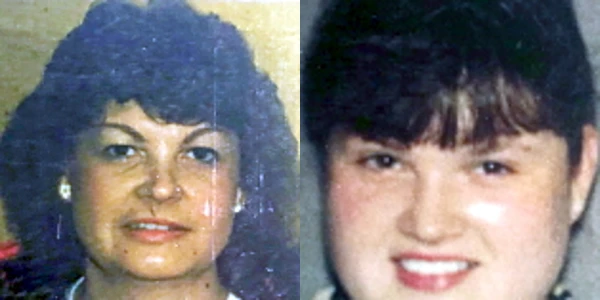
Dianna Lynn Meyer was forty nine years old in June 1996, married to a man named Robert James Meyer, known to most people as Bob. Her daughter, Christine Rena Meyer, known as Chrissy, was seventeen, just two days shy of her eighteenth birthday, five foot seven, a hundred fifty eight pounds, with brown hair and brown eyes, about to close out her final stretch as a minor and step into adulthood. The family owned a fifty foot yacht called the Marjo, and it served as a real part of the family's life together in southeast Alaska, not simply a onetime rental for a single vacation, giving the trip that began in early June 1996 the feel of a familiar, unremarkable routine right up until the moment it wasn't. On the night of June 4, 1996, all three of them, along with the family's two dogs, were aboard the vessel in Salisbury Sound, roughly thirty miles northwest of Ketchikan, Alaska, making their way toward Sitka.
According to the account Robert later gave investigators, he woke Dianna and Christine around 12:30 in the morning after smelling smoke somewhere on the boat. He said he then went to retrieve the family's two dogs from elsewhere on the vessel, and that when he returned to the deck, both his wife and daughter were simply gone. The Marjo itself did not survive the night. The U.S. Coast Guard located the yacht already engulfed in flames, and it sank shortly afterward in water more than five hundred feet deep, taking with it whatever physical evidence might have definitively explained what happened to Dianna and Christine in those final minutes before the fire consumed the boat.
A Story With Missing Hours
Robert made his way to Sitka harbor using the family's outboard skiff, which had been towed behind the yacht, arriving to a group that included his business associate, a woman named Ann L. Lowe, her daughter, and other employees of a company called Southwest Marine, all of whom met him when he came ashore. Robert had called Lowe around four that morning to tell her there had been a fire on the boat and that his wife and daughter were missing, a call that would later become one piece of a timeline investigators found increasingly difficult to square with his account of events.
Investigators identified roughly two hours in Robert's version of that night that remained entirely unaccounted for. He told authorities he had been unable to radio for help until he reached shore, yet investigators determined he had actually passed another boat on his way into Sitka harbor and never requested assistance from it, choosing instead to continue on alone despite having just watched his wife and daughter vanish from a burning vessel.
Evidence That Didn't Match the Story
What investigators eventually recovered painted a picture sharply at odds with a simple accidental fire. They found a .38 caliber shell casing on the family's skiff, along with a smear of blood on that same skiff that was later identified through testing as Dianna's. Fuel containers were recovered from the wreckage, including one holding diesel fuel, and Robert's own clothing, when eventually tested, showed traces of diesel fuel as well. Perhaps most damning, forensic analysis of the burn pattern on the Marjo's wreckage suggested the fire had started from the top of the vessel and burned downward, the opposite of what would be expected from an accidental fire originating in an engine room or fuel line below deck, directly contradicting the version of events Robert had given police.
The financial picture investigators uncovered gave the case an unmistakable motive. Robert held a life insurance policy worth a combined one million dollars on Dianna and Christine, along with a quarter million dollars in insurance on the yacht itself. At the time of the fire, Dianna had reportedly been planning to divorce him, a move that stood to cost Robert a substantial share of the couple's assets. Investigators also learned that Robert had been carrying on an affair with Ann Lowe, his business associate, who had recently gone through her own divorce. In the aftermath of the fire, Lowe washed a set of Robert's clothing that reeked of diesel fuel, despite police having specifically instructed her not to touch or clean any of his belongings, an act that led to her own criminal charge for tampering with physical evidence. She was ultimately convicted and served four months in jail for that offense.
Charges, and a Death Before Trial
In 1998, roughly two years after Dianna and Christine disappeared, prosecutors charged Robert Meyer with two counts of first degree murder and with arson in connection with the destruction of the Marjo. Investigators had concluded that Robert killed his wife and daughter aboard the yacht, staged the fire to destroy evidence and cover the deaths, and then fabricated the account of smelling smoke and losing track of them on deck, all as a way to avoid the financial fallout of Dianna's planned divorce while simultaneously collecting on the insurance policies he held on both of their lives.
Robert Meyer never stood trial for those charges. Before the case could reach a courtroom, he died in what was ruled an apparent suicide, his body later found at the end of a dock in Sitka harbor, submerged in roughly seventy feet of water, a location carrying its own grim symmetry with the deep water that had swallowed the Marjo and, presumably, his wife and daughter's remains two years earlier.
No Answers Beneath the Water
With Robert dead and no trial ever completed, the case against him was never formally proven in a court of law, even though investigators, prosecutors, and the physical evidence they gathered pointed overwhelmingly in his direction. Neither Dianna's nor Christine's remains have ever been recovered from the waters of Salisbury Sound, leaving their extended family without any place to mourn beyond the open water where the Marjo went down. Both cases remain formally classified as missing persons rather than closed homicides, a legal quirk of the fact that no conviction was ever secured and no bodies were ever found to confirm what everyone involved in the investigation had already concluded. Christine never reached her eighteenth birthday, missing it by only two days, her life cut short in the same incident that ended her mother's.
The case became notable enough in true crime circles to be featured on the documentary series The Investigators, in an episode titled Fire and Ice, one of several attempts over the years to piece together publicly what happened aboard the Marjo that June night in 1996. For Dianna and Christine's surviving family, though, no documentary or television segment has ever been able to substitute for what the case never delivered: a body to bury, or a trial that might have forced Robert Meyer to answer, under oath, for what investigators became convinced he had done.
Anyone with information related to the disappearance of Dianna and Christine Meyer is asked to contact Alaska State Troopers.
Sources
- The Charley Project: Dianna Lynn Meyer
- The Charley Project: Christine Rena Meyer
- NamUs: Missing Person MP61351
- Alaska Department of Public Safety: DPS Quarterly, Spring 2006
- IMDb: "The Investigators" Fire and Ice (TV Episode 2006)