The Note in the False Ceiling: The Disappearance of Alice Hummel
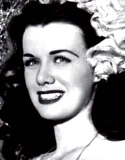
Alice Kristina Wehr Hummel, known to her family as Kristy, was 46 years old when she disappeared from her home on Alabama Hill in Bellingham, Washington, in October 1990. She lived there with her husband, Bruce Allen Hummel, and two of their children, Shanalyn and Sean, while their oldest child was away at college. Alice suffered from lupus and needed regular medication to manage it. Just days before she vanished, she had learned something that would have upended anyone's life, and she had promised to fix it. She never got the chance. What followed was one of the strangest and most legally tangled missing persons cases in Washington state history, one that ended not with justice, but with the man almost everyone believed had killed her walking free.
A Family That Had Lived in the Alaskan Bush
Before settling in Bellingham, Alice and Bruce had both worked as teachers in remote areas of rural Alaska, the kind of isolated posting that speaks to a certain resilience and adaptability in both of their characters. By 1990, they had relocated to the Pacific Northwest, raising their children on Alabama Hill while their oldest was already grown and attending college elsewhere.
A Daughter's Disclosure
In the days before Alice disappeared, her twelve-year-old daughter, Shanalyn, finally told her something Alice had apparently suspected for some time. Bruce had been sexually abusing Shanalyn since she was a toddler. Alice had asked her daughter about it twice before, and it was only days before Shanalyn's birthday that the girl finally confirmed what her mother had feared. Alice promised her daughter she would take care of the problem, and told her it would never happen again.
Gone Without a Trace
Whatever Alice intended to do about it, she never got the chance to follow through. A few days later, Shanalyn came home from school to find her mother gone. There had been no mention of any plan to leave, and Shanalyn never saw her pack so much as a bag. Alice left behind her purse, her wallet, her identification, her bank cards, and her medication for a chronic illness she could not safely go without treating. She missed Shanalyn's birthday entirely, on a day the two of them had specifically planned to spend together at a ballet performance.
A Story Built to Last
Bruce told the children their mother had gone to California to find work. In a detail that reads as almost unbearably cruel in hindsight, he had Shanalyn herself help him pack up Alice's clothes, makeup, medication, and purse, supposedly to be mailed to her mother in California. Their son, Sean, watched Bruce pack still more of Alice's belongings into boxes and a suitcase. In reality, Bruce sold some of Alice's possessions at a garage sale, and months later, Sean discovered the boxes and suitcase his father had supposedly shipped off, hidden away in the basement the entire time.
The Secret Hiding Place
Sean and his mother had shared a private tradition of leaving notes for each other in a hidden space above a false ceiling in the basement. Right after Alice disappeared, Sean checked that space and found it empty. Sometime later, he checked again and this time found a letter, purportedly written by his mother and framed as a suicide note, tucked into the same hiding spot. The handwriting, Sean would later say, looked more like his father's than his mother's.
Birthday Cards From Nowhere
For years afterward, the children continued to receive what appeared to be correspondence from their missing mother, including birthday cards and possibly a wedding gift, along with at least one letter signed in Alice's name claiming she had become involved with a new man who did not want children of his own. Bruce told the children their mother had received a promotion and relocated again, this time to Texas. He reportedly threw tantrums whenever he caught his children checking the mail themselves, hoping for a letter from her, and throughout this entire period, he continued sexually abusing Shanalyn.
A Decade of Silence
Bruce eventually remarried and moved the family to Billings, Montana. When Alice's own father died in 1993, the children tried to track their mother down to tell her, and could not locate her anywhere. It was not until 2001 that Sharinda, the eldest child, finally reported her mother's disappearance to police, more than a decade after Alice had actually vanished.
The Fraud That Gave Him Away
Investigators conducted records searches across every state in the country and the Canadian province of British Columbia, and found no evidence anywhere that Alice had died, or that she was alive under any identifiable name. They eventually located Bruce living in Montana in 2004. He told them he had last seen Alice in October 1990, when he drove her to the airport for a flight to California for a job interview, and that he had last spoken to her sometime in 1991. What investigators found instead was a financial trail that told a very different story. Since 1979, Alice had been collecting roughly $1,500 a month in disability payments through the Alaska Teachers Retirement System. Those payments never stopped after she vanished in 1990. Bruce eventually admitted that he had been forging Alice's signature on checks and official correspondence for years in order to keep collecting that money for himself. In the same round of admissions, he also confessed to having sexually abused Shanalyn.
A Confession, Then Flight
When authorities tried to bring Bruce in for a follow-up interview, he fled, leaving behind a written account of what he claimed had actually happened. In this version, Alice had not run away in 1990 at all. Bruce wrote that he had found her body in the bathroom, that she had taken her own life by slashing her wrist, and that she had left him a note asking him not to tell their children the truth. He described cleaning up the bloody scene himself and buying a new bathroom rug to replace the stained one. He said he hid her body in his van, built a makeshift raft the following day, and towed her corpse out into Bellingham Bay, weighted down with a rock and tied to the raft by a single rope. According to his account, the raft capsized, the rope gave way, and her body sank into the bay while the wind and rough water made it impossible for him to recover it.
A Story That Didn't Hold Up
Investigators found problems with this account almost immediately. Weather records for the night in question showed calm water and no significant wind at Bellingham Bay, directly contradicting the dramatic capsizing story Bruce had described. A search of the home the Hummels had lived in back in 1990 turned up no trace of blood anywhere in the bathroom, despite Bruce's detailed account of a bloody scene he claimed to have personally cleaned. Investigators also noted that Bruce had done work on the home's foundation around the same period Alice disappeared, raising the possibility that her remains had never left the property at all.
On the Run
Police searched for Bruce after he fled Montana in 2004 and found him camping in St. Maries, Idaho, about a month later. He initially agreed to take a polygraph examination, then fled once again rather than go through with it. Over the following years, he lived at a series of campsites, moving frequently and telling his new wife that he was afraid of going to prison and might choose to take his own life rather than face that outcome.
Wire Fraud First
Bruce was finally located again in Grays Harbor, Washington, in late 2006, and arrested on federal wire fraud charges connected to his years of misappropriating Alice's disability benefits. In the summer of 2007, he pleaded guilty to twelve counts of wire fraud, formally admitting for the first time that Alice had been dead since October 1990 and that he had fraudulently collected more than a quarter million dollars in benefits owed to her over the years since. He was sentenced to 27 months in prison for the fraud alone.
Murder Charges
In August 2008, while still incarcerated on the fraud conviction, Bruce was formally charged with Alice's murder. At his trial in August 2009, he abandoned his earlier suicide-and-burial-at-sea story entirely, reverting instead to his original claim that Alice had simply walked out on the family, explaining that he had invented the suicide account years earlier because he felt pressured to give investigators some kind of explanation. A former cellmate testified against him, telling the court that Bruce had confided in him that he had actually poisoned Alice with barbiturates. The jury convicted Bruce of first-degree murder. Prosecutors offered to recommend the minimum available sentence if he would simply reveal where Alice's remains could be found. He refused, and was sentenced to the maximum term of 45 years in prison.
Overturned Twice
That conviction did not stand. In early 2012, an appellate court overturned it on technical grounds and ordered an entirely new trial. Bruce was tried again and convicted a second time in 2014, this time receiving a 26-year sentence. That conviction also did not survive appeal. In October 2016, the appellate court overturned it once more, this time on a far more substantial basis, ruling that while the evidence strongly supported the conclusion that Alice had died through criminal means, the prosecution had never actually established premeditation beyond a reasonable doubt. The court found no evidence of specific planning, no purchase of a weapon or materials suggesting Bruce had prepared in advance to kill his wife, and concluded that the case, as prosecuted, rested almost entirely on motive and after-the-fact concealment rather than proof that the killing itself had been premeditated. Because a reversal based on insufficient evidence is treated under the law as equivalent to an acquittal, and because prosecutors in the original trial had not requested jury instructions allowing for a conviction on the lesser charge of second-degree murder, Bruce could not be tried a third time on any charge connected to Alice's death. He was released.
What's Left
Alice Kristina Wehr Hummel has never been found. Investigators remain convinced that Bruce murdered her after she confronted him, or prepared to confront him, over the abuse Shanalyn had finally disclosed, and that he then spent more than a decade constructing an elaborate cover story, complete with forged correspondence and stolen disability payments, to keep anyone from looking too closely. Bruce has continued to maintain that he did not cause his wife's death. Nearly thirty five years after Alice vanished, the case remains formally open, though the man almost everyone connected to it believes was responsible walks free today, protected by the same legal system that twice found enough evidence to convict him and twice took that conviction away.
Sources
- The Charley Project: Alice Kristina Wehr Hummel
- FindLaw: State of Washington v. Bruce Allen Hummel (2016)
- DoeNetwork: 153DFWA - Alice Kristina Hummel
- VLEX: State v. Hummel