The Kidnapping and Murder of Ruochen 'Tony' Liao
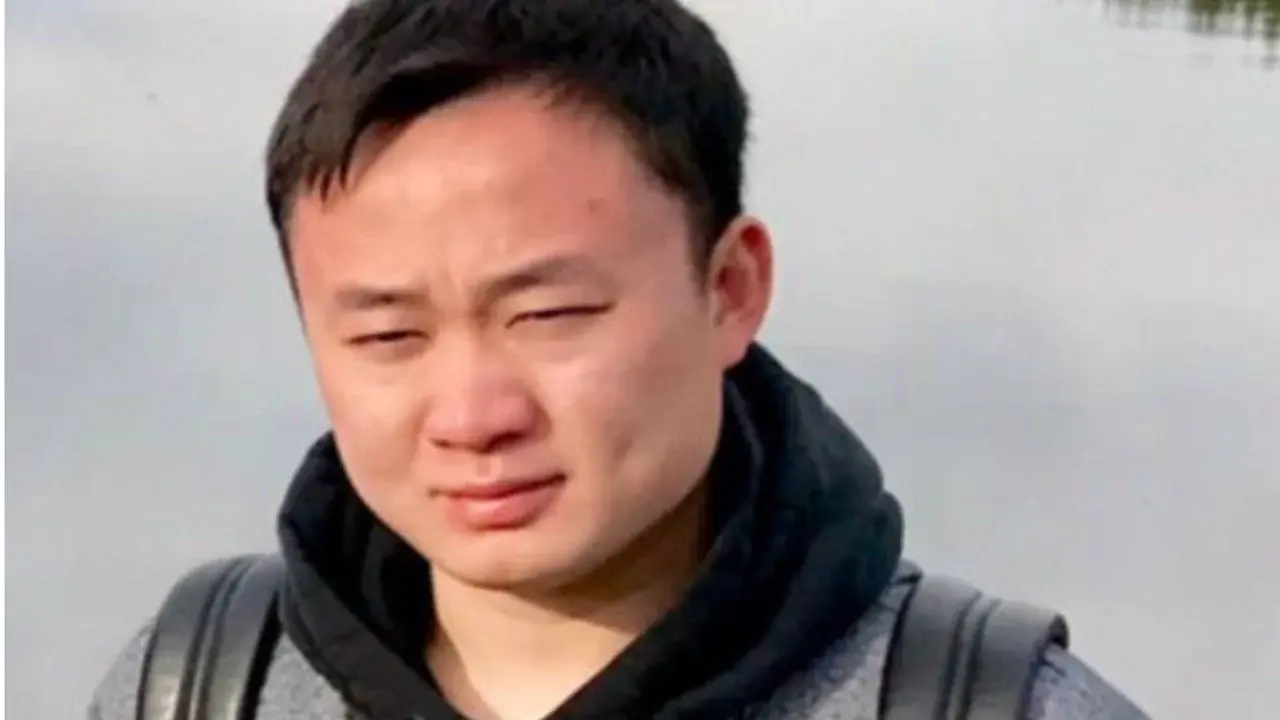
Ruochen "Tony" Liao had built exactly the kind of life that made Southern California feel worth the move. Born in Sichuan, China in 1990, he had studied in Nebraska before relocating to the Los Angeles area, where he carved out a niche for himself in the world of luxury cars. By 2018, he was running a high-end vehicle consignment business out of Costa Mesa, brokering deals on Porsches, Bentleys, and other vehicles that most people only ever see from a distance. He was 28 years old, ambitious, and living in Santa Ana on a visa. To friends and family, he was simply Tony. And then, on the evening of July 16, 2018, he walked across a mall parking lot in San Gabriel and disappeared forever.
A Meeting That Was Never What It Seemed
In the weeks before his abduction, Liao had been in contact with a man using an alias, later believed to be Peicheng Shen. Shen, then 34, approached Liao under the pretense of helping him collect a debt owed by a third party. It was a plausible enough offer in Liao's line of work, the kind of introduction that might have seemed like a useful connection. The two met at least twice before the fateful evening in July.
What is particularly striking, in retrospect, is how aware Liao already was that something felt off. Two days before his disappearance, he brought a friend along to his second meeting with Shen, simply because he did not trust the man. When Shen instructed him to come to the third meeting alone, Liao again brought his friend and had him watch from a safe distance. It was a precaution that showed good instincts, even if it was ultimately not enough to save him.
On the evening of July 16, that friend stood at a distance in the parking lot of San Gabriel Square, a shopping center on West Valley Boulevard, and watched Liao climb into a dark-colored minivan. The vehicle pulled out of the lot and drove away. Liao's friend never saw or heard from him again, and reported him missing the following day.
What Happened Inside the Minivan
Court documents and FBI affidavits later revealed the full horror of what unfolded in the moments after Liao entered that vehicle. The minivan was driven by Alexis Ivan Romero Velez, a 24-year-old from Azusa who had been recruited by Anthony Valladares, a Pasadena man who frequented the same UFC gym as Yang and Shen. Valladares himself was hiding inside the minivan, having agreed to act as "muscle" for the operation in exchange for cash and marijuana. He later admitted to sourcing the taser used in the attack, as well as acquiring a revolver and bullets.
When Shen uttered a specific prearranged word in Chinese, Valladares and Shen launched into a violent assault on Liao, using the taser to subdue him. He was bound with his legs tied together, his arms restrained behind his back, and tape placed over his eyes. The minivan drove to Rosemead, where Liao was transferred to a different vehicle. Shen and Guangyao Yang, a 26-year-old who had helped orchestrate the scheme, then transported him to a house in Corona, where he was confined inside a bedroom closet.
The plan was, at its core, a ransom scheme. Liao had been chosen not at random but because of his perceived wealth and his connections in the Chinese business community. The motive behind his targeting appears to have been rooted in a financial grievance. A voice on the phone call that followed told Liao's father in China, "Your son has made me very poor. I have lost everything and suffered a divorce because of him." Police later noted that Liao had worked with people who, in their words, "may not have been the most reputable."
The Ransom Demand and a Father's Worst Phone Call
The day after the kidnapping, Liao's father, still in China, began receiving messages through WeChat, the popular Chinese messaging platform. Photos appeared on his account showing his son bound and blindfolded inside the closet. Five minutes after those images arrived, his phone rang. He answered and heard his son's voice, speaking in Mandarin: "Father, save me, help me, I have been kidnapped."
It is difficult to imagine the weight of that moment. What followed made it worse. A message arrived demanding that the father deposit $2 million into three separate Chinese bank accounts within three hours, in exchange for his son's safe return. The family did not pay the ransom. The kidnappers made no further contact.
Whether paying the ransom would have saved Liao's life is something that will never be known. Investigators believe he died while still held captive in the Corona house, possibly as a result of the repeated taser shocks and the brutal assault he endured. His death may have occurred within a day or so of the kidnapping itself.
Covering Their Tracks
What followed Liao's death was a calculated attempt to erase what had happened. On July 18, two days after the abduction, Shen and Yang drove out to the Mojave Desert and buried Liao's body, along with other physical evidence connected to the crime. That same day, Shen arranged for the closet of the Corona house to be re-carpeted, apparently in an effort to eliminate forensic traces left behind. Yang, meanwhile, used his phone to search the internet for information about how long it takes a body to decompose in soil. The search history would later become one of the more damning pieces of evidence against him.
Yang left the United States for China on July 26, just ten days after the abduction. Three days after his departure, Chinese authorities arrested him on suspicion of kidnapping. Shen's whereabouts became less clear over time, though he too is believed to have fled to China. He was eventually arrested by Chinese authorities in January 2019 and began speaking to investigators there.
Back in California, the FBI had been building its case. About a month after the kidnapping, the bureau reached out publicly, releasing a composite sketch of the man known only as "David" — the alias Shen had used in his dealings with Liao — and offering a reward of up to $25,000 for information leading to Liao's recovery, dead or alive. Liao's family put up an additional $150,000 of their own money. His family's attorney told reporters at the time that they were still holding onto hope. "Our hope is that Tony is still alive," he said, "and we're operating under the premise that he is still alive, which is why this reward and this publicity is so crucial to the case."
That hope, as investigators suspected even then, would not survive what came next.
Finding Tony
In 2019, the FBI's Evidence Response Team conducted a search of the Mojave Desert area where they believed the body had been buried. The search was successful. Liao's remains were recovered and subsequently identified through DNA testing by the FBI laboratory. The desert, vast and brutally hot, had been chosen precisely because it seemed like a place where evidence might disappear permanently. It almost worked.
In March 2019, federal prosecutors in Los Angeles charged Yang and Shen with kidnapping, conspiracy to kidnap, attempted extortion in violation of the Hobbs Act, and threat by foreign communication. Both men remained in custody in China, where they also faced charges related to the kidnapping under Chinese law. Extradition remained a complicating factor throughout the case, given the absence of a formal extradition treaty between the United States and China.
The Reckoning in American Courts
Of the four conspirators, it was Valladares and Romero Velez who faced justice in an American courtroom. Valladares pleaded guilty in October 2020 to one count of conspiracy to kidnap. In his guilty plea, he admitted to acting as the muscle in the scheme, to helping acquire the taser, and to playing an active role in the assault on Liao inside the minivan. Romero Velez, the driver, pleaded guilty in September 2019 to the same conspiracy charge.
In October 2021, Valladares was sentenced to more than 16 years in federal prison by Judge Fernando M. Olguin, who described the kidnapping as a "horrendous crime." Prosecutors had been emphatic in their sentencing memorandum. "The seriousness of his crime cannot be overstated," they wrote. "He was an active participant and organizer of a violent kidnapping motivated solely by greed. He acted with utter disregard to the potential suffering and harm to the victim and his family." The judge also ordered Valladares to pay $33,090 in restitution. As part of his plea agreement, federal prosecutors had recommended a sentence between 12 and 25 years.
Justice Deferred, Justice Incomplete
The case of Ruochen Liao sits in a place that many families of crime victims know too well: partially resolved, with key figures still beyond the reach of American justice. Yang and Shen, the two men prosecutors allege masterminded the plot, remained in Chinese custody as of the time of their US indictment. The kidnapping charges they face in the US carry a maximum penalty of life in federal prison. The extortion and foreign communication charges carry up to 20 years each. Whether they will ever stand trial in the United States remains uncertain.
What is certain is that a 28-year-old man who came to America to build something for himself was targeted, brutalized, and killed because someone blamed him for their financial ruin. The ransom demand was never fulfilled. The family got no second phone call, no further negotiation, no resolution through payment. They got photographs of their son bound and blindfolded in a closet, a phone call that lasted just long enough to break their hearts, and years of waiting to learn where his body had been left.
Tony Liao was eventually brought home, in the only way that was still possible. His story is a reminder of how quickly trust can be weaponized, how a business dispute can curdle into something irreversible, and how far the consequences of greed can reach.
Sources
- The Charley Project — Ruochen Liao
- South China Morning Post — Two Men Charged in US Over 2018 Kidnapping (July 2020)
- South China Morning Post — US Man Pleads Guilty in Kidnap Death of Chinese National (October 2020)
- South China Morning Post — Two Chinese Nationals Indicted in California Kidnapping (March 2019)
- Pasadena Now — Local Man to Plead Guilty in Kidnapping of Luxury Car Dealer
- CBS Los Angeles — Anthony Valladares Sentenced to 16 Years
- U.S. Department of Justice — Pasadena Man Sentenced to More Than 16 Years in Federal Prison
- FBI Los Angeles — FBI Offers $25K Reward for Recovery of Santa Ana Man Abducted in San Gabriel
- KTLA — 2 Men Indicted in $2M Kidnapping Scheme in SoCal (March 2019)
- Fox News — 2 Chinese Nationals Charged in Kidnap of Car Dealer (March 2019)
- Heavy — Tony Liao Ruochen: 5 Fast Facts