A Stalled Car on Sunset Street: The Disappearance of Cherita Thomas
Cherita Janice Thomas was twenty years old on August 3, 1980, living in AuSable Township, Michigan, a small community along Lake Huron in the state's northeastern reaches. She stood five foot five, weighed a hundred thirty five pounds, had black hair and brown eyes, and was a cigarette smoker, small details that would end up circulating for decades in a case that refused to reach any clean resolution. That evening, Cherita had gone out with her friend Patricia Call, leaving Call's four year old daughter along with her own children in the care of a babysitter while the two women attended a baseball game together.
A Car That Wouldn't Stay Running
The two women left the game early, and Cherita borrowed Patricia's brown AMC Matador to go retrieve the children from the babysitter's house. The car had other plans. It stalled once at the intersection of U.S. 23 and River Road, and then a second time on Sunset Street, only about two blocks from where the babysitter lived, close enough that Cherita should have been able to simply walk the rest of the way without much trouble. A witness later placed her on Sunset Street at 11:15 that night, climbing into a blue pickup truck driven by a bearded white male, presumably someone who had stopped to help a stranded young woman with car trouble. It was the last confirmed sighting anyone has ever had of Cherita Thomas.
When Patricia Call arrived home, the car and her friend weren't there waiting as planned. The babysitter confirmed that Cherita had never actually arrived to pick up the children at all. Investigators later located the abandoned Matador sitting along the roadside, with Cherita's house keys, her cigarettes, and a set of directions still inside it, though notably without the car keys themselves anywhere to be found. Cherita herself had simply vanished, apparently swallowed up somewhere between a stalled car and a blue pickup truck that had seemed, at the time, like nothing more than a stranger's kindness.
A Suspect Overlooked for Years
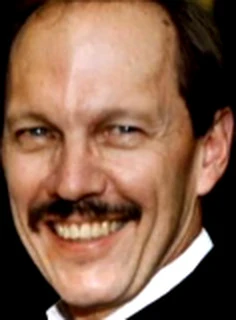
The man driving that pickup truck was Jimmie Allen Nelson, who happened to be Patricia Call's own brother-in-law and lived right there on Sunset Street, close to where Cherita's car had broken down for the second time. Despite that direct connection, investigators didn't focus on Nelson right away. Their early attention had instead been diverted by the presence of a federal fugitive known to be in the area at the time, a lead that eventually went nowhere once investigators determined the fugitive actually had a solid alibi for that night.
By the time investigators circled back to Nelson, years had already passed, and his own account of the night kept shifting under scrutiny. He initially denied having any contact with Cherita at all, before eventually admitting that he had, in fact, given her a ride, claiming he had simply dropped her off at a restaurant afterward. Investigators later learned Nelson had reportedly asked other witnesses to back up false versions of events, and that he had sold his own pickup truck not long after Cherita disappeared, behavior investigators would later describe as evidence he was actively covering his tracks. Compounding the suspicion around him, police had separately been told that Nelson harbored hostile, racially charged attitudes toward Black people, and Cherita herself was Black, raising the possibility that whatever happened to her that night may have been motivated by more than simple opportunity.
A Conviction Nearly Thirty Years Later
The case moved excruciatingly slowly through the legal system even once Nelson became the primary focus. He wasn't arrested on charges of obstruction and lying to police until 2004, twenty four years after Cherita vanished, and it took until 2005 for prosecutors to formally charge him with murder and perjury. In 2006, he was convicted on five separate perjury counts along with obstruction, receiving a comparatively light sentence of one year in jail and two years of probation for those charges specifically. The murder charge itself didn't go to trial until 2010, thirty years after Cherita disappeared, when a two day trial ended with Nelson convicted of second degree murder and sentenced to a minimum of twenty five years, up to a maximum of fifty.
A Reversal Built on Evidence the Public Has Never Seen
Nelson's conviction held for four years before an appeals court took it apart entirely. In February 2014, three appellate judges ruled that prosecutors had failed to establish, beyond a reasonable doubt, two essential elements required for a second degree murder conviction: that Nelson was actually the person who caused Cherita's death, and that whatever happened had been carried out with malice. The court's language acknowledged the fundamental limitation shaping the entire case from the very beginning, noting that courts must live with the evidence gleaned from a police investigation that did not seriously examine Nelson until many years after Thomas's disappearance, an implicit acknowledgment that the case had been badly hampered by how long it took investigators to focus on him in the first place.
What made the reversal especially unusual, though, wasn't simply the insufficient evidence finding on its own. The court specifically noted that new evidence had emerged implicating another individual entirely in Cherita's presumed murder, evidence serious enough that a jury would likely not find Nelson guilty beyond a reasonable doubt if it were presented at a new trial. That evidence, and the identity of the person it points toward, has been sealed from public view ever since, leaving the case in a strange limbo where prosecutors themselves requested the overturning of Nelson's conviction, official court filings acknowledge someone else may be responsible, and yet the public has never been told who that person actually is. Because of double jeopardy protections, Jimmie Nelson can never be tried again for Cherita's murder, regardless of what that sealed evidence ultimately contains.
A Body Never Found, A Name Never Revealed
More than four decades after Cherita Thomas climbed into a blue pickup truck on Sunset Street, her body has never been recovered, and the legal record now includes an acknowledgment that someone other than Jimmie Nelson may bear responsibility for her death, without ever disclosing who that person is or what evidence points toward them. Cherita's own case remains listed as an active investigation, one shaped by a uniquely frustrating combination of factors, an investigation that took decades too long to focus on its eventual suspect, a conviction that took thirty years to secure and only four to unravel, and a piece of sealed evidence that has left the actual answer to what happened that August night sitting somewhere in a courthouse file, known to prosecutors and judges, but never to the public, and never, as far as any public record shows, to Cherita's own family.
What remains especially unusual about this case, even among cold cases that eventually produce a conviction only to see it thrown out, is the deliberate choice to keep that new evidence sealed rather than released once it had already accomplished its legal purpose of clearing Nelson. In most reversed convictions, the public eventually learns at least the outline of what changed a court's mind. Here, decades after Cherita disappeared, the only certainty offered to anyone following the case is that the story investigators originally built around Jimmie Nelson was, by the court's own admission, not the whole truth, and that whoever actually knows what happened to her that night has never been named where the public can see it.
Sources
- The Charley Project: Cherita Janice Thomas
- Legal News: Court of Appeals strikes 1980 murder conviction
- ABC7 San Francisco: Jimmie Nelson convicted and sentenced in 30-year-old Iosco County murder of Cherita Thomas
- The Trail Went Cold: Episode 182, Cherita Thomas
- National Registry of Exonerations: Jimmie Nelson