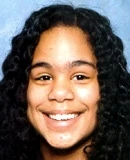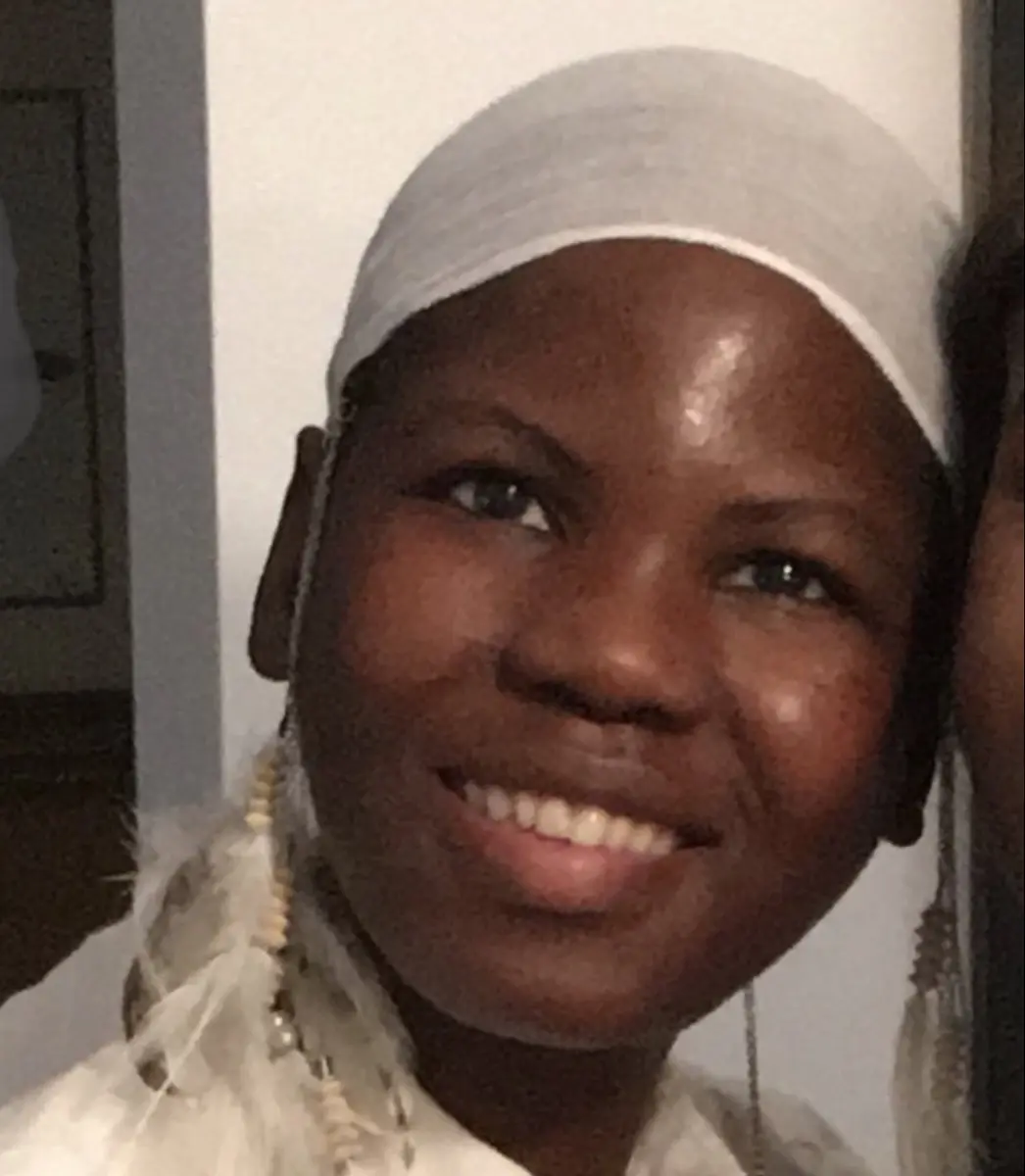
A Break-Up in a Parking Lot: The Disappearance of Typhenie Kae Johnson
Typhenie Kae Johnson, known to the people who loved her as Pippy or simply Typh, grew up in Iowa before relocating to Texas in her twenties looking, like a lot of people who make that kind of move, for a fresh start. By the fall of 2016 she was twenty five years old, living with her twin brother Asher at the Post Oak East Apartments in Euless, a suburb tucked between Fort Worth and Dallas, and had built a life that her family described as stable and full of plans. Her mother, Deborah Stub, remembered her as talkative, someone who filled a room, someone who had recently started talking about buying her own house and her own car once she'd saved up enough. She had scars on her chin and forehead, piercings in her ears, nose, tongue, and navel, and a collection of tattoos that told their own small story, an anchor on her left shoulder, a feather on the back of her upper arm, the word Faith inked along her inner left wrist. None of that mattered to the man she'd been dating since that June, a thirty four year old named Christopher Revill, who she'd met through his sister not long after he'd been released from a Texas prison, where he had served time for aggravated robbery with a deadly weapon, assault of a public servant, and burglary of a habitation with intent to commit assault.
A Relationship That Felt Off
By August, barely two months into the relationship, people close to Typhenie had already started noticing something was wrong. Her aunt, Janelle Hofeldt, came to visit that month and left with an uneasy feeling she couldn't entirely shake, later recalling that something about the situation just felt off by the end of the week. During that visit, Typhenie confided in her aunt that she was thinking about ending things with Revill, and at one point asked her, in the kind of plain, almost childlike phrasing people sometimes use when they're nervous about a decision they've already made, how do you break up with a guy. Her aunt told her, simply, that you tell them you need to breathe, that you need time for yourself. When Hofeldt later texted Revill directly to express her concerns about her niece's safety, he wrote back that he would never hurt her, that he loved her too much. Two months after that exchange, Typhenie Johnson was gone.
The Twenty Minutes That Changed Everything
On the evening of October 10, 2016, Typhenie was at the apartment she shared with Asher, spending time with him and his girlfriend, when Christopher Revill showed up uninvited. She went outside to talk to him, apparently intending to finally have the conversation she'd been building up to since August, to tell him it was over between them. The two of them talked in the parking lot for a while, and at some point moved out of view of the apartment, out of anyone's direct line of sight. About twenty minutes later, Revill came back alone. He told Asher and the others that Typhenie had gotten into a vehicle driven by someone he didn't recognize, someone who had apparently offered to help fix her car, and that she had ridden off with them. It was a strange, thin explanation, and it only got stranger the more anyone looked at it. When Asher went out to check the parking lot himself, he found his sister's phone, her car keys, and a single sock lying in the grass near where Revill's car had been parked, her own vehicle sitting nearby with the keys left on top of it. Revill's trunk, witnesses noted, had been left open.
Police arrived and began building a picture of the previous half hour that didn't match the story Revill had given. Tire marks and footprints in the area were matched to him. When officers eventually brought him back to the apartment complex to go over his account, they noticed he was visibly sweating despite the cool October evening, and he denied having parked his car where multiple witnesses had already placed it. A search of the backyard behind his parents' home near Sandy Lane Park turned up a torn bra with a stretched clasp, one of Typhenie's shirts, a broken Fitbit watch, and a tank top, scattered items that told an entirely different story than the one about a stranger's car.
An Arrest, A Trial, and a Life Sentence
Christopher Revill was indicted on charges of aggravated kidnapping with intent to kill, and maintained his innocence throughout the years leading up to trial. When the case finally went before a Tarrant County jury in August 2019, nearly three years after Typhenie vanished, prosecutors leaned heavily on the physical evidence recovered from the parking lot and the backyard, the footprints, the discarded clothing, the broken watch, alongside the account of Revill's own behavior in the immediate aftermath, since no version of a stranger arriving to help with car trouble ever squared with what investigators found scattered across two separate properties. The defense pushed back on the absence of any of Typhenie's DNA inside Revill's car trunk or blood at the scene, arguing that physical evidence alone couldn't place him at the center of an actual abduction. The jury disagreed. Revill was convicted of aggravated kidnapping and sentenced to life in prison, with no eligibility for parole until 2046. One investigator, reflecting on the conviction afterward, put it simply: he's never going to hurt another woman again. Despite the conviction, and despite years of searches along the Trinity River, Trinity Boulevard, and the wooded areas near State Highway 360 involving volunteers, private investigators, and even drone operators, Typhenie Johnson's body has never been found. Her family, still holding a GoFundMe campaign that raised only a few hundred dollars against a five thousand dollar goal, and a Facebook page called Bring Typhenie Johnson Home, has continued searching on weekends in the years since, holding onto the kind of hope that coexists uneasily with what Janelle Hofeldt herself came to call, publicly, the sickening truth that Typhenie had already been taken from this world far too soon.
A Name That Kept Resurfacing
What made the case even more disturbing to investigators, and to the public once it came to light, was that this was not the first time a woman close to Christopher Revill had vanished under circumstances that strained belief. Ten years before Typhenie disappeared, in January 2006, Revill's former girlfriend Taalibah Fatin Bint Islam went missing after, according to Revill's own account to police at the time, dropping off their infant son at his home and then leaving in an SUV driven by someone unknown, never to return. Investigators at the time found no evidence directly tying Revill to Islam's disappearance, and the case went cold for years, even though a police officer would later testify that Revill had assaulted Islam while she was nine months pregnant, punching her in the stomach and the head. For seventeen years, Taalibah Islam's case sat unresolved, its similarities to what would eventually happen to Typhenie Johnson invisible to anyone who wasn't looking specifically for a pattern.
That changed in March 2023, when human remains were discovered in the 900 block of South Hughes Avenue in Fort Worth. DNA testing confirmed in June 2023 that the remains belonged to Taalibah Islam, finally closing, after seventeen years, the question of whether she was alive somewhere or had been a victim all along. The discovery arrived four years after Revill had already been sentenced to life for what happened to Typhenie, meaning that by the time investigators finally recovered proof of what had happened to his first missing girlfriend, he had already been safely off the streets for years, convicted in connection to a second woman who had also tried, in her own way, to walk away from him.
What Remains Unanswered
Typhenie Johnson's family has a conviction now, a life sentence handed down by a Tarrant County jury that believed, based on torn clothing and matched footprints and a story about a stranger's car that never held together, exactly what happened to her that October night in 2016. What they do not have, nearly a decade later, is Typhenie herself, or anywhere close to an answer about where her body might be. The parallel to Taalibah Islam's case, similarly unresolved for seventeen years until a chance discovery finally gave her family a body to bury, offers Typhenie's family a strange, complicated kind of possibility rather than comfort, a reminder that answers in cases like these can arrive decades after anyone expects them, if they arrive at all. Until then, her family keeps searching the same stretches of riverbank and highway they've been walking for years, still hoping, against everything the evidence has told them, that this particular story might somehow end differently than the one written seventeen years earlier for the woman who came before her.
Sources
- The Charley Project: Typhenie Kae Johnson
- CBS News Texas: The Typhenie Johnson mystery, the Fort Worth cold case that remains unsolved 9 years later
- CBS News Texas: Christopher Revill guilty in kidnapping of missing woman Typhenie Johnson, sentenced to life
- Dallas Observer: Typhenie Johnson Still Missing As Boyfriend Sits in Jail For Her Kidnapping
- WFAA: Man found guilty of kidnapping ex-girlfriend, gets life in prison
- WFAA: DNA confirms human remains found in Fort Worth is woman who went missing in 2006