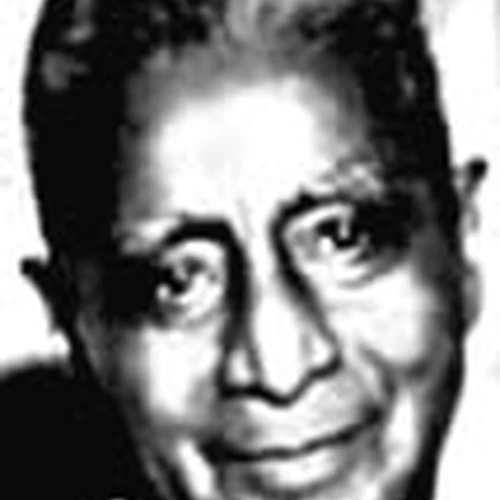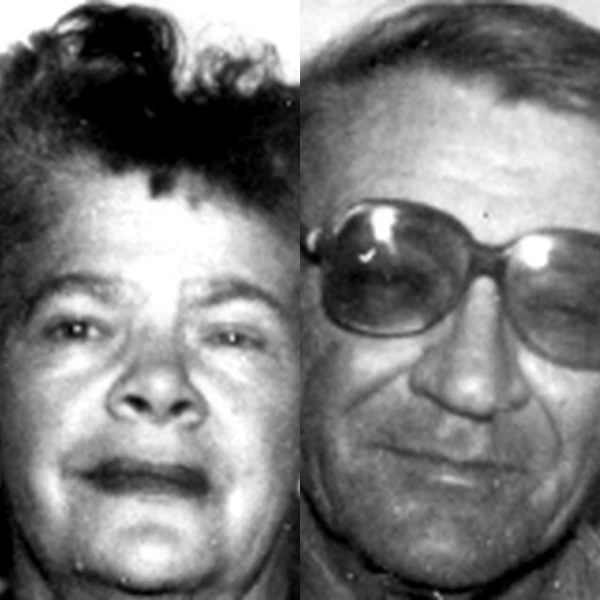
The Suitcases That Never Left: Frank and Tessie Pozar
Frank Pozar had only completed a sophomore year of high school. His wife Tessie had gone no further than the sixth grade. Neither of them came from money, and neither ever received much formal education, yet together they built a genuinely substantial fortune in Spokane, Washington, running a laundromat and managing a handful of low rent motels across the city, including the Spokane Street Motel that served as both their business and, for part of the year, their home. By 1984, when Frank was 62 and Tessie 58, their combined estate was worth something in the neighborhood of half a million dollars, money the couple had also begun investing in property in Hawaii as part of a retirement plan built around the place they already spent every winter.
Their routine was well established and unremarkable to anyone who knew them. Each fall, the Pozars closed the Spokane Street Motel, boarded their dogs, an Akita and a mixed breed, put their camper into storage, and flew to Hawaii, where they stayed without a working telephone until the following spring, when they would return to Spokane and reopen the motel around March or April. On October 29, 1984, they followed that same pattern one more time, or at least appeared to. Their dogs never made it to their scheduled boarding reservation that day. The camper they had planned to place in storage was later found abandoned instead at Spokane International Airport's long term parking lot, left there by an unidentified man sometime before one o'clock in the afternoon on October 30, the very day Frank and Tessie were supposed to board their flight to Hawaii. They never got on that plane. The tickets were never used or cashed in. Neither Frank nor Tessie Pozar has been seen since.
A Silence Nobody Questioned for Months
Because the Pozars' winter routine already involved months of minimal contact with anyone back home, their actual disappearance went unnoticed for an unsettling stretch of time. Their children and Spokane neighbors were used to hearing from them only occasionally, through an infrequent postcard, and otherwise simply expected to see them again once the motel reopened in the spring. It was not until after Christmas, when the usual holiday communications from the couple failed to arrive at all, that family members finally grew concerned enough to check in directly. Relatives contacted authorities in Hawaii, and Hawaii officials in turn reached out to the Spokane Police Department on January 7, 1985, more than two months after Frank and Tessie had actually vanished, formally opening what would become a missing persons investigation into a couple who had, for all practical purposes, disappeared from their own lives without anyone realizing it in real time.
A Son Who Moved In
Not long after his parents vanished, their son, Frank Pozar Jr., then 33 years old, moved into the Spokane Street Motel himself. He told his sister, Linda Rose, that their parents were off sailing somewhere, an explanation he did not repeat consistently to everyone else who asked, offering conflicting accounts of where his parents actually were depending on who was doing the asking. He also claimed to have received written instructions from Frank and Tessie authorizing him to operate the motel in their absence, a claim investigators were never able to independently verify. When police eventually searched the property as part of the missing persons investigation, they discovered something considerably more troubling than an absent explanation: Tessie's reading glasses and the couple's fully packed suitcases were still sitting inside the motel, luggage that should have traveled with them to Hawaii and instead had never left Spokane at all.
Forged Checks and a Failed Polygraph
As detectives dug further, they found that Frank Jr. had been cashing in his parents' savings bonds and using their credit cards without authorization in the weeks and months after their disappearance, activity that continued well after any legitimate contact with his parents would have been possible. Investigators also determined that he had forged his mother's signature on a check worth 550 dollars. In December 1986, Frank Jr. was convicted on resulting theft and forgery charges and sentenced to twenty months in prison, a conviction tied entirely to the financial fraud rather than to anything directly connecting him to what had actually happened to his parents.
The relationship between Frank Jr. and his parents before their disappearance had reportedly been strained well before any of this began. Family members later described the elder Pozars as people who would go out of their way to avoid their son, effectively running from him if they saw him coming, a detail that cast his sudden, confident takeover of their motel and finances in an even more unsettling light. Frank Jr. initially agreed to submit to a police administered polygraph examination, then refused to actually go through with it under those terms. The Spokesman-Review and the Spokane Chronicle newspapers jointly funded an independent polygraph exam instead, conducted by examiner Robert Mandich. According to press accounts from the time, Frank Jr. got roughly halfway through that test before apparently realizing he was failing it, at which point he tore the machine's sensors off his own body and refused to continue any further. Mandich's professional conclusion, based on what the test had already recorded, was that Frank Jr. had either directly harmed his parents himself or possessed direct knowledge of who had.
No Charges, No Bodies, No Closure
Despite that conclusion, despite the forged checks, despite the packed suitcases left behind and the documented family estrangement, Frank Pozar Jr. was never charged with anything connected to his parents' actual disappearance, only with the financial crimes investigators could prove independently of what may or may not have happened to Frank and Tessie themselves. He served his sentence for the theft and forgery convictions and eventually dropped out of regular contact even with his own sister, who told reporters years later that her last known information placed him somewhere in Washington, D.C., communication between them having ended after he sent her what she described only as crazy letters. As of the case's twenty fifth anniversary in 2009, Spokane police still identified Frank Jr. as their primary suspect in his parents' presumed deaths, while acknowledging they had no current information on where he was actually living.
A Memorial That Never Happened
Linda Rose, the Pozars' daughter, took over managing the old Spokane Street Motel property herself in the years after her parents disappeared, eventually converting it into apartments rather than continuing to run it as the motel her parents had built. She never held any kind of memorial service for Frank and Tessie, telling an interviewer decades later that there would have been no real point to one, since no one would have actually attended. Without recovered remains, without a body to bury or even a confirmed cause of death, the practical rituals that typically accompany a family's grief simply never had anywhere to attach themselves. She described her own life in the years since simply as surviving until she dies, a blunt assessment of what it means to carry an unresolved disappearance indefinitely, with no trial, no conviction, and no answer ever likely to arrive.
Still Missing, More Than Forty Years Later
Frank and Tessie Pozar's case remains officially unsolved. No bodies have ever been recovered, no charges were ever filed connecting anyone to their actual deaths, and the one person investigators have consistently pointed to as their most likely suspect has not been in confirmed contact with his own surviving family in years. What remains behind is a set of suitcases that were packed for a trip that never happened, a pair of reading glasses left on a nightstand, and a motel that changed hands and changed purpose entirely while the two people who spent their lives building it were never seen again.
Sources
- The Charley Project: Frank M. Pozar
- The Charley Project: Tessie E. Pozar
- The Spokesman-Review: Questions linger in disappearances
- The Doe Network: 4089DMWA, Frank M. Pozar