The Television Was Still On: Lillian Rose Martin
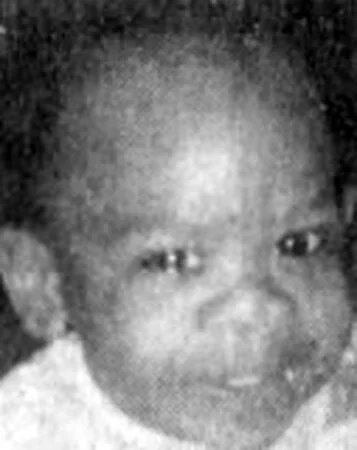
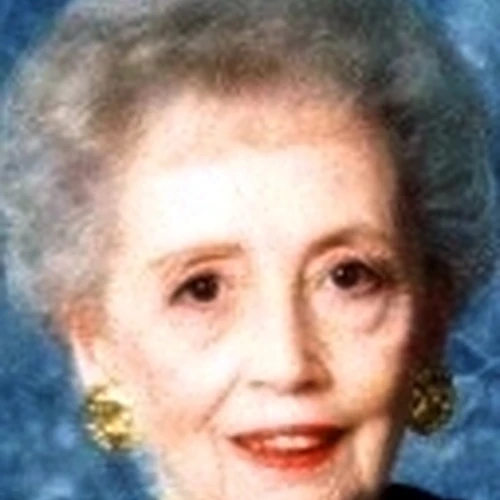
Lillian Rose Martin was born March 17, 1924, and by May 2001 was a seventy seven year old widow living in Deltona, Florida, sharing a home in the 1000 block of West Seagate Drive with her ten year old grandson, Joshua Roland Paul Bryant, her granddaughter Joanne Miller, Joanne's husband John, and the couple's own young son. Joshua's mother, Lillian's daughter, had died in 2000 from complications related to substance abuse, and in the aftermath Lillian had stepped into the role of primary caregiver for her young grandson, even as she was simultaneously in the process of selling her own house and had moved into guest quarters on the same property to make that arrangement work. It was, by every outward appearance, a family doing its best to hold together in the wake of a genuine loss, with Lillian providing the kind of steady presence a grieving ten year old badly needed.
An Ordinary Morning That Never Resolved
On the morning of May 12, 2001, Joanne and John Miller left the house around 7 a.m., leaving Lillian and Joshua alone together as they often were. At around 9 a.m., Lillian spoke by phone with her own sister, mentioning that she and Joshua were busy doing housework around the property and confirming plans to pick her sister up sometime between 11 and 11:15 that morning for a grocery run. That call would turn out to be the last confirmed contact anyone had with either Lillian or Joshua. When Joanne returned home around 11 a.m., she found the house unlocked, Lillian's own Ford Tempo still parked in the driveway exactly where it should have been, and both her grandmother and her younger brother gone entirely.
What she found inside only deepened the alarm. The master bedroom showed signs of having been vandalized in some way. Lillian's purse remained behind, still containing her credit cards, her cash, and her identification, exactly the kind of items no one leaves behind voluntarily under any ordinary circumstance. Her keys sat untouched as well. The television was still running, suggesting whatever had happened had interrupted something as mundane and ordinary as watching a show on a Saturday morning. Joshua, for his part, had vanished barefoot, with his bicycle and his toys left sitting undisturbed in the garage, offering no indication he had simply wandered off on his own initiative. No activity has ever been recorded on Lillian's credit cards or bank accounts from that morning forward.
A Case That Drew National Attention and Produced Nothing
The disappearance of an elderly grandmother and her young grandson together, from a home that showed every sign of something having gone badly wrong in the span of a few hours on an otherwise ordinary Saturday, drew significant regional and eventually national attention. Investigators pursued hundreds of tips called in from around the country in the months following Lillian and Joshua's disappearance, chasing down leads that, one after another, failed to produce either of them or any solid answer about what had actually happened inside that house. Joanne and John Miller, the two adults who had left the house that morning and returned to find it emptied of the two family members left behind, were themselves questioned extensively by investigators given their position as the people closest to the scene. Both maintained their innocence throughout, eventually retaining an attorney as the questioning continued, with Joanne stating publicly that the family had been experiencing no particular problems or conflict in the period leading up to that May morning. The case, despite the scale of the search effort behind it, went cold.
An Electrician's Crack Fueled Rampage Three Years Later
The break that finally moved the case forward did not come from any renewed tip about Lillian or Joshua directly. It came in May 2004, nearly three years after they vanished, when a Deltona electrician named Douglas Manning McClymont, a man who had previously worked inside the Martin family home and who carried his own prior record involving drug offenses and burglary, embarked on a violent, rapidly escalating crime spree. McClymont shot and killed an acquaintance, then kidnapped that man's wife and fled the state entirely, driving to North Carolina, where he went on to fatally shoot a separate married couple and kidnap his own estranged wife as well. The spree ended only when McClymont fled a routine traffic stop and ultimately took his own life rather than face capture. Neither of the two women McClymont had kidnapped during the rampage was seriously injured, and at least one of them later told investigators that during her time in his custody, McClymont had confessed directly to killing both Lillian and Joshua years earlier.
Bones Found in the Woods
That confession, delivered to a kidnapping victim in the final chaotic days of McClymont's life, gave investigators something they had lacked for three years, an actual, specific person to connect physically to the Martin family disappearance. Acting on tips from residents who recalled seeing McClymont's distinctive tan work van in the area around the time Lillian and Joshua vanished, investigators conducted an intensive search of wooded terrain around Cassadaga, roughly five miles from the Martin home. In June 2004, that search turned up Joshua's skeletal remains. Investigators separately recovered a gold watch resembling one Lillian was known to have owned, found roughly twenty yards from where Joshua's eyeglasses had also been located, though the watch itself was never conclusively identified as belonging to her. Lillian's own remains were never found, and have not been recovered in the decades since.
A Sheriff's Blunt Assessment
Volusia County Sheriff Ben Johnson spoke publicly and directly about the department's conclusions once the connection to McClymont became clear, stating plainly that he himself believed Douglas McClymont was the person who had taken both Joshua and Lillian and who had ultimately murdered them both. Johnson also acknowledged the deep frustration built into that conclusion, describing the case as genuinely bizarre and haunting, and noting that whatever specific knowledge McClymont possessed about exactly what happened that May morning, including where Lillian's own remains might actually be located, had died with him the moment he chose to end his own life during that final standoff rather than allow himself to be captured and questioned formally.
A Community That Kept Searching
The scale of the initial search effort in 2001 reflected just how unsettling the case felt to the surrounding Deltona community from the very beginning. An elderly woman and a young child disappearing together, without a struggle loud enough to alert neighbors, without any vehicle taken, and without any subsequent financial activity to trace, did not fit the profile of a wandering senior or a runaway child that investigators might otherwise have hoped for. Volunteers and law enforcement combed the surrounding neighborhoods and wooded areas repeatedly in the weeks after the disappearance, well before anyone had any specific reason to suspect Douglas McClymont individually, simply because the physical evidence inside the house, the untouched purse, the running television, Joshua's abandoned bicycle, all pointed so clearly toward something sudden and involuntary having occurred.
A Family Left Without Complete Answers
Joshua's death was eventually confirmed through his recovered remains, giving his family at least the grim certainty of a body to bury and a formal determination of what had happened to him, even without any surviving suspect to actually stand trial for his murder. Lillian's case has never reached even that level of resolution. She remains formally classified as a presumed homicide victim rather than a confirmed one, a distinction that exists purely because her body has never been located, leaving her surviving family with strong investigative confidence about who was responsible and effectively no realistic path toward the kind of courtroom accountability that a living, capturable suspect might have provided. Ten years after Lillian and Joshua disappeared together from that Deltona home, Sheriff Johnson's own account of the case remained essentially unchanged from what investigators had concluded back in 2004, a confident identification of the man responsible paired permanently with the specific, unresolved absence of Lillian's remains and the full truth of what actually happened inside that house on an otherwise unremarkable Saturday morning in May 2001.
Sources