I'm Glad the Tot Is Dead: The Disappearance of Anna Christian Waters
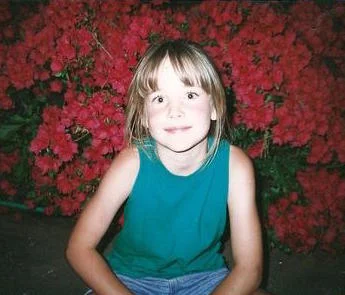
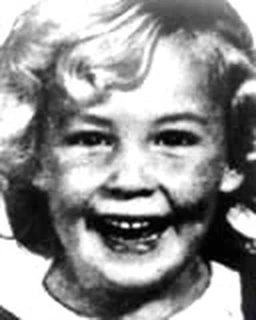
Anna Christian Waters was five years old on January 16, 1973, living with her mother, Michele, her stepfather, Joe Ford, and her half brother on an isolated farmhouse property along Purissima Creek Road in rural San Mateo County, California, not far from Half Moon Bay. She was a white girl with blonde hair and brown eyes, standing three foot eight and weighing forty pounds, with a mole on her cheek and dimples that showed easily when she smiled. That afternoon, Anna came home from her kindergarten class at Alvin Hatch Elementary School at around 1:00, changed out of her school clothes, and asked her mother if she could go play in the backyard. She went outside around 1:15, wearing a blue and white striped t-shirt, blue jeans, and a pair of oversized black rubber boots. When her mother checked on her again around 2:15 or 2:20 that afternoon, Anna was gone.
The family's home sat on a dead end road that saw little regular traffic, behind a creek that ran high with recent rain and was, by some accounts, in a flooding stage that January. Michele's first fear, understandably, was that Anna had wandered too close to the water and fallen in. She called authorities at around 3:00 that afternoon, and deputies with the San Mateo County Sheriff's Office arrived at the property roughly fifteen minutes later, immediately organizing a search of the creek and the surrounding land. Divers searched the water. Deputies from the sheriff's department were joined by personnel from the state's Division of Forestry and, eventually, by close to a hundred volunteers combing the property and the land around it. None of it turned up any trace of Anna. No body, no clothing, nothing pulled from the creek that could explain what had happened to her.
A Van, a Car, and a Warning Nobody Heeded
As the search stretched on without result, investigators began shifting away from the drowning theory and toward the possibility that Anna had been taken. A family friend reported seeing two men driving a white panel truck on the road near the property just minutes before Anna vanished, one of the men appearing noticeably younger than the other, though neither could be identified from the description alone. That sighting took on added weight once investigators learned about something that had happened roughly a month earlier. Anna's half brother told police that while Anna had been playing in the family's front yard, a man and a woman driving a 1960s Chevrolet Impala with Washington state license plates had pulled up and tried to coax her into getting into their car. Anna, according to her half brother's account, refused, and the couple drove off. Investigators were never able to identify that vehicle or the couple inside it, but the earlier attempt made the timing of Anna's actual disappearance considerably harder to write off as pure coincidence.
A Father's Unraveling
The investigation eventually turned inward, toward Anna's own biological father, a physician named George Henry Waters. George had come from a prominent family and attended a well regarded medical school, but by the time Anna disappeared, his life had taken a dramatically different shape. He and Michele had divorced, and George had moved to San Francisco, maintaining only minimal contact with his daughter beyond sending monthly child support payments. Around this same period, George's mental health deteriorated significantly. He was eventually diagnosed with paranoid schizophrenia and refused ongoing treatment for the condition, a decision that coincided with him moving into a hotel alongside a man investigators came to know only by the surname Brody, a name many close to the case believed was not his real one.
Brody, according to people who knew the two men, held an intense and unsettling fixation on Anna, one rooted in the belief that she was the reincarnation of a woman he had previously lived with and lost. He reportedly pushed for Anna's name to be changed to incorporate the name Eifee, tied to whatever private mythology he had constructed around his belief in her as this earlier woman returned. That obsession, combined with George's own psychiatric decline and his sudden physical closeness to a man harboring such specific and strange beliefs about his daughter, was enough to make investigators seriously consider whether the two men might have had some hand in Anna's disappearance.
Joe Ford, Anna's stepfather, became convinced enough of George's possible involvement that he confronted him directly, at one point pressing him in writing about what, if anything, he knew about what had happened to Anna. According to accounts of that confrontation, George's written response was chilling in its plainness, telling Ford that he was glad the tot was dead. Michele, for her part, reportedly remained skeptical that George was capable of actually orchestrating and carrying out an abduction without leaving behind some trace of evidence, given the severity of his declining mental state at the time. Whatever the truth of George's involvement, or lack of it, investigators were never able to build a case against him or Brody strong enough to bring charges.
An Ending That Answered Nothing
Brody died in 1981. In the weeks immediately following his death, George destroyed what appears to have been every piece of documentation connected to his relationship with Brody and to Anna, methodically erasing whatever written record might have existed of the beliefs Brody held or any knowledge either man had about what happened to her. Roughly two weeks after Brody's death, George Waters died by suicide in a San Francisco hotel room, taking with him whatever answers he might have carried about his daughter's fate.
That double death, arriving in such close succession and preceded by George's deliberate destruction of records, has remained one of the most suggestive, and most frustrating, threads in Anna's case ever since. It reads, to anyone who studies it, like the closing of a story someone wanted buried, and yet it proved nothing conclusively, leaving investigators with a strong set of circumstantial suspicions about two men who were both already dead and unable to answer for them.
Anna's case has been classified over the years as a non family abduction by the National Center for Missing and Exploited Children, a designation reflecting that whoever ultimately took her, if she was in fact taken by the men in the white panel truck or by some other party entirely rather than by her own father, was very likely someone outside her immediate family circle. Anna's mother, according to people who have followed the case closely in the decades since, has continued to hold onto the hope that her daughter survived, that she may be alive somewhere today, in her late fifties now, entirely unaware of the search that has continued for her for more than fifty years.
No trace of Anna Christian Waters has ever been recovered. No arrest was ever made. What remains of her case is a set of unsettling, half connected threads, a couple who tried once already to lure her into a car, two unidentified men seen near her home in the minutes before she vanished, and a father whose final years were consumed by a delusional companion's belief that Anna was someone else entirely, someone already dead and returned. Whether any of those threads actually connects to what happened to her that January afternoon in 1973 is a question that died along with the two men most likely to have known the answer.
Sources
- The Charley Project: Anna Christian Waters
- Chip Chick: She Vanished While Playing in the Backyard, and Her Half Brother Said a Man and Woman Tried to Lure Her Into Their Car Weeks Earlier
- Vocal Media: The Heartbreaking Disappearance of Anna Waters
- The Resource Center for Cold Case Missing Children's Cases: Anna Christian Waters
- National Center for Missing and Exploited Children: Anna Christian Waters