Forty Two Notches, No Bodies: Bessie Louise Haley Hyde
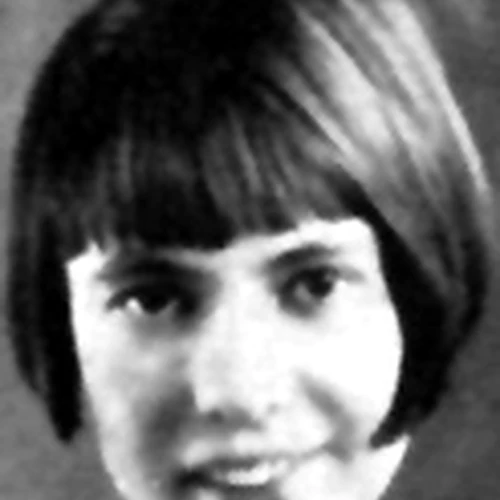
Bessie Louise Haley was born December 29, 1905, in Parkersburg, West Virginia, a bohemian young woman who studied theater and poetry and had already lived through one failed marriage by the time she reached her early twenties. She had married a man named Earl Helmick in June 1926 while still a student, only to separate from him shortly afterward, though he refused for some time to grant her an actual divorce. Bessie eventually relocated to Nevada specifically to establish the residency required to finalize that divorce on her own terms, receiving her decree in April 1928. The very next day, she married Glen Rollin Hyde, a farmer from Twin Falls, Idaho, whom she had met the previous year aboard a passenger ship traveling to Los Angeles. Glen, born December 9, 1898, brought his own experience running rapids on Idaho's Salmon and Snake Rivers to the marriage, along with an ambition that would ultimately define both of their final months alive.
A Honeymoon Built Around a Speed Record
Rather than a conventional honeymoon, Glen and Bessie set out on October 20, 1928, from Green River, Utah, aboard a twenty foot wooden sweep scow that Glen had built himself, intending to run the Green and Colorado Rivers all the way through the Grand Canyon. Glen's ambitions for the trip went well beyond a simple adventure. He wanted to set a new speed record for the passage, and he wanted to make Bessie the first woman ever formally documented running the Grand Canyon by boat, an achievement that carried real potential for book deals, lecture invitations, and a level of public recognition still rare for a woman in 1928. Neither of them wore life jackets during the journey, a decision consistent with the era's more casual approach to river safety, but one that would take on considerable significance in hindsight.
A Photographer's Warning, Ignored
On November 15, 1928, roughly a month into their journey, Glen and Bessie stopped at the Grand Canyon's South Rim to restock supplies, visiting the studio of well known local photographer Emery Kolb. Kolb later described Bessie as appearing visibly apprehensive about continuing the remainder of the trip, an unease that seemed to reflect a growing awareness of just how dangerous the remaining stretch of river actually was. Kolb warned Glen directly that the couple lacked adequate life saving equipment for what remained ahead of them. Glen dismissed the warning and the couple departed regardless. They were seen again briefly on November 18, boating away downriver below Hermit Rapid, an observation that stands as the last confirmed sighting of either Glen or Bessie Hyde by anyone who survived to describe it.
A Boat Found in Perfect Condition
When Glen and Bessie failed to emerge from the canyon on schedule, a search effort eventually enlisted an airplane to scan the river from above. On December 19, 1928, that search plane spotted the couple's scow drifting near river mile 237 of the Colorado, roughly a month after they were last seen. What searchers found once they reached the boat only deepened the mystery rather than resolving it. The scow was upright, fully intact, and still packed with the couple's supplies, including coats, boots, Glen's own gun, and Bessie's personal diary. Forty two individual notches had been carved into the gunwale of the boat, apparently one for each day of the journey, a small, methodical detail that made the boat's undisturbed condition all the more unsettling. There was no damage suggesting the scow had capsized or been battered by rapids, no disturbance visible on the surrounding riverbank, and no tracks leading away from the vessel in any direction. It was, in every visible respect, a boat that had simply been abandoned mid journey by two people who vanished without leaving behind any trace of where they had actually gone.
A Diary That Gave No Warning
Bessie's own diary, recovered intact from the boat, offered searchers a written account of the trip right up until its final entry, dated November 30, describing the couple as running ahead of their own planned schedule and having already reached a landmark called Diamond Creek. Investigators later determined the couple most likely continued past that point toward a notoriously dangerous stretch of river near mile 232, an area where submerged granite rock formations have damaged numerous boats over the decades since. Nothing in Bessie's diary entries hinted at any distress, conflict, or sense that the trip might be cut short, a detail that has made the couple's disappearance somewhere in the days immediately following her final entry feel particularly abrupt. A camera recovered from the scow contained a final photograph believed to have been taken around November 27, offering one last visual record of the journey before whatever happened to Glen and Bessie actually occurred.
The Most Straightforward Explanation
Historian Otis R. Marston, who studied the case extensively, proposed what remains the most widely accepted theory among those who have researched the disappearance in depth, that the couple's scow struck submerged rocks in the heavy rapids near river mile 232 and threw them both into the water without adequate safety equipment to survive the fall. Glen's own father offered a related theory, suggesting the pair might have experienced some kind of equipment failure, attempted to hike out of the canyon on foot rather than continue by water, and became lost or died somewhere in the surrounding terrain instead. Given the remote, largely undeveloped state of the Grand Canyon in 1928, either explanation would account for why no remains were ever recovered despite an extensive search effort.
A Brother's Darker Suspicion
Not everyone connected to the case accepted the accidental drowning theory without reservation. Bessie's own brother raised a considerably darker alternative, suggesting that her first husband, Earl Helmick, a man he described as having a violent temper, might have somehow been involved in whatever happened to his sister and her new husband. No evidence ever emerged connecting Helmick to the disappearance in any way, and the theory has remained speculative, rooted more in a family member's independent knowledge of Helmick's temperament than in anything investigators actually uncovered.
A Woman Who Claimed to Be Bessie, Then Recanted
More than four decades after Glen and Bessie vanished, the case produced one of its strangest footnotes. In 1971, an elderly woman participating in a river rafting trip through the Grand Canyon told fellow passengers she was, in fact, Bessie Hyde, and that she had stabbed and killed Glen during an argument decades earlier before quietly escaping the canyon and disappearing into an entirely new identity. She recanted the claim almost immediately afterward. Subsequent investigation found her account did not hold up regardless, contradicted by both a physical height discrepancy and existing birth records that failed to support her identity as Bessie.
A separate, arguably more compelling coincidence surfaced in 1992, following the death of a well known river guide named Georgie White Clark. Among Clark's possessions, investigators discovered a pistol, along with what appeared to be Glen and Bessie's actual marriage certificate and a birth certificate listing a name, Bessie DeRoss, that seemed to echo Bessie's own maiden name. Despite the tantalizing nature of those specific items, Clark's own early life turned out to be well documented independently, ultimately disproving any theory that she and Bessie Hyde had ever been the same person.
A Skeleton That Wasn't Glen
The case took yet another unexpected turn in the 1970s, when a skeleton bearing a bullet wound to the skull was discovered on property belonging to Emery Kolb, the same photographer who had warned the Hydes before their final departure, sparking immediate speculation that the remains might actually belong to Glen himself. Forensic analysis conducted by the University of Arizona ultimately determined that the skeleton belonged to someone no older than twenty two years old who had died no earlier than 1932, several years after Glen and Bessie disappeared, ruling him out definitively. The remains were later identified instead as an unrelated suicide victim from within the park, closing off what had briefly seemed like a genuinely promising physical lead in the Hydes' own case.
Still Unsolved Nearly a Century Later
Glen and Bessie Hyde's disappearance is no longer actively investigated by any law enforcement agency, a case old enough and thoroughly enough examined over the decades that it has effectively passed from active investigation into permanent historical mystery. What remains is a strikingly specific set of physical facts that has never fully resolved into a single accepted explanation, an intact boat still packed with supplies, forty two carved notches marking each day of a honeymoon journey, a diary entry giving no hint of danger just before the couple vanished, and nearly a century of competing theories ranging from a straightforward drowning to a stabbed husband and a wife who quietly walked away from her own legend. No trace of either Glen or Bessie Hyde has ever been conclusively found.
Sources
- The Charley Project: Bessie Louise Haley Hyde
- Wikipedia: Disappearance of Glen and Bessie Hyde
- Mental Floss: An Empty Boat in the Grand Canyon, The Mysterious Disappearance of Glen and Bessie Hyde
- Adventure Journal: The Strange Grand Canyon Disappearance of Glen and Bessie Hyde