The Note That Never Finished: The Disappearance of Jean Spangler
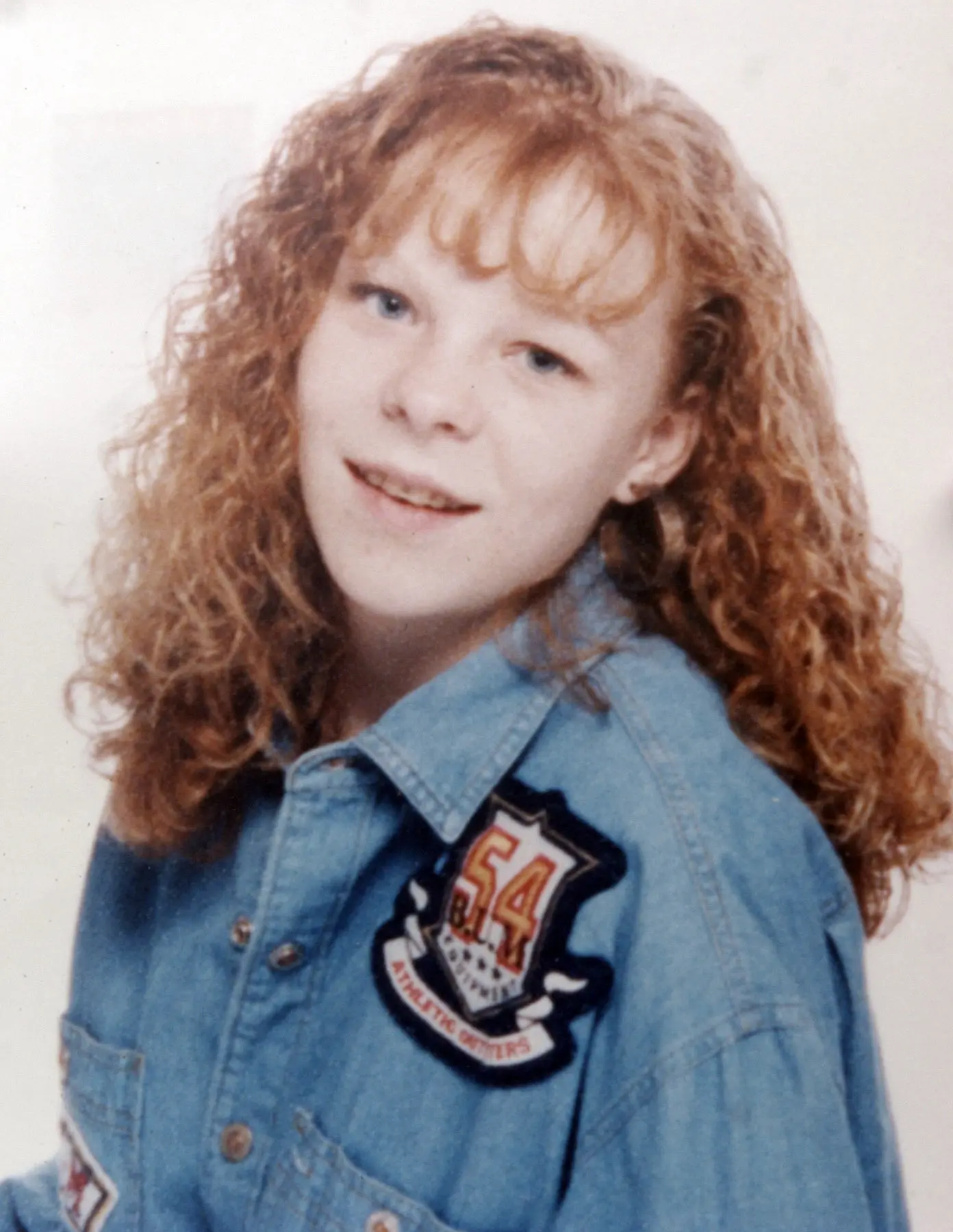
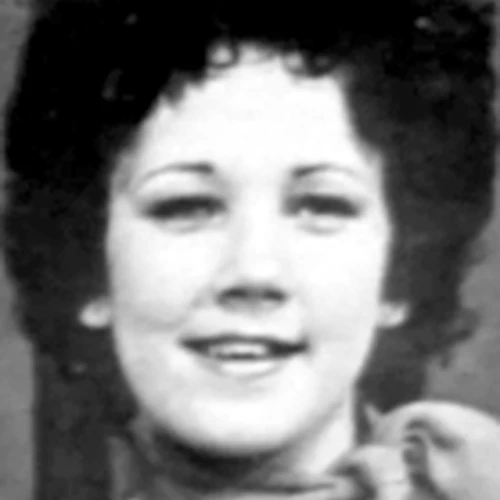
Jean Elizabeth Spangler was a 26-year-old dancer and bit-part actress trying to build a career in postwar Hollywood when she vanished from Los Angeles on October 7, 1949. Two days later, her purse turned up in Griffith Park, straps torn as though ripped from her arm, containing a handwritten note that began with a single name, "Kirk," and ended mid-sentence with nothing but a trailing comma. That unfinished note would go on to implicate a future movie star, connect Jean's disappearance to organized crime figures operating out of Hollywood nightclubs, and fuel more than seventy five years of speculation without ever actually explaining what happened to her.
A Dancer Turned Bit-Part Actress
Jean was born September 2, 1923, in Seattle, Washington, and moved to Los Angeles as a young woman, graduating from Franklin High School in 1941. Before pursuing film work, she danced professionally at the Earl Carroll Theatre and at the Florentine Gardens nightclub, two of the more glamorous nightlife venues in 1940s Hollywood. Her film career began in 1948, consisting mostly of small, uncredited roles as a dancer and extra, including appearances in When My Baby Smiles at Me in 1948 and, most consequentially for how her disappearance would later be understood, Young Man with a Horn, a 1950 musical drama starring a rising actor named Kirk Douglas.
A Contentious Divorce
Jean had married a manufacturer named Dexter Benner in 1942, and the couple had a daughter, Christine. Their marriage ended in divorce in 1946 following a contentious custody dispute over Christine, one that Jean initially lost before eventually regaining custody in 1948. By the time she disappeared, Jean was living in Los Angeles's Park La Brea housing complex alongside her mother, Florence, her daughter Christine, her brother Edward, and her sister-in-law Sophie, a full household that made her sudden, unexplained absence all the more jarring to everyone around her.
The Last Ordinary Evening
On the evening of October 7, 1949, Jean left home around 5:00 p.m., telling Sophie that she was going to meet her ex-husband to discuss overdue child support before heading to a scheduled night film shoot. She called home roughly two hours later to say she would have to work the full eight hours of the shift. A saleswoman at the nearby Farmers Market later reported seeing Jean around 6:00 p.m. that evening, appearing to be waiting for someone to arrive. That sighting remains the last confirmed appearance of Jean Spangler alive.
Investigators would later discover two significant problems with her stated plans that evening. Dexter Benner denied ever meeting her, and his current wife corroborated his account of where he had actually been. Separately, the motion picture studios confirmed that no night shoots had actually been scheduled for that date at all, meaning the reason Jean gave her own family for leaving the house that evening appears to have been entirely fabricated.
The Purse in Griffith Park
Two days later, on October 9, Jean's purse was discovered near the Fern Dell entrance of Griffith Park, roughly five and a half miles from her home, a considerable distance from anywhere she had told her family she was going. Both straps on the purse had been torn, as though ripped forcibly from her arm rather than simply set down or lost.
The Note
Inside the purse, investigators found a handwritten note that read: "Kirk, Can't wait any longer, Going to see Dr. Scott. It will work best this way while mother is away," a message that ended abruptly mid-sentence with a trailing comma, as though Jean had been interrupted in the middle of writing it, or had simply never finished it for reasons no one has ever been able to determine.
Kirk Douglas Under Suspicion
Because Jean had so recently worked as an extra on Young Man with a Horn, starring Kirk Douglas, public speculation seized almost immediately on the possibility that Douglas himself was the Kirk referenced in the unfinished note. Douglas, for his part, called police entirely unprompted once he learned of the note's existence, denying that he knew Jean well at all. Under further questioning, he acknowledged that he had talked and kidded with her a bit on set, recalling her specifically as a tall girl in a green dress, but he denied any personal contact with her outside of filming and stated that he had been in Palm Springs at the time she disappeared. No evidence has ever emerged definitively connecting Douglas to Jean's disappearance beyond the coincidence of a shared first name on an unfinished note, though the association has followed the case in public memory for decades regardless.
Dr. Scott and the Abortion Theory
Friends of Jean's told investigators she had confided in them that she was roughly three months pregnant and had discussed the possibility of obtaining an illegal abortion, a serious and dangerous undertaking in 1949, when the procedure was against the law everywhere in the country. Acting on the note's reference to a Dr. Scott, police questioned every doctor in Los Angeles who shared that surname and found not a single one with any record of Jean or Dexter Benner as a patient. Investigators also looked into a man Jean had previously known, an Air Corps lieutenant nicknamed Scotty with whom she had reportedly had a difficult, at times abusive relationship that ended around 1945, though she apparently had not seen him again in the years since. Separately, police searched for a former medical student, sometimes referred to as Doc or Scotty, believed to be performing illegal abortions in the area at the time, but were never able to locate him or confirm any connection to Jean's case.
A Darker Connection
A more troubling thread connected to Jean's disappearance ran through the Hollywood nightlife world she had worked in as a dancer. Historian Jon Lewis documented ties between Jean's employment at the Florentine Gardens and a broader network of associates connected to organized crime figures Anthony Cornero and Mickey Cohen, two of the more notorious figures in mid-century Los Angeles's criminal underworld. Most notably, a man named David Ogul, known as Davy and identified as an associate of Cohen's, disappeared on October 9, 1949, just two days after Jean herself vanished. Witnesses reported having seen Jean and Ogul together in Palm Springs during the week before her disappearance.
The connection deepened further in February 1950, when a U.S. Customs agent in El Paso, Texas, reported possibly spotting Ogul, a woman resembling Jean, and another man named Frank Niccoli together at a hotel, though neither Jean's name nor an obvious alias appeared on the hotel's registration. A hotel employee reportedly identified Jean from a photograph shown to them afterward. Jean's sister, Betsy, testified in April 1950 that neither she nor Jean had ever known Ogul or any of Cohen's associates, a denial that, if true, left the entire connection unexplained, and if false, suggested Jean's family may have known more than they were willing to say publicly.
A Search That Found Almost Nothing
The investigation into Jean's disappearance eventually involved more than 200 volunteers alongside law enforcement, combing Griffith Park and the surrounding area for any further sign of what had happened to her. The search turned up almost nothing beyond the purse itself, with the sole additional item recovered being a Los Angeles County Jail denim uniform found somewhere in the park, an item never connected definitively to Jean at all.
What Happened to Christine
In the aftermath of Jean's disappearance, police awarded temporary custody of Christine to Dexter Benner on October 27, 1949. The following year, Benner defied a court order granting visitation rights to Jean's mother, was sentenced to fifteen days in jail for contempt of court, and afterward fled California with Christine entirely, eventually settling in Florida, well beyond the reach of the custody arrangements that had governed his daughter's care up to that point. Benner lived the rest of his life largely out of the spotlight connected to his ex-wife's famous disappearance, dying on May 7, 2007, in Jacksonville, Florida.
Still Unsolved
The Los Angeles Police Department circulated Jean's photograph for years afterward without ever generating a confirmed sighting, and newspaper columnist Louella Parsons personally offered a $1,000 reward for information leading to Jean's discovery. Unverified reported sightings surfaced over the years across Northern and Southern California, in Phoenix, Arizona, and as far away as Mexico City, none of which were ever substantiated. Some newspapers at the time even speculated about a possible connection to the notorious 1947 Black Dahlia murder, given some superficial similarities between the two women, though no credible evidence has ever tied the two cases together. As late as 2017, the LAPD still maintained Jean Spangler's case as officially open. She has since been fictionalized in author Megan Abbott's 2006 novel The Song Is You, a testament to how firmly her story has embedded itself in the broader mythology of old Hollywood's unsolved mysteries.
More than seventy five years after she left her Park La Brea apartment for what she told her family would be an ordinary evening of work, Jean Elizabeth Spangler has never been found, and the note she left behind, addressed to a man named Kirk and cut off mid-sentence, remains one of the most famous unfinished thoughts in American true crime history.
Sources
- The Charley Project: Jean Elizabeth Spangler
- Wikipedia: Jean Spangler
- All That's Interesting: Inside The Haunting Hollywood Mystery Of Aspiring Actress Jean Spangler's Disappearance
- Far Out Magazine: The actor whose disappearance left Kirk Douglas as a suspect
- Front Page Detectives: The story behind the disappearance of Jean Spangler from Hollywood
- NBC Los Angeles: Cold Case, Aspiring Actress Left Cryptic Note
- True Crime Edition: The Disappearance of Jean Spangler
- The True Crime Database: Jean Spangler