Bloodstained Crutches in a Colchester Field: The Disappearance of Wilfred King III
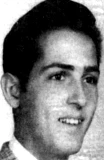
Wilfred Fred King III, known to everyone who knew him as Butch, was born on April 22, 1943, in Essex Junction, Vermont, the second of six children raised by Lillian and Wilfred King Jr., who ran a successful paving business in the area. Butch never finished high school, working instead in his family's paving operation and taking carpentry jobs on the side. At nineteen, his parents gave him two acres of land, and Butch built his own house on it with his own hands. He married a woman named Diane Irish in 1966, and the two of them had three children together over the years that followed, building what looked, for a long stretch, like an ordinary working class Vermont family life.
That life changed dramatically on April 18, 1978, when a car struck Butch as he crossed Vermont Route 15. The injuries were severe enough that doctors doubted he would survive at all, and told his family that if he did live, he would likely remain in a permanent vegetative state. Butch defied that grim prognosis. He spent weeks in a coma before gradually beginning to recover, and after eight months of hospitalization and grueling rehabilitation, he relearned how to walk, though only with the aid of two metal crutches that he would depend on for the rest of his life. The accident changed him in ways that went beyond the physical. Diane later described him as like a totally different person after the accident, someone who struggled with depression and had undergone real personality changes in the aftermath, changes that placed real strain on a marriage that had already been going for more than a decade.
A Divorce Nearly Finalized
By 1980, that strain had become too much, and Butch and Diane filed for divorce. The two of them reached an agreement in September of that year that gave Butch custody of their oldest son, a boy named Joey, along with the family home Butch had built himself years earlier, with a final court hearing scheduled to formalize the divorce in December. Butch was, by every account, living out the final months of a contentious separation, with custody and property questions largely settled and only the formal legal conclusion still ahead of him.
On October 24, 1980, Butch received a phone call around five in the evening that he had reportedly been anticipating, described in some accounts as an important call he had been waiting for much of the day. Around seven that evening, he left his home on Jericho Road in Essex, telling his parents he was going to meet friends. According to some accounts, his parents had urged him to bring his son Joey along that night, reportedly out of concern tied to threats Butch had received in the weeks before, a detail that suggests his family already sensed some specific danger surrounding him during those final months of the divorce process. Butch went alone anyway, driving his blue and white 1979 Chevrolet Blazer pickup truck, outfitted with plow equipment, a yellow plow blade on the front, a yellow light on the roof, a trailer hitch on the back, and Vermont license plate E-3050, a distinctive vehicle that made it easy for investigators to track once it eventually resurfaced. He was never seen alive again. His father would later be the one to confirm to police the details of that final departure, having been among the last people to see his son leave the house that evening.
Crutches Found in a Field
The following day, hunters came across a disturbing discovery in a field off Middle Road in Colchester, Vermont, roughly nine miles from Butch's home: his bloodstained metal crutches, along with a boot and an article of clothing believed to belong to him. For a man who depended entirely on those crutches simply to stand and walk, finding them abandoned and covered in blood, without him anywhere nearby, was about as unambiguous a signal of violence as investigators could have asked for. Roughly two to three weeks later, Butch's Chevrolet Blazer turned up abandoned and burned at the Oak Hill gravel pit in Williston, Vermont, about eight miles from his home, the truck's destruction seemingly intended to eliminate whatever physical evidence it might have carried.
A Wife Who Wouldn't Cooperate
As investigators worked to piece together what had happened to Butch, his estranged wife Diane quickly became a central focus of their suspicion. Police at the time stated publicly that Diane's refusal to cooperate was hampering the broader investigation into her husband's disappearance. Accounts of the case differ on the specifics, but Diane either refused to take a polygraph examination or disputed the circumstances under which she was asked to take one, and she reportedly instructed the couple's children not to speak with investigators, a directive that, whatever its intent, had the practical effect of cutting off police from people who may have had direct knowledge relevant to the case.
Within about a year of Butch's disappearance, Diane moved to legally take control of property and the house Butch had built and that had been designated to go to him under their divorce agreement, moving to claim it for herself despite her husband having vanished under circumstances police were actively investigating as a homicide. Years later, Butch's parents told investigators and reporters they believed Diane had hired someone to kill their son, though no evidence ever surfaced strong enough to support formal charges against her or anyone else. In perhaps the case's most painful turn, Butch and Diane's own son, Joey, the boy his father had fought to keep custody of during the divorce, later filed a lawsuit against his own mother, alleging that she had orchestrated his father's death.
A Case That Went Cold
Investigators pursued various leads throughout the 1980s without ever identifying a formal suspect they could bring charges against, and the case grew progressively colder as the decade wore on, effectively stalling out by 1988. In January 1994, more than thirteen years after he vanished, Wilfred Fred King III was formally declared legally dead, a legal resolution that offered his family no actual answers about what had happened to him or where his remains might be. His case has remained officially open and unsolved with the Essex Police Department in the decades since, revisited periodically by cold case researchers, podcasts, and true crime writers drawn to a story built around bloodstained crutches, a burned truck, and a family divided by accusations that have never been proven in any courtroom.
Butch's own history added a layer of tragic irony to how the case unfolded. He was a man who had already been given up for dead once, surviving injuries doctors were certain would either kill him or leave him permanently unresponsive, only to fight his way back to walking again on crutches through sheer months of rehabilitation. That same resilience meant nothing when he vanished two years later, and the physical vulnerability that had defined the last stretch of his life, his total dependence on those two metal crutches just to move around, became instead the very detail that made his disappearance so unmistakably violent once they turned up soaked in blood in a field miles from home.
More than four decades after that October evening, nobody has ever been arrested or charged in connection with Butch King's disappearance. He would be in his early eighties today had he lived, a man who had already beaten one set of impossible odds after his 1978 accident, only to vanish two years later in the middle of a divorce that his own family has never stopped believing got him killed.
Anyone with information about Wilfred Fred King III's disappearance is asked to contact the Essex Police Department at 802-878-8331.
Sources
- The Charley Project: Wilfred Fred King III
- Dark Downeast: The Disappearance of Wilfred "Butch" King III (Vermont)
- Unsolved Vermont: Missing, Wilfred King III
- Medium: The Mysterious Cold Case Disappearance of Wilfred "Butch" King III in 1980
- Vermont State Police: Wilfred King