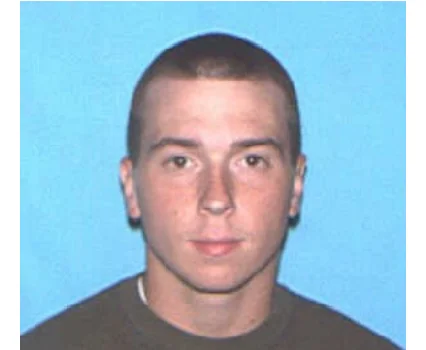
A Ring Left in a Phone Booth: The Murder of Shannon Melendi
Shannon Denise Melendi was 19 years old, a sophomore at Emory University working part time as a scorekeeper at a softball facility, when she disappeared from Atlanta, Georgia, on March 26, 1994. She finished her shift that afternoon, stopped at a nearby gas station for a soft drink, and was never seen alive again. What followed was more than a decade of investigation, an anonymous phone call laced with a strange kind of reassurance, a ring left wrapped in masking tape near a payphone, and eventually a full confession from the very umpire who had worked alongside her at the softball club, describing in detail exactly what he had done to her.
An Ordinary Shift That Never Ended
On the afternoon of March 26, 1994, Shannon finished her shift as a scorekeeper at the Softball Country Club around 12:40 p.m. Witnesses reported seeing her shortly afterward at a nearby Citgo gas station, purchasing a soft drink, an entirely unremarkable errand on an entirely unremarkable day. She never made it home. Her black Nissan 280SX was later discovered abandoned in the Citgo parking lot, keys still sitting in the ignition, exactly the kind of scene that offered no immediate explanation for where she had gone or why she would have left her own car behind so completely.
A Strange Call to a Counseling Center
Roughly two weeks after Shannon disappeared, on April 6, 1994, Emory University's own counseling center received a call from an anonymous man who claimed that Shannon was with him and that she was doing okay. The FBI became involved in tracing the call, eventually locating the payphone booth the caller had used. Near that booth, investigators recovered a bag containing Shannon's own blue topaz ring, a piece of jewelry her grandmother had given her, wrapped inside a layer of masking tape that would ultimately prove far more significant than anyone realized at the time.
A Suspect Hiding in Plain Sight
Investigators quickly turned their attention toward Colvin Cornelious "Butch" Hinton III, a man who had worked part time as an umpire at the same softball club where Shannon herself worked. Hinton already carried a documented history of violence against women, having previously served time for abducting women before Shannon ever crossed his path. Despite this troubling background and his direct connection to Shannon through their shared workplace, Hinton would not be formally charged in connection with her disappearance for more than ten years.
What the Tape Revealed
The masking tape recovered near the payphone booth ultimately became one of the case's most significant pieces of forensic evidence, though it would take years of advancing technology before investigators could fully exploit it. Specialists eventually examined trace particles found on the tape and identified a specific combination of metals, including tungsten and cobalt, materials commonly associated with aircraft manufacturing. This unusual metallic signature helped investigators connect the tape directly back to Hinton's own place of employment, providing the kind of physical, scientifically grounded link that had simply not been available to investigators in the earlier years of the case.
Buried Evidence in a Suburban Yard
As investigators built their case against Hinton over the following years, a search of his own property uncovered women's clothing, shoes, and other personal items buried in his yard, physical evidence that, combined with the tape analysis and his documented history of violence against women, finally gave prosecutors enough to move forward with formal charges.
An Arrest More Than a Decade Later
Hinton was finally arrested in 2004, ten years after Shannon disappeared, and he stood trial in DeKalb County the following year. In September 2005, he was convicted of her murder, a remarkable outcome given that Shannon's body had never been recovered, making the case one of the relatively rare instances in which prosecutors secured a murder conviction entirely without physical remains. Hinton was sentenced to life in prison.
A Detailed Confession
It was not until 2006, a year after his conviction, that Hinton finally offered investigators a full account of what had actually happened to Shannon, confessing during an interview conducted at Rogers State Prison in Reidsville, where he was already serving his life sentence. According to Hinton's own account, he had kidnapped Shannon at knifepoint directly from the softball field, taking her back to his own home, where he held her bound for approximately twelve hours. During that time, he raped her before ultimately strangling her with a necktie. Afterward, he burned her body in his own yard and scattered the resulting ashes, a disposal method that explained, in the most painful way possible, why Shannon's remains were never recovered despite years of searching. Hinton also confirmed during this confession that he himself had been the anonymous caller to Emory's counseling center weeks after Shannon's disappearance, and that he had personally left her ring wrapped in the masking tape near the payphone booth, the very piece of evidence that would eventually help lead investigators back to him.
A Family That Never Stopped Fighting
Shannon's parents, Luis and Yvonne Melendi, along with her younger sister Monique, have continued advocating publicly in the years since Hinton's conviction to ensure he remains incarcerated for the rest of his life. Under Georgia law, inmates serving life sentences who are denied parole must still be periodically reconsidered, and Hinton's case has come up for parole review multiple times over the years, with the board denying his release both in 2012 and again in 2020. Luis Melendi has spoken publicly about his continued anger over having to repeatedly confront the possibility of Hinton's release, stating plainly that he does not want him coming out, and that while Shannon is dead forever, Hinton should remain in prison forever as well. The family has continued this advocacy right up through the 30th anniversary of Shannon's murder in 2024, with Hinton's case scheduled for yet another parole consideration in February 2025, a recurring reminder for the Melendi family that a life sentence in Georgia does not necessarily mean an uninterrupted one.
What Remains
More than three decades after Shannon Melendi finished an ordinary shift at a softball club and stopped for a soft drink on her way home, her remains have never been recovered, scattered somewhere years ago according to the confession of the man convicted of killing her. Her case stands as a striking example of forensic patience rewarded, a piece of masking tape wrapped around a stolen ring eventually leading investigators, more than a decade later, directly back to the man who had been working alongside Shannon the entire time. Her family continues, to this day, to show up whenever Hinton's case comes before a parole board, ensuring that the passage of time never quietly erases what happened to her.
Sources
- The Charley Project: Shannon Denise Melendi
- WIS10: GA convict admits murder of Emory University student
- Dalton Daily Citizen: Convicted killer admits Melendi murder
- NBC News Dateline: Family fighting to keep killer behind bars on 30th anniversary of Shannon Melendi's murder
- CBS News Miami: 25 Years Later, Shannon Melendi's Father Worries Killer May Get Parole
- Justia: Hinton v. State, Supreme Court of Georgia (2006)
- The Cinemaholic: Where is Colvin Cornelious "Butch" Hinton III Now?
- NBC 6 South Florida: Shannon Melendi, 30 years after Miami woman's disappearance and killing in Atlanta