The Oldest Missing Teens Case in America: Mitchel Weiser and Bonita Bickwit
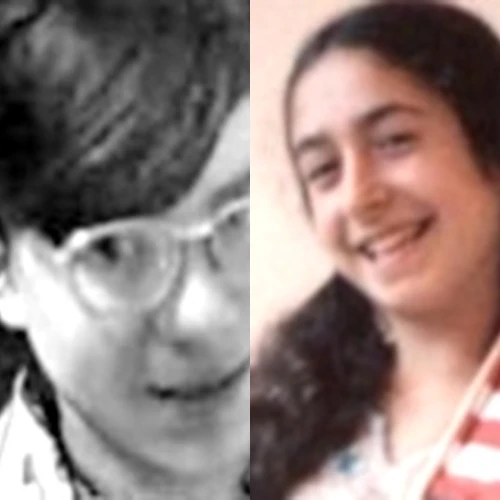
Mitchel Fred Weiser and Bonita Mara Bickwit, known to nearly everyone as Mitch and Bonnie, were both students at John Dewey High School, a Brooklyn alternative school reserved for gifted, high achieving students. Mitchel, sixteen years old, came from a stable, middle class Jewish family in Brooklyn's Midwood neighborhood, worked as a photography assistant at Chelsea Photographers in Coney Island, and was set to graduate in January 1974. He had interests in photography and poetry, wore his shoulder length hair pulled back in a ponytail, and had recently felt the disappointment of learning his family could not afford to send him to the out of town college he had actually wanted to attend. Bonnie, fifteen, lived in Borough Park and came from an equally stable, similarly middle class Jewish family, though hers carried the added weight of a father who was seriously ill and disabled, a source of real worry for her throughout that final summer. The two of them had been dating for more than a year, and at some point that summer, quietly and without telling either family, they had exchanged their own private wedding rings.
A Job at Summer Camp and a Plan to Hitchhike
By July 1973, Bonnie was working as a mother's helper at Camp Wel-Met in Narrowsburg, New York, a job that had put real distance between her and Mitchel for the summer. The two of them made plans to reunite and attend Summer Jam, a massive rock festival scheduled for July 28 in Watkins Glen, New York, featuring the Allman Brothers, the Grateful Dead, and the Band, an event that would go on to draw an audience estimated at somewhere around six hundred thousand people, making it briefly one of the largest gatherings in American history. On July 27, 1973, the day before the festival, Bonnie quit her camp job in anger after her employers refused to give her the night off, having already withdrawn eighty dollars from her own savings account in preparation for the trip. One of her fellow camp workers gave both Mitchel and Bonnie a ride to Narrowsburg, dropping them off along State Route 97, still roughly seventy five miles from Watkins Glen. Carrying backpacks, sleeping bags, about twenty five dollars combined, and a cardboard sign reading Watkins Glen, the two of them began trying to hitch the rest of the way. That camp worker, watching them stand at the edge of the highway with their thumbs out, remains the last person known to have seen either of them alive.
A Serial Killer Working the Same Roads That Same Week
What makes the timing of Mitch and Bonnie's disappearance so unsettling is not simply that they vanished, but who else was actively operating in that exact region of upstate New York during that same narrow window. Robert Garrow, a serial rapist who had already committed numerous assaults in the years prior, launched an eighteen day killing spree in July 1973 that would go on to claim at least four confirmed victims. On July 11, he kidnapped and repeatedly raped sixteen year old Alicia Hauck before killing her. On July 20, just a week before Mitch and Bonnie disappeared, he murdered twenty three year old Daniel Porter and twenty year old Susan Petz. On July 29, two days after Mitch and Bonnie vanished, he killed eighteen year old Philip Domblewski at a campsite in the Adirondacks. Garrow's spree ultimately triggered what was, at the time, the largest manhunt in New York State history, a twelve day search involving roadblocks throughout the Adirondack Park region before he was finally cornered and shot by an environmental conservation officer. He would later be connected by Canadian investigators to at least one additional 1973 murder in Ontario, and he died in 1978 during a violent escape attempt from Fishkill Correctional Facility, shot by a corrections officer.
A Witness Who Waited Decades to Come Forward
For twenty seven years, Mitch and Bonnie's case sat cold, initially dismissed by investigators who assumed, given the couple's secretly exchanged rings, that the two teenagers had simply run off together rather than actually disappeared under dangerous circumstances. That assumption began to unravel in 2000, when a Rhode Island man named Alan Smith came forward with an account he said he had been carrying privately for decades. Smith claimed he had personally hitchhiked with Mitch and Bonnie in an orange Volkswagen that same July, and that he had witnessed a girl screaming while being swept away in the Susquehanna River, watching both teenagers vanish into the water after, according to his account, Mitchel attempted some kind of rescue. Investigators searched three separate counties along the Susquehanna in response to Smith's account, but never recovered any unidentified remains matching either teenager's description, and the bus driver Smith referenced as a potential corroborating witness was never located or identified.
A Car That Matched a Killer's Description
The drowning account might have remained just one more unverifiable, decades late report if not for a specific detail investigative journalist Eric Greenberg uncovered decades later, that Robert Garrow himself was known to have been driving an orange Volkswagen during that same July 1973 window, matching the exact vehicle description Alan Smith had given about the car he claimed to have shared with Mitch and Bonnie before they vanished. Garrow's documented pattern that same month, targeting teenagers and young adults across a relatively compact stretch of upstate New York, combined with the vehicle match and the sheer proximity of his July 20 and July 29 murders bracketing Mitch and Bonnie's own July 27 disappearance, has made him one of the most seriously considered theories in the case in the years since, even though no direct, confirmed evidence has ever definitively placed Garrow together with either teenager.
Lost Files and a Case Nobody Could Quite Close
Compounding the difficulty of ever resolving the case, the original investigative files compiled by the Sullivan County Sheriff's Department have apparently been lost entirely over the decades, including the only existing copies of both teenagers' dental records, records that could have proven decisive had unidentified remains ever surfaced anywhere in the region. Authorities have since publicly acknowledged making numerous mistakes throughout the original investigation, starting with the initial decision to treat two missing teenagers, one of them only fifteen years old, as simple runaways rather than launching an urgent search from the very beginning. Bonnie's close friend Michelle Fester Weller later put the failure in blunt terms, recalling that detectives at the time simply did not seem to be taking the case seriously, writing the two of them off almost immediately as a couple who had chosen to disappear together voluntarily.
A Case Renewed by a Magazine Investigation
The case remained largely dormant in terms of active law enforcement attention for years afterward, sustained mostly by family members and friends who refused to let it go entirely. That changed following an extensive Rolling Stone investigation into the disappearance, reporting that brought fresh public attention to the case and specifically to the years of investigative failures surrounding it. In August 2023, New York Governor Kathy Hochul responded directly to that renewed attention by publicly calling for a meticulous reexamination of what has since become known as the oldest missing teens case in the United States. A task force bringing together the Steuben County Sheriff's Office, New York State Police Troop E's Bureau of Criminal Investigation, and other regional agencies had already spent portions of the 2010s conducting searches using cadaver dogs and excavation equipment at various sites connected to the case, including an abandoned power company property in Steuben County, without ever recovering remains belonging to either teenager.
Despite the governor's public directive, family members and advocates following the case have since expressed considerable frustration with the pace of the renewed investigation, with reporting indicating that even basic follow up steps, such as formally interviewing potential persons of interest and surviving witnesses, had still not been completed well after Hochul's own call for action.
More Than Fifty Years Later, Still Waiting
Mitchel Weiser and Bonita Bickwit have now been missing for more than fifty years, longer than either of their own parents lived to see the case resolved in most instances, and longer than almost any other missing teenager case still formally open anywhere in the country. What remains is a set of competing, unresolved possibilities, a witnessed drowning that was never physically corroborated, a serial killer whose documented movements and vehicle description line up with unsettling precision, and an original investigation compromised from its earliest days by a mistaken assumption that two gifted, loving teenagers with secretly exchanged wedding rings had simply chosen to vanish together on their own terms, rather than having been taken by whatever, or whoever, actually met them on the side of that rural New York highway.
Sources
- The Charley Project: Mitchel Fred Weiser
- The Charley Project: Bonita Mara Bickwit
- FOX 5 New York: The Tape Room, 1973 NYC cold case involving missing teens resurfaces
- Mitchel and Bonnie: The Story
- Wikipedia: Robert Garrow
- Adirondack Life: Summer of Garrow