A Red Toy Truck Left in the Front Yard: The Disappearance of Melvin Horst
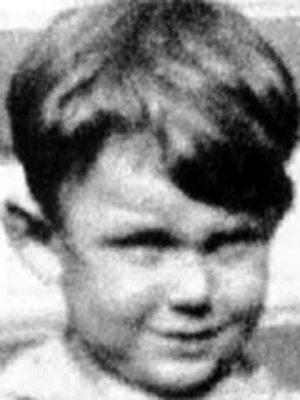
Melvin Charles Horst was four years old in December 1928, living in Orrville, Ohio, a small city roughly ninety minutes south of Cleveland with a population then hovering around forty five hundred people. He had light brown hair, blue eyes, a slightly upturned nose, and a stocky build, along with a distinctive six inch burn scar on his hip that would have made him easy to positively identify had circumstances ever allowed for it. The day after Christmas that year, he was out playing with four neighborhood friends in a vacant lot near Chestnut Street and the local railroad tracks, still enjoying the small red toy truck he had received as a Christmas gift only two days earlier.
An Alleyway a Thousand Feet Long
As the afternoon of December 27 wore on and darkness began to settle in around five o'clock, Melvin's playmates started heading home for dinner, the ordinary rhythm of a winter evening in a small Ohio town. Melvin, roughly a block from his own house at that point, told his friends he needed to head home too, and set off through a nearby alleyway stretching close to a thousand feet, the kind of route he had presumably walked before without incident. He never emerged from the other end. When his mother called for him around 4:30 that afternoon and he failed to appear for dinner, the family began searching on their own before formally contacting authorities, and by 8:30 that evening a much larger search effort was already underway. All that turned up in the family's own front yard was the little red toy truck Melvin had been carrying, left behind with no other sign of what had happened to the boy who'd been holding it.
The search that followed drew in a substantial portion of Orrville's entire population, along with volunteers from surrounding communities, ultimately covering an estimated hundred square miles and involving systematic house to house checks, along with searches of local wells, cisterns, and the town pond. None of it produced so much as a single confirmed trace of Melvin. Investigators initially considered a straightforward kidnapping for ransom, particularly since some neighbors assumed a wealthier relative might have been the intended target rather than Melvin's own working class family, but that theory collapsed quickly once it became clear no ransom demand of any kind was going to arrive. Detectives also worked through the list of known sex offenders in the area, checking alibis and searching properties, and came up with nothing connecting any of them to the boy's disappearance.
An Uncle With Enemies
The investigation's most enduring theory centered not on Melvin himself, but on his uncle, Roy Horst, who served as Orrville's village marshal and had built a reputation as an unusually aggressive enforcer of Prohibition era liquor laws, a job that made him plenty of enemies among the bootleggers and rumrunners operating in and around the region. Roy had lived with Melvin's family until shortly before the boy vanished and was known to be genuinely fond of his young nephew. Investigators theorized that bootleggers looking to strike back at Roy might have targeted Melvin specifically as an act of revenge, mistaking the marshal's own affection for the boy as evidence that Melvin was actually his son rather than his nephew.
That theory led investigators directly to the Arnold family, whose home backed onto the very alleyway Melvin had walked into and never emerged from. The Arnolds already had a poor reputation locally, with Roy Horst himself having previously arrested several family members on bootlegging and robbery charges. An eight year old boy named Charles Hanna, known to everyone as Junior, told investigators he had personally seen Melvin enter the Arnold home that evening. Based largely on that account, Elias Arnold and several family members, including his son Arthur, were arrested on January 2, 1929, and charged with the boy's abduction.
A Conviction Undone by an Orange
The case against the Arnolds went to trial in March 1929, and despite what defense attorney A.D. Metz exposed as a genuinely weak prosecution case, including testimony from a witness named Ora Watts suggesting that a key piece of physical evidence, an orange supposedly used by Arthur Arnold to lure Melvin into the house, had not actually been present during an earlier search of the property, the jury still convicted both Elias and Arthur after seven hours of deliberation. Elias received a twenty year sentence. Arthur, only seventeen years old at the time, was sent to reform school instead. An appellate court subsequently ordered a new trial, with two of the three reviewing judges going so far as to recommend that all charges simply be dropped outright, largely because Junior Hanna's original testimony should never have been admissible in the first place given his age and the way his account had been obtained.
By the time of the December 1929 retrial, it had become clear that Junior had changed his story about who took Melvin and when at least five separate times over the course of the investigation. This time, after six hours of deliberation, the jury acquitted both Arnolds entirely, unwinding the conviction that had already sent a father to prison and a teenager to reform school for a crime neither of them had actually been proven, beyond reasonable doubt, to have committed.
A Confession Extracted Over Three Days
With the Arnolds cleared, the same young witness, Junior Hanna, changed his account once again, this time accusing his own father, Charles Hanna, of murdering Melvin. Under what would later be described as intense police interrogation, the elder Hanna eventually confessed, claiming he had witnessed a friend and neighbor, Earl Conold, kidnap and strangle the child. As part of that same confession, Hanna described an Akron area bootlegger named Tony "Tony Long" LaFatch offering twenty five gallons of liquor to anyone willing to deliver Marshal Roy Horst's nephew to him, dead or alive, tying the case's central revenge theory directly to a specific and, at least on paper, corroborated motive. Conold, for his part, responded to the accusation by turning around and accusing Hanna right back.
Neither confession ultimately held up under scrutiny. A subsequent excavation of Hanna's property turned up nothing resembling a body or physical evidence of any kind, and Hanna himself retracted his entire statement, insisting he had only signed it to bring an end to three days of what he described as brutal interrogation at the hands of investigators. The LaFatch bootlegging revenge theory that had emerged from that same interrogation was never independently corroborated either, though it has remained one of the most frequently repeated explanations for what happened to Melvin in the decades since, in part because LaFatch himself lived until 1994, long enough that at least one later witness came forward claiming he had briefly kept a kidnapped child in an Akron apartment before moving him elsewhere, a claim that could never be verified before LaFatch's death closed off any possibility of directly questioning him about it.
A Family That Never Took Down the Tree
Melvin's parents reportedly refused to take down their Christmas tree in the aftermath of his disappearance, unwilling to treat the holiday as over while their son remained missing, and his mother Zorah Horst was said to have vowed she would never celebrate another Christmas without him. Roy Horst, the uncle whose own enemies may have cost his nephew everything, never stopped searching either, and by 1943 had developed his own working theory that Melvin had survived, passed quietly from one bootlegger to another over the years until none of them still knew or cared where he had originally come from, eventually growing up under a different identity entirely, with Roy speculating the boy might, by then, have simply ended up serving in the army like countless other young men of that generation. Ohio's governor ordered the investigation reopened in 1940, without producing any new resolution, and Roy Horst continued his own personal search for his nephew right up until his death in 1961.
Ohio's Oldest Unsolved Missing Child Case
Melvin's parents eventually relocated to Florida and have since passed away, as have his two brothers. A younger sister is reported to still live in the area, one of the last people alive with any direct connection to the family that spent decades searching for answers that never came. Nearly a century after a four year old boy walked into a thousand foot alleyway carrying a red toy truck and never came out the other side, Melvin Charles Horst's case remains officially open with the Orrville Police Department, recognized as the oldest unsolved missing child case in Ohio and among the oldest anywhere in the country, a case that produced a wrongful conviction, two collapsed murder confessions, and a persistent, unproven theory involving Prohibition era bootleggers, but never produced Melvin himself.
Sources
- The Charley Project: Melvin Charles Horst
- Strange Company: The Lost Boy, The Mystery of Melvin Horst
- Vocal Media: The strange disappearance of Melvin Horst
- We The Missing: Melvin Horst, Ohio's Oldest Missing Child Case
- The Doe Network: Melvin Charles Horst