A Confused Walk Down Pupukea Road: The Murder of Masumi Watanabe
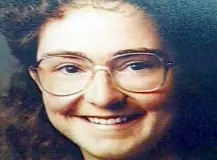
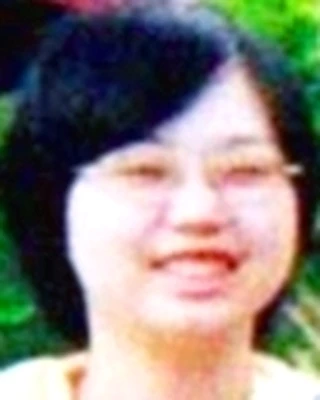
Masumi Watanabe was born in 1985 on Sado Island, a rural stretch of Niigata Prefecture off Japan's western coast, the only daughter of Hideichi and Fumiko Watanabe. Those who knew her described a shy, artistic young woman who loved to draw, especially dogs and other animals, someone more comfortable with a sketchbook than with crowds. In the spring of 2007, at twenty one years old, she traveled to Hawaii to volunteer at Sunset Beach Elementary School on Oahu's North Shore, staying with a distant relative while she settled into a new environment thousands of miles from the quiet island she'd grown up on. She spoke Japanese fluently and had only minimal English, and she wore silver framed glasses to correct severe myopia and astigmatism, small practical details that would later matter a great deal to the people trying to piece together what happened to her.
A Truck at the Foodland
On the morning of April 12, 2007, sometime between 9:20 and 10:00, witnesses near a Foodland grocery store in Pupukea saw Masumi walking along Pupukea Road before she was seen climbing into a truck belonging to Hauoli Termite and Pest Control. She appeared confused as she got in, according to those who saw her, and did not seem to interact with the driver in any way that suggested she knew him or had arranged to meet him. She was wearing a navy blue long sleeved hooded sweater over a brown shirt, blue jeans, and pink shoes, an outfit that would later be repeated in missing persons flyers and news reports across two countries as investigators in Hawaii and worried relatives in Japan tried to make sense of her sudden absence.
The truck belonged to a pest control technician named Kirk Matthew Lankford. Investigators zeroed in on him relatively quickly, and what they found inside his company vehicle made him considerably more than a routine person of interest. There was blood in the truck matching what would later be confirmed as Masumi's, along with her eyeglasses, and a cracked windshield on the passenger side that didn't fit easily into any innocent explanation. A witness separately came forward describing a man seen digging near Kahana Bay around midnight on the night of April 12, and the license plate on the vehicle at that scene matched a personal truck registered to Lankford. He was later identified in a police lineup and formally charged with second degree murder on April 26, 2007, just two weeks after Masumi disappeared.
A Story That Kept Shifting
When Lankford's trial finally opened in 2008, roughly a year after Masumi vanished, he did not deny that she had died as a result of contact with him. Instead, he offered jurors an account built around accident and panic rather than intent. He claimed he had accidentally sideswiped Masumi with his work truck, causing what he described as relatively minor injuries, and that he had then offered her a ride, presumably to help or to make amends, only for her to jump from the moving vehicle, strike her head on a rock, and die from that fall. According to Lankford, what happened afterward was not murder but a bad decision made by a frightened man: afraid of losing his pest control job over the accident, he said, he panicked and moved to conceal what had happened rather than call for help.
Prosecutors spent the month long trial systematically working to dismantle that version of events. They pointed to physical evidence that didn't line up with a simple roadside accident, including the absence of blood in the truck bed where Lankford claimed to have placed her body, and components of the vehicle that showed no damage consistent with the kind of impact he described. The contradictions were significant enough that the jury needed only a day and a half of deliberation before returning a verdict in April 2008, finding Kirk Lankford guilty of second degree murder in Masumi Watanabe's death.
A Sentence of 150 Years and Still No Body
Sentencing didn't come until a year later, in April 2009, when Lankford received a term of 150 years in prison, with the requirement that he serve at least fifty years, one third of that sentence, before he would become eligible for parole. By that point Lankford had changed his account once again, telling the court a more elaborate version in which he claimed to have kept Masumi's body inside a box in the back of his truck for roughly twelve hours before ultimately disposing of it in the waters near Kualoa, on the windward side of Oahu. Investigators and the presiding judge remained openly skeptical of that claim. The judge specifically noted that Lankford alone possessed the knowledge of where Masumi's remains actually were, and pointedly suggested that demonstrating what he called humanity and compassion, by finally revealing the true location of her body, could meaningfully affect how his eventual parole prospects were viewed decades down the line. Investigators have separately theorized that her remains may never have gone into the ocean at all, and instead may be buried somewhere on the island, a possibility that has kept informal searches alive in the years since, even as the official case moved from investigation to conviction to a sentence that will keep Lankford incarcerated for most or all of the rest of his life regardless of whether her body is ever found.
Even at his own sentencing, with the conviction already behind him and any hope of acquittal gone, Lankford continued drawing a line between what the jury had found him guilty of and what he was personally willing to admit. He told the court directly that what he did was wrong, but insisted, in the same breath, that he did not kill Masumi Watanabe, a distinction that offered her family no clarity and, if anything, only underscored how completely he had controlled the only remaining piece of information that might have brought them some form of closure.
A Mother's Plea in a Foreign Courtroom
The most devastating moments of the entire proceeding came from Masumi's parents, who traveled from Japan to be present at Lankford's sentencing and address him directly, through translation, in a courtroom half a world away from the small island where their daughter had grown up. Her father told Lankford plainly that he had killed off her soul and her life, and said he did not believe Lankford had ever given any real second thought to what he had done to her. Her mother's statement carried a different, almost unbearable register, one shaped by grief bent toward desperation rather than anger. Even after all of this, she said, addressing her daughter's convicted killer, we still bow humbly to you, to beg and plead to show us some way. It was, in effect, a mother formally, ceremonially bowing to the man who had murdered her only daughter, not out of forgiveness but out of sheer desperation for any path back to her child's remains, a gesture that captures, more starkly than any piece of forensic evidence introduced at trial, exactly what Masumi's disappearance had cost the people who loved her most.
Nearly Two Decades of Waiting
Masumi Watanabe's case closed, in the strict legal sense, with a conviction and a sentence long enough to ensure Kirk Lankford will likely die in custody. But for her parents, and for the broader Sado Island community she came from, the case has never actually closed at all, because the one piece of information that might let them finally bring their daughter home, whether from the waters off Kualoa or from some unmarked patch of ground elsewhere on Oahu, remains locked inside the memory of a man who has spent nearly two decades since his conviction offering shifting, self serving accounts of a young woman's final hours rather than the simple truth her family has been begging for since the day they first found out she'd disappeared. She had come to Hawaii to volunteer with children and spend time drawing the animals she loved. Instead, her name became permanently attached to a stretch of road on Oahu's North Shore, and to a wait that, for her parents, still has no end in sight.
Sources
- The Charley Project: Masumi Watanabe
- Hawaii News Now: Kirk Lankford Found Guilty of Second-Degree Murder
- Hawaii News Now: Parents of slain Japanese tourist make tearful plea for body at convicted killer's sentencing
- Hawaii News Now: Man Not Giving Up Search For Masumi Watanabe's Body
- Honolulu Star-Bulletin: Lankford details Watanabe's death
- Wikipedia: Kirk Lankford