A Wedding Ring on the Counter: The Disappearance of Mary Badaracco
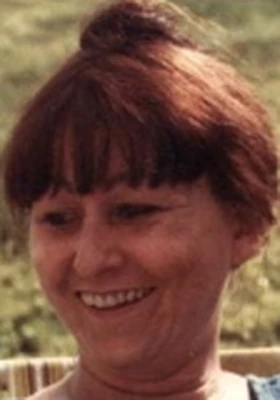
Mary Edna Badaracco was thirty eight years old in the summer of 1984, living in Sherman, Connecticut, a small town near the New York border, and working as a barmaid to help support herself and her two daughters, Sherrie and Beth. She was the second wife of Dominic Badaracco, and by every account that surfaced in the years after her disappearance, theirs was not a peaceful marriage. Friends and family later described it as tumultuous, marked by infidelity on Dominic's side and by acts of domestic violence that Mary had endured for years while trying, as best she could, to shield her daughters from the worst of what was happening inside their home. Shortly before she vanished, Mary discovered that Dominic was having an affair and made the decision to file for divorce, a choice that would come to look, in hindsight, less like the beginning of a fresh start and more like the moment that set everything else in motion.
A Smashed Windshield and an Empty Kitchen Counter
On August 19, 1984, Mary's daughters spoke to her for what would turn out to be the last confirmed contact anyone had with her. She did not report to work the following days, and her daughters, growing increasingly worried, eventually went to police on August 31 to report her missing, nearly two weeks after that last conversation. According to accounts of Dominic's own behavior during that window, he showed little urgency or concern about his wife's absence, and reportedly discouraged his grown stepdaughters from going to the police at all, a detail that, once it came to light, did little to help his credibility with investigators. Sherrie and Beth ignored his wishes and contacted authorities anyway.
What police found at the Badaracco home on Wakeman Hill Road only deepened the sense that something was deeply wrong. Mary's 1982 Chevrolet Cavalier sat in the driveway with its windshield smashed on the driver's side. On the kitchen counter, investigators found her car keys and her wedding ring, left behind in a way that read less like someone packing up to start a new life and more like someone who had no say in leaving at all. Dominic told investigators a story meant to explain all of it away: he said he and Mary had reached an informal settlement, that he had given her somewhere between one hundred thousand and two hundred fifty thousand dollars, and that she had simply taken the money, packed her clothes, jewelry, and belongings, and left of her own accord. Investigators looking into that account found reason to doubt it almost immediately, noting that personal items, including framed photographs, were indeed missing from the home, but that the overall picture, a smashed windshield, an abandoned car, a ring and keys left behind on the counter, didn't square neatly with a woman who had voluntarily walked away with a six figure payout in hand. Adding to the strangeness, that same Chevrolet Cavalier, initially found sitting in the driveway, later disappeared entirely, with no record of it ever having been sold or transferred to anyone else.
A Case That Waited Six Years to Become a Homicide
For years, Mary's case sat in an uncomfortable, unresolved space between a missing persons investigation and something more serious, without officially crossing over into the latter. That changed in 1990, six years after she vanished, when an informant came forward claiming that members of the Hells Angels motorcycle gang had been responsible for her death. The claim pointed investigators directly back toward the Badaracco family itself, since Dominic's own son Joseph was reportedly a member of the gang, and an associate named Steve Kendall was named alongside him as a suspect in what investigators now treated as a homicide rather than a disappearance. The upgrade to a homicide investigation didn't produce an arrest, a body, or a confession. What it did produce, over the following decades, was a slow moving legal process that eventually convened a one judge grand jury specifically tasked with digging back into what had actually happened to Mary Badaracco on that August night in 1984.
A Judge, an Envelope, and $100,000
The grand jury investigation dragged on for years without producing charges against anyone in connection with Mary's death, but it produced an entirely separate criminal case almost by accident, one that would eventually send her own husband to prison, just not for the crime everyone suspected him of. In 2010, according to testimony later given at trial, Dominic Badaracco approached Judge Robert Brunetti, the judge overseeing the grand jury investigation into his wife's disappearance, and offered him one hundred thousand dollars, apparently hoping to influence or derail the proceedings before they could get any closer to him. Brunetti testified that he was stunned by the offer and reported it to court officials the very next day, setting in motion a bribery prosecution against Dominic that moved forward even as the underlying grand jury investigation into Mary's death continued without resolution.
By the time the bribery case reached trial in Bridgeport Superior Court, Dominic Badaracco was seventy seven years old. The jury found him guilty of attempted bribery, rejecting his denials that he had ever tried to influence Judge Brunetti's handling of the case. State prosecutors, in their sentencing memorandum, recommended the maximum penalty available, ten years in prison. Dominic ultimately received a seven year sentence for the bribery conviction, becoming, in an almost absurd twist of legal fate, a man imprisoned for trying to obstruct an investigation into a death he has never actually been charged with causing.
Two Daughters and Thirty Years of Waiting
Mary's daughters, Sherrie and Beth, were the ones who insisted on reporting their mother missing in the first place, over their stepfather's objections, and they have remained the primary voices keeping her case alive across four decades of dead ends, grand jury proceedings, and, eventually, an unrelated bribery conviction that offered a strange kind of vindication without ever answering the central question at the heart of everything. The Connecticut State Police still list Mary Badaracco's case as an open homicide investigation, offering a fifty thousand dollar reward for information leading to an arrest and conviction in connection with her death. No one has ever been charged with killing her. Her body has never been recovered. The car that once sat in her driveway with a shattered windshield vanished from official record entirely, following her into whatever silence has swallowed the rest of the case's most important physical evidence.
What remains, more than forty years later, is a set of facts that never quite resolve into an answer: a wedding ring left on a counter by a woman who, according to her husband, had simply decided to leave; a windshield broken in a way no one has ever adequately explained; a motorcycle gang informant's claim that pointed investigators toward the victim's own stepson; and a grand jury that ran for years, investigating a homicide it could never close, only to watch the one man consistently suspected of involvement go to prison instead for trying to buy his way out from under its scrutiny. Mary Badaracco's daughters are still, by every indication, waiting for the answer that all of that activity was ultimately supposed to produce.
Sources
- The Charley Project: Mary Edna Badaracco
- Connecticut State Police: Open Case, Mary Badaracco
- NBC Connecticut: Missing Woman's Husband Guilty of Trying to Bribe Judge
- i95 Rock: CT's Most Notorious Cold Case, Sherman's Mary Badaracco Vanishes Into Thin Air
- The Crime Logs: The Disappearance of Mary Badaracco