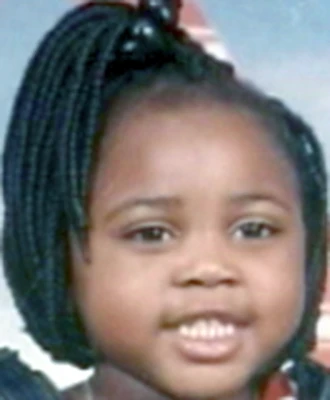
My Mommy Did It: The Disappearance of Kynande Bennett
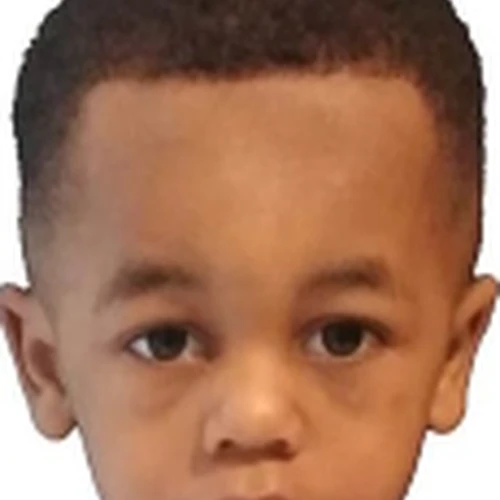
Kynande Kalehje Bennett was born August 24, 1998, and by September 2002 she was four years old, living in Conway, South Carolina, with a seashell shaped birthmark on her arm and pierced ears, small identifying details that would later circulate on missing child posters across two states. On September 29, 2002, her mother, Vartasha McCullough, reported that Kynande had disappeared from a K-Mart store in Whiteville, North Carolina, roughly an hour's drive from their home in South Carolina, claiming the two of them had been shopping for snacks when the child simply vanished.
A Story That Didn't Hold Together
Almost from the moment investigators began looking into what McCullough described, inconsistencies started surfacing that made the account increasingly difficult to believe. McCullough herself couldn't keep her own story straight, initially claiming Kynande had vanished from a specific aisle inside the store before later shifting to a vaguer account in which she believed the child had simply been behind her before disappearing. Store surveillance video, reviewed carefully by investigators, showed no images of Kynande anywhere in the K-Mart that day. No customers or employees reported seeing a four year old girl matching her description. When investigators examined the family's vehicle, they found no car seat inside it at all, an immediate red flag for a young child supposedly being driven an hour across a state line, along with minimal physical evidence that a young child had been riding in the vehicle recently in any capacity. Perhaps most damning of all, investigators were never able to find any proof whatsoever that Kynande had actually arrived in North Carolina that day to begin with.
Bruises Days Before She Vanished
As investigators dug further into the days leading up to Kynande's disappearance, a picture emerged that made her mother's kidnapping account even harder to accept. Witnesses reported seeing visible bruises on Kynande's face and shoulder in the two days before she vanished, along with, according to some accounts, strap marks and cuts elsewhere on her small body. When someone had asked Kynande directly about the bruises on her shoulder and face, the four year old had answered in the plain, direct language of a small child describing exactly what had happened to her: my mommy did it.
An Apartment That Smelled of Bleach
When investigators eventually searched the apartment McCullough shared with Kynande's father, Kevin Bennett, what they found only deepened the sense that whatever had actually happened to Kynande had occurred there rather than in any K-Mart parking lot in another state. The apartment reeked of an overwhelming chemical odor, and investigators located three separate bottles of bleach inside alongside damp mops and towels, an unusual volume of cleaning supplies and effort for an ordinary household chore. Forensic testing recovered transfer stains matching Kynande's own DNA, the kind of evidence created when fluid spatter is wiped rather than simply left undisturbed, findings that led investigators to conclude, in their own words, that a physical assault had taken place inside that apartment. Investigators also noted that the parents had disposed of Kynande's own toys and clothing even as the search into her disappearance continued around them, behavior a former deputy solicitor involved in the case, Bert von Herrmann, would later describe bluntly: it was clear, he said, that they knew Kynande Bennett was not coming home.
A Nod That Was Almost a Confession
During her formal interrogation, after failing a polygraph test, Vartasha McCullough came close to confessing outright when investigators confronted her directly with the physical reality their evidence pointed toward, telling her plainly that whatever happened to that child did not happen in North Carolina, it happened in that apartment. According to accounts of that interrogation, McCullough responded by nodding her head in apparent agreement, a wordless gesture that read, to everyone in the room, like confirmation of exactly what investigators had already concluded. She ultimately recanted that nonverbal admission and never gave a full confession describing what had actually happened to her daughter or where her body might be.
A Conviction Without a Body
Both Vartasha McCullough and Kevin Bennett were arrested in February 2003 and charged with homicide by child abuse in connection with Kynande's death. The case against Kevin Bennett, Kynande's biological father, ultimately fell apart, and prosecutors formally dropped the charges against him in October 2005, citing insufficient evidence tying him directly to whatever had happened to his daughter, though authorities noted the murder charge could be refiled against him if Kynande's remains were ever actually located.
McCullough's case moved to trial in February 2006, and testimony began with witnesses describing the bruising and injuries observed on Kynande in the days before she disappeared. On February 10, 2006, a jury convicted Vartasha McCullough of homicide by child abuse, specifically finding that she had knowingly aided and abetted the offense, unlawfully neglected her daughter, and inflicted great bodily harm on her. She was sentenced to twenty years in prison, with a release date eventually scheduled for January 2023. The conviction itself represented something genuinely unusual within South Carolina's legal history: prosecutors had secured a homicide conviction for a child's murder entirely without a body, reportedly the first time that particular legal feat had been accomplished in the state.
A Center for Missing Persons That Still Considers Her Family
Nearly a quarter century after Kynande Bennett vanished, her body has never been recovered, leaving her officially listed as missing even though the person legally responsible for her death has already served a substantial prison sentence in connection with it. Monica Caison, director of the CUE Center for Missing Persons, an organization that has continued advocating for Kynande's case over the years since her disappearance, has spoken about the case in terms that reflect just how personally these unresolved child cases can attach themselves to the people who work them. I just feel like we are her family, Caison has said, describing an organization's continued hope that Kynande might still, someday, be physically found and given the proper burial her own mother's cleanup effort was seemingly designed to prevent.
A Four Year Old's Own Words
What makes Kynande Bennett's case so difficult to sit with, even among cases involving similarly young victims, is the specificity of the evidence trail investigators pieced together after the fact, a fabricated kidnapping story that fell apart under basic scrutiny, an apartment scrubbed with enough bleach to leave a lingering chemical smell, DNA evidence consistent with a physical assault, and, perhaps most hauntingly, a four year old's own plain, unprompted words when someone had simply asked her about the bruises visible on her own body just days before she disappeared entirely. My mommy did it, she said, and years of investigation, an arrest, a trial, and a conviction later, nothing uncovered since has ever seriously contradicted her. Whatever happened to Kynande in that final week of September 2002 remains, in the most literal sense, unburied, a case where the courts reached a verdict long before the ground ever gave up any answer of its own.
Sources
- The Charley Project: Kynande Kalehje Bennett
- WECT: Crimes of the Cape Fear, Mother convicted of homicide by child abuse after 4-year-old disappears
- WECT: Mother Found Guilty in Kynande Bennett Case
- WECT: Testimony Begins in Kynande Bennett Case
- CUE Center for Missing Persons: Kynande Bennett
- WBTW: 15 years since Kynande Bennett disappearance