Say Goodbye to Your Daughter: The Murder of Katelyn Rivera-Helton
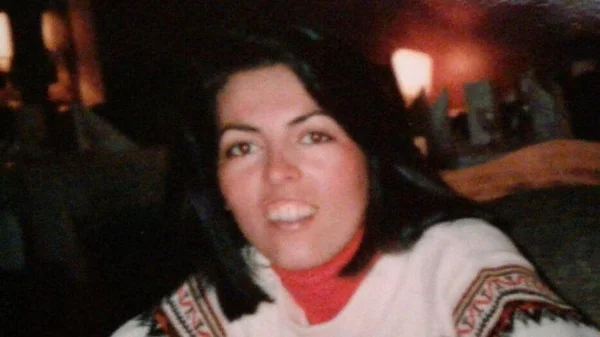
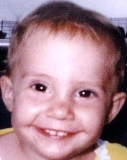
Katelyn Selena Rivera-Helton was 20 months old when she disappeared from Boothwyn, Pennsylvania, on August 10, 1999, taken by her own father in the middle of an already violent day that had begun with him assaulting her mother in a convenience store parking lot. What followed was a case that would eventually produce a murder conviction without a body, a weapon, a drop of blood, or any DNA evidence whatsoever, built instead on circumstantial evidence, threatening phone calls made in real time, and the testimony of a man who shared a jail cell with the person responsible.
A Relationship Already Marked by Violence
Katelyn's parents, Robert Rivera and Jennifer Helton, had a relationship defined by escalating violence well before Katelyn's disappearance. By the summer of 1999, Jennifer had taken steps to protect herself and her daughter, obtaining a Protection From Abuse order that granted her sole custody of Katelyn, then just 20 months old. Rivera had been ordered into only supervised visitation with his own daughter following separate assault charges Jennifer had filed against him, a legal arrangement meant to create distance and safety that would ultimately fail to prevent what happened next.
A Beating, Then an Abduction
On August 10, 1999, Rivera confronted Jennifer in a convenience store parking lot and beat her severely. That same day, he forced his way into the daycare facility where Katelyn was being watched and took her, in direct violation of the custody order that was supposed to keep her safe from exactly this kind of unsupervised contact. Over the following hours, Rivera kept Katelyn with him in a borrowed car, making a series of increasingly threatening phone calls to Jennifer, demanding that she meet with him alone. During these calls, according to testimony later presented at trial, Rivera told Jennifer that Katelyn was going to heaven, and instructed her to say goodbye to her daughter, language that left little ambiguity about what he was implying, even before anyone knew for certain what had actually happened.
The Last Confirmed Sighting
The final confirmed sighting of Katelyn came from an employee at a gas station in Chadds Ford, who saw her in the back seat of Rivera's borrowed car at approximately 7:00 p.m. that evening. Roughly two hours later, Rivera returned to the home of a friend in Maryland, Thomas Whittaker, where he had been staying, arriving alone. He spent that night drinking. When he left the following morning, a shovel belonging to Whittaker, normally kept at his boathouse, had disappeared along with him.
Clothing on a Highway Median
In the days that followed, as an intensive search effort involving local police, volunteers, and the FBI failed to locate Katelyn anywhere, investigators recovered a size four sneaker and a yellow sock along a highway median on Route 202 in Delaware, items believed to belong to Katelyn based on the clothing description provided by her family. Whittaker's missing shovel was later recovered at a construction site in Maryland, physical evidence that, combined with Rivera's own movements that night, began to suggest a specific and grim sequence of events even in the total absence of any body.
A Cellmate's Account
The most direct evidence against Rivera came not from physical forensics but from testimony given by William Lively, a man who shared a jail cell with Rivera following his arrest. According to Lively, Rivera confessed to him directly, describing how he had suffocated Katelyn, removed her clothing in an apparent effort to hinder identification and slow decomposition, and buried her body intact using Whittaker's own shovel. Lively further testified that Rivera had drawn a map indicating where he had buried her, believed to be near Elkton, Maryland, and had specifically instructed Lively to direct any blame toward Whittaker himself rather than toward Rivera.
Rivera's Own Shifting Account
When Rivera took the witness stand in his own defense, he acknowledged taking Katelyn from the daycare and acknowledged making the threatening calls to Jennifer throughout that day. He admitted that his earlier claims, that he had given Katelyn to an unfamiliar woman at Longwood Gardens, and separately that she was with another woman from New York, had both been lies. When pressed directly about what had actually happened to his daughter, Rivera offered only a cryptic response, telling the court that everybody else already knew what happened. When asked point blank whether he had killed her, he said simply that he had not. He denied stealing Whittaker's shovel and disputed that the clothing recovered along Route 202 had actually belonged to Katelyn or that she had been wearing it that day.
A Conviction Without a Body
Rivera was convicted in January 2002 of second degree murder, kidnapping, and related charges, and was sentenced to life in prison without the possibility of parole for the murder and kidnapping counts, along with an additional 10 to 20 years for burglary and 3 and a half to 7 years for custodial interference. Katelyn was formally declared legally dead in 2002, and her remains have never been located.
An Appeal That Failed
Rivera appealed his conviction, raising several distinct legal arguments. He first contended that a parent could not, as a matter of law, be convicted of kidnapping his own child, pointing to older Pennsylvania case law from the nineteenth century to support this position. Pennsylvania's Superior Court rejected this argument outright, holding that under the modern kidnapping statute, adapted from the Model Penal Code, a parent absolutely could be convicted of kidnapping his own child, particularly in a case like Rivera's where the evidence showed he had acted specifically with intent to terrorize Katelyn's mother. Rivera separately challenged the admission of evidence describing his prior violence against Jennifer, but the court found this evidence properly established both motive and intent, describing the connection between Rivera's history of violence against Helton and his eventual seizure of Katelyn as unmistakably clear.
Perhaps most significantly, Rivera argued that prosecutors had failed to establish the legal requirement known as corpus delicti, the principle that a crime must be proven to have occurred independent of a defendant's own statements, given the complete absence of a body, a murder weapon, blood, or DNA evidence of any kind. The appellate court rejected this argument as well, stating plainly that Pennsylvania law imposed no requirement that prosecutors produce an actual body in a homicide case, and that circumstantial evidence could be sufficient on its own. The court pointed to the specific combination of evidence assembled against Rivera, a helpless toddler who vanished while in his sole, unsupervised custody in direct violation of a court order, her clothing discovered along the exact route he had traveled, his documented access to the very shovel later found at a Maryland construction site, the extensive and ultimately fruitless search efforts that followed, and his own explicitly threatening statements made to Katelyn's mother throughout that day, as more than sufficient to establish that Katelyn had died by criminal means. The court affirmed both his conviction and his life sentence in full.
A Family Left Without Answers
More than two decades after Katelyn Rivera-Helton disappeared from a Pennsylvania daycare center on a summer afternoon marked by violence from the very beginning, her body has never been recovered, leaving her mother and extended family without the most basic form of closure even as the legal system reached its own firm conclusion about who was responsible. Robert Rivera remains in prison serving his life sentence, having never disclosed the location investigators believe lies somewhere near Elkton, Maryland, where a jailhouse informant once said he had drawn a map showing exactly where his own daughter's body could be found.
Sources
- The Charley Project: Katelyn Selena Rivera-Helton
- FindLaw: Commonwealth v. Rivera (2003)
- Maryland Daily Record: Pennsylvania court upholds man's conviction for kidnapping his own child
- True Crime Diva: The Heartbreaking Parental Abduction of 20-Month-Old Katelyn Rivera-Helton
- Doe Network: 2663DFPA, Katelyn Selena Rivera-Helton
- Find a Grave: Katelyn Selena Rivera-Helton (1998-1999)
- vLex: Com. v. Rivera, 828 A.2d 1094