The Missingest Man in New York: What Happened to Judge Crater?
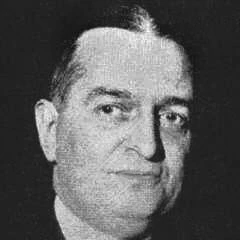
For decades after he disappeared, New York nightclub comedians had a stock joke that never failed to get a laugh: somewhere in the middle of the act, someone would step to a microphone and announce, "Judge Crater, call your office." Everyone in the room knew what it meant. Joseph Force Crater, a forty-one-year-old justice of the New York State Supreme Court, had walked out of a Manhattan chophouse on the evening of August 6, 1930, climbed into a taxi, and vanished so completely and so permanently that his name became a punchline, then a piece of American slang. To "pull a Crater" meant to disappear without explanation. Nearly a century later, nobody has ever proven what actually happened to him.
Good Time Joe
Crater was born in 1889 in Easton, Pennsylvania, to Irish immigrant parents, and by most accounts built the kind of career that looked, from the outside, like a genuine American success story. He went to Lafayette College, then Columbia, practiced law out of Manhattan's Equitable Building, and married a woman named Stella Mance Wheeler, whom he'd met while she was still married to someone else. He helped her get a divorce, and the two wed just seven days after it was finalized. Among friends, he was known as "Good Time Joe," a nickname that referred to his love of nightlife, dancing, and the company of the era's showgirls, several of whom he kept up long-running relationships with throughout his marriage.
His real advancement came through Tammany Hall, New York's famously corrupt Democratic political machine, where Crater aligned himself with district leader Martin J. Healy's Cayuga Democratic Club, organizing election workers and handling election law cases for the organization. On April 8, 1930, Governor Franklin D. Roosevelt appointed Crater as a justice of the New York Supreme Court for New York County, a plum position that, at the time, was widely understood among people who followed New York politics to be something you could effectively purchase through the right connections. In the weeks around his appointment, Crater liquidated sixteen thousand dollars in investments and withdrew another seven thousand from his bank account, a combined sum worth well over a quarter of a million dollars today, with no clear explanation for where the money went. Many assumed it had gone toward buying the judgeship itself.
A Summer of Strange Errands
By the summer of 1930, the ground underneath Tammany Hall had started to shift. A statewide anti-corruption inquiry, the Seabury Commission, had launched that year, and it was creeping steadily closer to exactly the kind of patronage appointments Crater's own career had been built on. Crater and his wife were spending the summer at their cabin in Belgrade, Maine when, in late July, he received a phone call that unsettled him enough to tell Stella he needed to go back to New York to "straighten those fellows out." Instead of tending to whatever business had prompted the call, he went to Atlantic City with a showgirl named Sally Lou Ritz.
He returned briefly to Maine on August 1, then went back to New York on August 3, telling his wife he would be home in time for her birthday on August 9. By all appearances he was in good spirits. On the morning of August 6, he spent roughly two hours in his court chambers, reportedly destroying a number of documents. His law clerk, Joseph Mara, cashed two checks for him that morning totaling $5,150, close to seventy-seven thousand dollars in today's money. The two men carried two locked briefcases to Crater's Fifth Avenue apartment, where Crater sent Mara home for the day and kept the briefcases with him. Neither briefcase was ever seen again.
That evening, Crater stopped by a Broadway ticket agency and bought a single seat to a play called Dancing Partner at the Belasco Theatre, an odd purchase since he had already seen a preview of the show with an acquaintance days earlier. He then went to Billy Haas's Chophouse on West 45th Street for dinner with Sally Lou Ritz and a lawyer named William Klein. Sometime around 9:15 that evening, he said goodbye to his dinner companions on the sidewalk outside the restaurant. Klein initially told investigators that Crater had gotten into a taxi and driven off westward. Ritz corroborated that account. Both later changed their stories, saying instead that Crater had simply walked away down the block. No taxi driver in New York ever came forward to say they'd picked him up. He was never confirmed seen again by anyone, by any account that could be verified, for the rest of recorded history.
A Slow Alarm
What is striking about the disappearance, in hindsight, is how long it took anyone to treat it as one. Crater's wife didn't start making calls to their New York acquaintances until roughly ten days had passed. His fellow justices only grew alarmed when he failed to show up for the opening of the courts on August 25, nearly three weeks after he'd vanished. Police weren't formally notified until September 3, almost a full month after that last dinner at Billy Haas's, at which point the story broke into the newspapers and the case became a national sensation almost overnight.
When detectives finally searched in earnest, they found Crater's safe deposit box already emptied, and the two locked briefcases from that final morning were gone along with everything else. Thousands of reported sightings poured in from around the country, all of them dead ends. An October 1930 grand jury called ninety-five witnesses and produced 975 pages of testimony. Crater's wife declined to appear before it. In the end, the jury issued a conclusion that has aged into something close to the definitive epitaph for the entire case: "the evidence is insufficient to warrant any expression of opinion as to whether Crater is alive or dead, or as to whether he has absented himself voluntarily, or is the sufferer from disease in the nature of amnesia, or is the victim of crime."
Showgirls, Gangsters, and a Murdered Madam
The list of people connected to Crater in the weeks around his disappearance reads like the cast of a Prohibition-era crime drama. Beyond his dinner companion Sally Lou Ritz, who left New York within weeks of the disappearance citing a sick father and was still being interviewed by police as late as 1937 while living in Beverly Hills, there was another showgirl named June Brice, seen with Crater the day before he vanished, who investigators suspected may have been involved in a blackmail scheme that could explain his unusual cash withdrawals. Brice herself disappeared right as the grand jury was set to convene and wasn't located again until 1948, when she turned up in a mental hospital.
Crater's suit jacket, strangely, later surfaced in the apartment of a woman named Vivian Gordon, a high-end prostitute connected to the notorious New York madam Polly Adler and reportedly acquainted with the gangster Jack "Legs" Diamond, whom Crater was rumored to have socialized with as well. Crater had also known Arnold Rothstein, the organized crime figure believed to have fixed the 1919 World Series, and was said to have been genuinely shaken by Rothstein's murder the year before his own disappearance. Gordon's own story took a dark turn that reverberated well beyond Crater's case: angry over losing custody of her teenage daughter, she agreed to meet with a Seabury Commission lawyer on February 20, 1931 to discuss testifying about corruption within the police department. Five days later, she was murdered. Her death triggered a police resignation, her own daughter's suicide, and a fresh wave of public attention on the corruption investigation that eventually helped force New York City Mayor Jimmy Walker to resign and substantially broke Tammany Hall's grip on the city, an outcome connected only sideways to Crater himself, but part of the same rotten thread he'd been pulled from.
The Envelopes in the Dresser
The case took one more strange turn on January 20, 1931, nearly six months after Crater vanished, when Stella Crater found four envelopes tucked inside a dresser drawer in their apartment, a drawer investigators had already searched thoroughly and found empty. Inside were cash, insurance policies worth thirty thousand dollars, Crater's will, and a handwritten note listing debts he owed to various people. Investigators strongly suspected the envelopes had been planted sometime after the initial search, by someone with access to the apartment, though nothing ever came of that lead either.
Stella herself lived through the aftermath in genuinely reduced circumstances. She was evicted from their Fifth Avenue apartment for nonpayment of rent, and by 1937 was working as a telephone operator in Maine, earning twelve dollars a week, when she petitioned to have her husband legally declared dead. Joseph Force Crater was declared legally dead on June 6, 1939, nearly nine years after he disappeared, and Stella collected a little over twenty thousand dollars in life insurance. She remarried the following year, separated from her second husband in 1950, and in 1961 published a book, The Empty Robe, laying out her own conviction that her first husband had been murdered. She died in 1969, having never learned, at least not that she ever revealed, what had actually happened to him.
A Letter From Coney Island
The most recent serious development in the case came from an unexpected place: a dying woman's handwriting. In August 2005, following the death of a ninety-one-year-old Queens resident named Stella Ferrucci-Good, her family turned over notes she'd left behind. In them, she claimed her late husband, an NYPD detective named Robert Good, had told her decades earlier that Crater had been killed by an NYPD officer named Charles Burns, who was moonlighting as a bodyguard for the Murder, Inc. enforcer Abe Reles, along with Burns's brother Frank. According to the letter, Crater's body had been buried near West Eighth Street in Coney Island, on the site now occupied by the New York Aquarium.
Police had, in fact, excavated that general area back in the 1950s during unrelated construction and found no skeletal remains at the time, which does not by itself rule the account out, given how much ground had shifted and how imprecise "near West Eighth Street" really is. Researchers who have spent years on the case, including Richard Tofel, author of a 2004 book on the disappearance, have expressed real skepticism about the letter's reliability. It remains, like nearly everything else connected to Crater, a lead that sounds plausible and can neither be confirmed nor fully dismissed.
What Was Left Behind
The official case was formally closed by New York authorities in 1979, forty-nine years after Crater climbed out of a chophouse and, by most tellings, into a taxi that no driver ever admitted to driving. In 1933, a film studio publicly offered ten thousand dollars, a quarter million in today's money, to Crater personally if he would simply show up to claim it at a screening of a movie called Bureau of Missing Persons. Nobody ever collected. A confidential letter Crater apparently wrote the day he vanished, beginning with the line "The following money is due me from the persons named," sold at auction in 1981 for seven hundred dollars, having been mistakenly reported for years as his will.
Almost a hundred years on, the honest answer to what happened to Joseph Force Crater is still the same one that grand jury gave in 1930: nobody knows, and the evidence available has never been sufficient to say for certain whether he ran, was killed, or simply vanished into the machinery of a city that, as it turned out, had a great many reasons to want a corrupt, well-connected judge to disappear right when he did.
Sources
- The Charley Project — Joseph Force Crater
- Wikipedia — Joseph Force Crater
- HISTORY — Judge Joseph Force Crater becomes the "missingest man" in New York
- HowStuffWorks — Decades Later, the Disappearance of Judge Joseph Force Crater Remains a Mystery
- Sick History — Judge Crater disappearance: The Vanishing Act of New York's Notorious Jurist
- EBSCO Research Starters — Crater disappearance
- Stanford Lawyer Magazine — In Print: Finding Judge Crater: A Life and Phenomenal Disappearance in Jazz Age New York