Twenty Nine Years in a Warehouse: Jeanette Louise Zapata
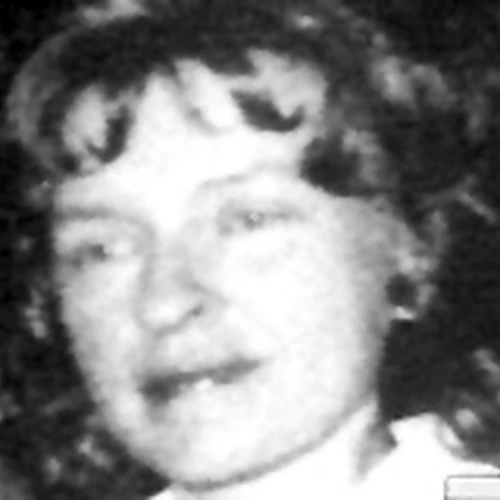
Jeanette Louise Zapata, known to nearly everyone as Jean, earned her pilot's license as a teenager in the 1950s, becoming one of the youngest licensed pilots in Wisconsin at the time. She went on to build a genuine career around flying, working as a flight instructor at the Frickelton School of Aeronautics and specializing in instrument training, while also staying active with the Civil Air Patrol. She married Eugene J. Zapata, an engineer, in 1959, and the two of them had three children together, Christine, Steven, and Linda, settling into a home in the 5700 block of Indian Trace on Madison, Wisconsin's east side.
A Marriage That Had Curdled
By the mid 1970s, Jean's marriage to Eugene had deteriorated into something genuinely troubling. According to accounts that surfaced later, Eugene had taken intimate photographs of Jean at some point and sent them to adult magazines without what appears to have been her full consent, and had also taken her to bars specifically to gauge other men's interest in her, behavior Jean reportedly found deeply resentful and humiliating rather than anything resembling a healthy shared interest. In May 1976, Jean filed for divorce, and the court granted her a restraining order that limited Eugene's access to their shared home to a narrow window on Saturdays, between nine and eleven in the morning, a legal arrangement that reflected just how far the relationship had broken down by that point.
An Ordinary Tuesday Morning
On October 11, 1976, Jean dropped her three children off at school as she did every weekday morning. She never returned home afterward, and a coworker reported her missing two days later when she failed to show up for work without any explanation. Investigators who searched her home found her purse, her money, her nearly new car, her coat, and other personal clothing all left behind exactly where she would have kept them, along with two uncollected paychecks. The only item missing from the house was a .30-06 rifle. Everyone who knew Jean agreed that walking away from her life and her three children without a word was entirely out of character for her.
Eugene told investigators at the time that Jean had simply walked away of her own free will, an explanation that struck many close to the family as implausible given everything she had left behind. He submitted to a polygraph examination and passed it, and with no other direct evidence pointing toward him or anyone else, the investigation stalled and the case went cold for nearly three decades.
A Daughter Divided
Jean and Eugene's children grew up carrying very different beliefs about what had actually happened to their mother. Linda, who was only ten years old at the time Jean disappeared, eventually came to believe her own father was responsible for whatever happened to Jean, a conviction she held onto even as her siblings continued to maintain Eugene's innocence for years afterward. That split within the family itself, one child convinced of her father's guilt while her brother and sister defended him, reflected just how genuinely unresolved and contested the case remained within the Zapata family long before investigators ever developed the evidence to settle the question definitively.
A Case Reopened, Two Decades Later
At the urging of one of Jean's friends, Madison police formally reopened the investigation into her disappearance in 2004, nearly thirty years after she vanished. Detectives working the renewed case eventually brought in cadaver dogs, which detected the scent of human remains both in the crawl space beneath the Zapata family's former home and inside a storage locker Eugene had rented. That physical lead gave investigators, for the first time since 1976, something concrete connecting Eugene directly to wherever Jean's body had actually ended up in the years since her disappearance.
Disposed of the Same Month the Case Reopened
What investigators eventually pieced together painted an almost unbelievable picture of just how long Eugene had actually kept evidence of what he had done. Records showed he had rented a warehouse space back in 2001, and that in April 2005, in the midst of the very same period police were actively reopening and pursuing the case, Eugene made a specific trip to Madison and purchased a disturbing collection of items: two gallons of water, an odor absorbing mask, several large plastic containers, a tarp, and two cans of Lysol disinfectant spray. He then drove to a distant landfill. Investigators eventually concluded that Eugene had kept Jean's remains hidden, likely in that rented warehouse space, for nearly the entire twenty nine years since her death, only finally destroying and disposing of them once he realized, correctly, that renewed police attention meant his decades long concealment was finally at genuine risk of being discovered.
A Confession Instead of a Trial
Rather than face a full trial on the evidence investigators had assembled, Eugene Zapata agreed to a plea arrangement in February 2008. He pleaded guilty to homicide by reckless conduct and provided investigators with a detailed account of what had actually happened that October morning in 1976. He admitted that he and Jean had argued about their divorce, that he had snapped during the confrontation, striking her on the head with a paperweight before strangling her to death. He told investigators he had dumped her body in a rural area east of Madison shortly after killing her, and that he later purchased land in Juneau County, Wisconsin, where he moved her remains and buried them for a period, before ultimately dismembering what remained of them and disposing of everything at the landfill in April 2005.
A Sentence Bound by a Law From the Year She Died
Because Eugene was charged under the criminal statute in effect at the time of the actual killing in 1976 rather than any updated law reflecting decades of subsequent legal reform, he faced a maximum possible sentence of just five years for reckless homicide, a strikingly light consequence given the deliberate, sustained concealment that had kept his crime hidden for nearly thirty years. He received that maximum five year sentence, along with a requirement that he pay five thousand dollars in restitution specifically to his daughter Linda, the child who had spent decades believing, correctly as it turned out, that her own father had killed her mother.
A Career That Made Her Absence Even Harder to Explain
Part of what made Jean's disappearance so immediately suspicious to those who knew her was how thoroughly it clashed with who she actually was. A licensed pilot since her teenage years and a working flight instructor by trade, Jean had built a life defined by discipline, precision, and a genuine independence that predated her marriage entirely, qualities considerably at odds with any theory that she had simply walked away from her career, her home, and her three children on a whim in the middle of an ordinary Tuesday. Investigators and family members alike found it difficult to square the idea of a woman capable of teaching instrument flying, a discipline that demands exacting attention to detail and careful judgment under pressure, with a spontaneous, unexplained abandonment of everything she had built. That disconnect between Jean's established character and the story her husband offered helped keep suspicion focused on Eugene for decades even during the long years when investigators lacked anything resembling physical evidence to act on.
No Remains, Only a Confession
Because Eugene had already destroyed Jean's remains at the landfill years before his eventual confession, nothing physical of her was ever recovered for her children to bury or visit. What the family received instead, after nearly thirty two years of uncertainty, was a detailed admission of guilt and an account of exactly what had happened to their mother, delivered by the same man who had spent almost three decades ensuring that account would never have to include any evidence capable of proving it in a courtroom.
Sources
- The Charley Project: Jeanette Louise Zapata
- The Cinemaholic: Jean Zapata Murder, Where is Eugene Zapata Today?