A Custody Dispute Over Child Support: Jay-Quan Mosley
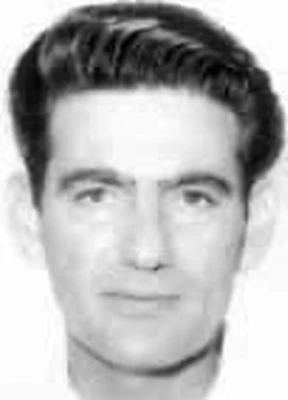
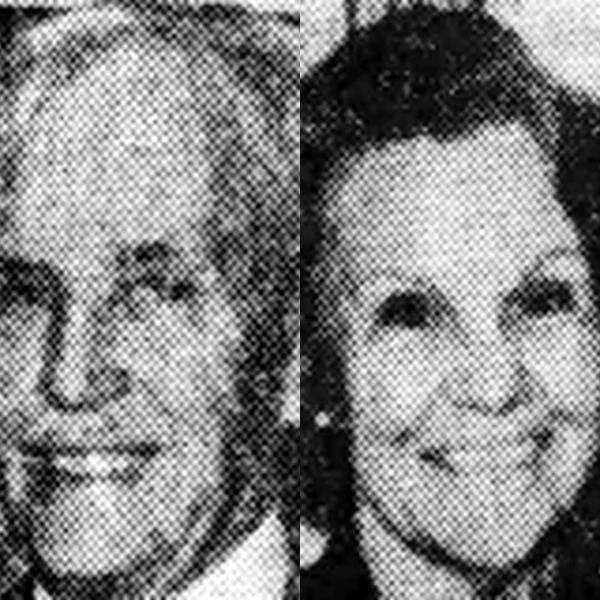
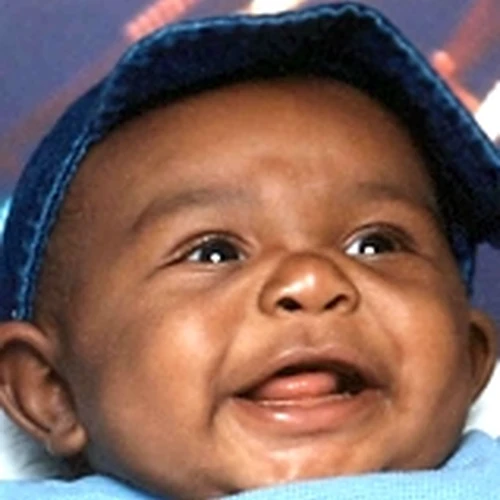
Jay-Quan Lyndarius Mosley was born June 24, 2003, and was just ten months old on April 22, 2004, when he and his mother, Lynda Jean Wilkes, disappeared from a strip mall in the 3000 block of Dunn Avenue in Jacksonville, Florida. Lynda worked as a bus attendant and had four other children besides Jay-Quan. That afternoon, around 12:30, an acquaintance named John Franklin Mosley Jr., the man who had fathered Jay-Quan, offered to drive Lynda and the baby out to look at a house she was considering renting. According to the account John later gave police, he drove the two of them out to see the property, then returned them to the same shopping center only a short time later before heading off to work himself. Neither Lynda nor Jay-Quan was ever seen alive again.
A Car Left Behind, Children Left Waiting
Relatives realized something was wrong when Lynda failed to show up to collect several of her other children from school that afternoon, an absence completely out of character for a mother managing five children on her own. When police began searching for her, they found her red Ford Escort still sitting abandoned in the strip mall parking lot, exactly where John said he had dropped her off. There was no sign of Lynda or the baby anywhere nearby. In the aftermath of their disappearance, Lynda's oldest daughter took on guardianship of one of her younger siblings, while the remaining two children went to live with their own father, a fracturing of the family that happened almost immediately, well before anyone had confirmed what had actually happened to Lynda and Jay-Quan.
A Discovery Fifty Five Miles Away
Two weeks after the disappearance, investigators found Lynda Wilkes's burned remains in a remote wooded area on the property of a hunting club in Alachua County, fifty five miles from where she and Jay-Quan had last been seen in Jacksonville. Police declared her death a homicide, and given the circumstances, publicly stated they believed Jay-Quan had been murdered as well, even though his remains were not found alongside his mother's or anywhere else in the vicinity. Search efforts extended well beyond that initial discovery site, with dozens of officers at one point combing through a landfill in Valdosta, Georgia, hoping to locate the infant's body. Those searches never succeeded. Jay-Quan's remains have never been recovered.
A Dispute Over Support Payments
The motive investigators developed centered on money, specifically the ordinary, unglamorous machinery of child support. Lynda had been seeking support payments from John for Jay-Quan, and John, according to the case built against him, contested his own paternity of the child rather than accept the financial obligation that would follow from acknowledging he was Jay-Quan's father. John was already in custody on an unrelated sex offense charge when investigators connected him to Lynda and Jay-Quan's disappearance, and on May 7, 2004, while still incarcerated on that separate matter, he was formally charged with two counts of murder.
A Teenage Accomplice Who Chose to Talk
A key figure in the case against John was Bernard Deon Griffin, who was only fifteen years old at the time of the killings and was charged as an accomplice. Griffin ultimately cooperated with investigators and testified in detail about how the murders were carried out, describing Lynda being strangled and Jay-Quan being suffocated. His cooperation proved central to the case prosecutors eventually built against John, and in exchange, Griffin initially received probation for his role rather than facing anything close to the consequences John would go on to receive. That leniency did not last indefinitely. Griffin was later sentenced to twenty years in prison after violating the terms of his probation.
A Conviction, and a Two Decade Fight Over the Sentence
John Mosley was convicted of both murders in November 2005. The jury that decided his sentence voted 8 to 4 in favor of capital punishment, and he was sentenced to death for Jay-Quan's murder, receiving a life sentence in connection with Lynda's killing. What followed was an unusually long, repeated cycle of appeals and resentencing. The Florida Supreme Court vacated John's death sentence on procedural grounds on two separate occasions over the years, including as recently as 2022, when the court found the trial court had failed to properly address a motion John had filed seeking to represent himself. Each time his sentence was vacated, the case returned to a Florida circuit court for a fresh sentencing hearing, extending a legal process that, more than two decades after the actual murders, was still nowhere near fully resolved.
John's most recent appeal raised two separate claims, one alleging jury nullification during his penalty phase, and a second built around newly discovered evidence questioning the competence of the medical examiner whose findings had been used at his original trial, with John's filings alleging that examiner had a documented history of memory problems the state failed to disclose and had potentially been pressured to change her official ruling on Lynda's cause of death. In November 2024, the Florida Supreme Court denied that third appeal outright, finding the jury nullification claim procedurally barred since it had not been raised in his earlier appeals, and dismissing the medical examiner claim as untimely. With that ruling, John Mosley's death sentence was finally affirmed for good, more than twenty years after Jay-Quan and Lynda disappeared from that Jacksonville strip mall.
Twenty Years Later, Still No Baby to Bury
Even with John Mosley's conviction and death sentence now fully settled by Florida's highest court, Jay-Quan's own remains have never been located anywhere, not at the hunting club property where his mother was found, not in the Valdosta landfill dozens of officers searched, not anywhere else investigators have looked in the two decades since he disappeared as a ten month old baby. His case remains formally classified as missing rather than confirmed recovered, a distinction that persists purely as a matter of physical fact even though the legal system has long since settled the question of who was responsible for what happened to him.
A Motive That Reflects a Broader Pattern
Cases in which a father kills a child specifically to escape a support obligation remain, thankfully, rare relative to the broader universe of child support disputes that play out in family courts every single day without any violence attached to them at all. What makes Jay-Quan's case land with particular weight is the sheer disproportion between the underlying dispute and its outcome, an argument over a legal and financial responsibility that exists in nearly every jurisdiction specifically to ensure children are provided for, escalating instead into the death of the very child that obligation was meant to protect, along with the mother who had done nothing more than ask that the obligation actually be honored. The involvement of a fifteen year old accomplice, recruited into carrying out or assisting with the killings of a grown woman and an infant, adds another layer of tragedy entirely separate from Jay-Quan and Lynda's own deaths, a teenager whose own life was permanently altered by his participation in a crime driven by an adult's refusal to pay for his own child's care.
A Case Finally Closed on Paper, Still Open in Every Other Sense
More than twenty years after Jay-Quan Lyndarius Mosley vanished alongside his mother, the courts have exhausted every avenue his convicted killer had left to challenge the sentence against him. What the legal system has never been able to provide, despite two full decades of trials, appeals, and resentencing hearings, is Jay-Quan himself, or any physical trace of where his body actually ended up after that April afternoon in 2004.
Sources
- The Charley Project: Jay-Quan Lyndarius Mosley
- News4Jax: Man convicted of 2004 murders wants new trial
- WCJB: Waldo man headed to death row after third appeal to Florida Supreme Court denied
- Justia: Mosley v. State, 2024 Florida Supreme Court Decisions