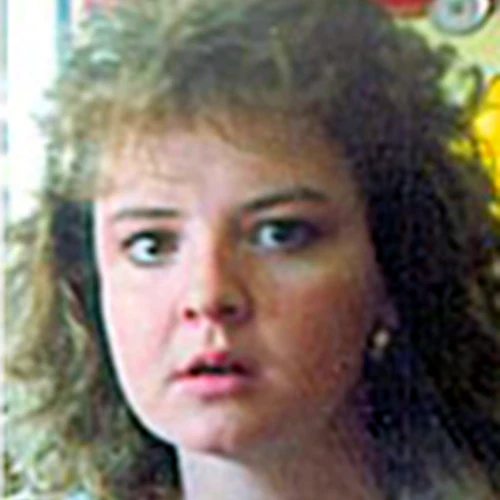
The Fourth One: Diana Leone and the Man Who Outlived Every Investigation
Diana L. Leone was thirty five years old, living in a home in the 3000 block of West Tecos Avenue in Las Vegas, Nevada, with her longtime boyfriend, David Dale Morgan, and their two children, when she disappeared sometime in February 2000. She left behind nearly everything a person leaving voluntarily would normally take with them. Her clothes remained in the house. Her money was untouched. Her car sat exactly where she had parked it. What her family and investigators eventually pieced together painted a picture considerably darker than a woman simply walking away from her life.
Diana had met Morgan back in 1981, when she was sixteen years old and he was fifty, and she moved into his home not long after, eventually going to work at one of his businesses, a storage facility called Abacus Mini-Storage. The relationship that followed was marked by a long documented history of domestic violence. In 1989, Morgan was charged with Diana's attempted murder after he beat her with a pipe, an assault that left her with numerous fractures. Those charges were ultimately dropped when Diana, likely out of fear or dependence or both, refused to testify against him in court, a pattern common enough in long term abusive relationships and one that left Morgan free to remain in her life for the following decade.
A Seven Year Old Witness
The night before Diana vanished, her seven year old daughter witnessed a violent altercation between her parents, later telling investigators that she saw Morgan push her mother through a glass window and strike her head against the refrigerator. It was, as far as anyone has ever been able to establish, the last confirmed sighting of Diana Leone. Morgan never reported her missing. When investigators eventually did learn of her disappearance and began asking questions, he offered an explanation that would become a familiar pattern in his own account of the women who vanished around him: he claimed Diana had run off with another man, someone he identified only as Tim, leaving Las Vegas and her own children behind entirely of her own accord. Diana was not reported missing to police until October 2000, eight months after her family says they last had contact with her, a gap that gave whatever had actually happened to her considerable time to go cold before any formal investigation even began.
A History Diana Herself Had Warned About
What makes Diana's disappearance especially chilling in hindsight is that she herself had reportedly voiced fear about exactly this kind of outcome years before it happened to her. Diana was said to believe that Morgan had murdered his first wife, Marie Bernhardt Morgan, who had disappeared decades earlier in May 1980 under strikingly similar circumstances, and Diana had specifically cited that suspicion as her reason for repeatedly refusing Morgan's proposals of marriage over the years they were together. Marie herself had a documented history of seeking shelter at a local women's crisis center during her marriage to Morgan, and after she vanished, Morgan offered investigators at the time a similar story to the one he would later give about Diana, claiming Marie had run off with a boyfriend named Gabriel Vincent.
Gabriel Vincent had his own disappearance to account for. He vanished in November 1979, months before Marie herself went missing, and was reportedly having an affair with Marie at the time, allegedly attempting to blackmail Morgan with explicit photographs and recordings connected to the relationship. A third disappearance, that of Donald Cowan, a business associate of Morgan's, occurred in December 1982. Morgan's own sister, Deloris, later told investigators she believed her brother was directly responsible for Cowan's disappearance as well.
A Confession to a Sister, and a Body That Was Never Found
Deloris Morgan's account of her brother went well beyond suspicion regarding Donald Cowan. In a 1985 statement, she told investigators that Morgan had directly confessed to her that he shot and killed his first wife Marie because she was planning to leave him. According to Deloris, Morgan forced her at gunpoint to view Marie's body, wrapped in a blanket, near mile marker 124 on Highway 95 close to Indian Springs, then compelled her to help bury the body deeper in the desert, and later forced her to return separately to cover the grave site with cement. When police eventually searched a two mile radius around the location Deloris described, they found no remains.
A Witness Who Finally Surfaced
The investigation into Morgan sat largely dormant for years, hampered by exactly the kind of aging, uncorroborated secondhand accounts that make prosecuting decades old disappearances so difficult. The case's real breakthrough came in 2006, when improvements in computer based records searching allowed detective Mark Reddon, who had worked the case for years, to finally locate Fred Hackett, a man who had worked for Morgan back in the late 1970s. Hackett told investigators he had been directly involved in the killing of Gabriel Vincent, describing how Morgan shot Vincent in the groin and chest with a .38 revolver, and confirming that the two of them together buried Vincent's body somewhere in the direction of Indian Springs and Mount Charleston. Hackett's own wife, Avis, corroborated part of his account, telling investigators she recalled hearing gunshots that night.
An Arrest, Then a Collapse
Armed with Hackett's account, Las Vegas Metro obtained a search warrant in December 2006 for property Morgan owned near Sunset Road and Polaris, connected to his moving and storage business, and began an excavation on New Year's Day 2007 using ground penetrating radar to search for remains. Despite more than two days of digging, no human remains were recovered. Morgan himself was arrested in January 2007, apprehended at a Budget Inn in Kingman, Arizona, while traveling back from Los Angeles. He was released on one hundred thousand dollars bail and placed under house arrest in a motor home, with his passport confiscated given his ownership of property and a wife in Brazil, factors investigators considered a genuine flight risk. His attorney, Thomas Pitaro, dismissed Hackett as nothing more than a disgruntled former employee who had once stolen from Morgan.
The case against Morgan ultimately fell apart not through any legal vindication but through simple attrition. His defense waived the preliminary hearing, an unusual tactical choice, and the case dragged on for years afterward without resolution. In 2012, Fred Hackett died of natural causes in Florida, and without his firsthand testimony available to present at trial, prosecutors dropped the charges against Morgan without prejudice, technically leaving the door open to refile while practically ensuring the case would never move forward again. Morgan walked free at eighty one years old, having spent five years in legal limbo but never facing a jury.
Outliving Every Case Against Him
David Dale Morgan lived another six years as a free man after the charges against him were dropped, dying on November 11, 2018, at the age of eighty seven. He was buried in West Virginia. In the years since his death, family members and former associates have continued posting accusations of abuse and murder connected to him in various online memorial spaces, a scattered, informal record of suspicion that never translated into the kind of formal legal accountability the physical and testimonial evidence against him seemed, at multiple points, to be building toward.
Four People, Still Gone
As of the most recent reporting on the case, Diana Leone, Marie Bernhardt Morgan, Gabriel Vincent, and Donald Cowan all remain officially missing, their cases long since transferred from missing persons files into homicide investigations even without a single conviction ever having been secured in connection to any of them. No sighting, communication, or confirmed trace of any of the four has surfaced in the decades since each of them vanished. Diana's own children grew up without her, one of them carrying, for the rest of her life, the memory of watching her mother pushed through a window the night before she disappeared for good, a single fragment of evidence that outlived every legal proceeding built around it and never once, in the end, produced the conviction it seemed so clearly to be pointing toward.
Sources
- The Charley Project: Diana L. Leone
- Sins and Survivors: David Morgan's Trail, Disappearances Linked to a Violent Past
- Las Vegas Sun: Police believe missing woman killed
- Las Vegas Sun: Never-ending stories
- Solve the Case: Diana Lee Leone, Las Vegas, Nevada