The Girl Who Wouldn't Leave the Show: The Disappearance of Beverly Potts
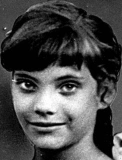
Beverly Rose Potts was ten years old, a quiet, responsible girl her mother affectionately called Rosebud, when she disappeared from a neighborhood park in Cleveland, Ohio, on the night of August 24, 1951. She vanished less than a quarter mile from her own home, in the middle of a crowded, city sponsored summer festival, walking a route she had traveled countless times before. More than seventy years later, her case remains unsolved, having outlived nearly everyone connected to it, including her own parents and sister, all of whom spent the rest of their lives without ever learning what happened to her.
A Quiet, Careful Girl
Beverly lived with her parents, Robert and Elizabeth Potts, and her older sister Anita in a modest, middle class home in Cleveland. Her father worked as a stagehand at the Allen Theater, and her mother kept house. Beverly herself was described as an attentive B student, generally shy and friendly but notably timid around strangers, particularly unfamiliar men. Her closest friend was her neighbor, eleven year old Patricia Swing, known to everyone as Patsy.
A Night at the Showagon
On the evening of August 24, 1951, Beverly and Patsy rode their bicycles to Halloran Park, less than a quarter mile from the Potts home, to attend the Showagon, an annual city sponsored children's performance event that drew roughly 1,500 people that night to watch local youth perform on a flatbed truck stage. Beverly had actually been grounded earlier that month after arriving home late, but her parents allowed her to attend this particular event. Around 8:45 p.m., as the evening grew darker, Patsy decided it was time to head home. Beverly, absorbed in watching a dancing performance, refused to leave with her, insisting she had permission to stay until after 9 p.m.
The Last Sightings
At approximately 9:30 p.m., as the crowd began dispersing following the Showagon's conclusion, a thirteen year old boy named Fred Krause reported seeing a girl he believed to be Beverly walking diagonally across the park, recognizing her by a distinctive duck like gait, her toes turned outward as she walked. Multiple other witnesses separately reported seeing a girl matching Beverly's description near a battered black 1937 or 1938 Dodge coupe parked on West 117th Street, apparently speaking to two young men inside the vehicle, sightings placed sometime between 8:30 and 9:30 that evening. Around 9:45 p.m., an unidentified woman reported seeing an entirely different vehicle, a dark 1948 coupe driven by a man in his forties, speeding north on Baltic Avenue with a visibly distressed child in the back seat, her hands bound, shouting that she wanted to get out. Whether either sighting actually involved Beverly has never been conclusively established.
A Massive Search Begins
When Beverly failed to return home by 10 p.m., her family called the Swing household and learned that Patsy had already come home alone nearly an hour earlier. After an hour of searching the immediate area themselves, the Potts family contacted police at 10:57 p.m. What followed became one of the largest manhunts in Cleveland's history. Detective Chief James McArthur assigned 45 officers to the case full time, supported by more than a thousand volunteers and auxiliary police officers. Investigators conducted door to door canvassing, traced suspicious vehicles, searched vacant lots and waterways, and even used Civil Air Patrol planes to survey the surrounding area from above. All members of Beverly's own family passed polygraph examinations and were quickly cleared, and investigators found no indication whatsoever that Beverly had any reason to run away, especially given that the family had a trip planned to Euclid Beach Park for the very next morning. The FBI eventually distributed 22,000 circulars nationwide, and Beverly's father's labor union offered a 1,500 dollar reward, but despite thousands of tips pouring in over the following weeks, none of them led anywhere.
A Rotating Cast of Suspects
Over the decades that followed, investigators pursued a long series of suspects, none of whom were ever conclusively tied to Beverly's disappearance. William Ross Slates, a 25 year old former serviceman living near Halloran Park with a prior arrest for making sexual advances toward an eight year old girl, drew early suspicion after he mysteriously boarded up his home and borrowed a friend's car the day after Beverly vanished. A polygraph indicated deception when he was questioned about Beverly specifically, but his teenage girlfriend provided an alibi that could never be independently verified, and he was ultimately released, dying in 1978 without ever being charged. Frank Dale Davis, a 52 year old ex-convict, attempted an extortion scheme in November 1951, falsely claiming to be holding Beverly and demanding a 25,000 dollar ransom, a scheme that ended with his arrest in a police sting operation, though he was cleared of any actual connection to her disappearance. Harvey Lee Rush, a drifter arrested in Los Angeles in 1955, confessed to murdering a girl in Cleveland, but his account contained glaring inconsistencies with Beverly's actual age, appearance, and the timeline of her disappearance, and he recanted immediately after being extradited back to Cleveland.
A Carnival Worker With a Violent History
Perhaps the most persistent suspect over the years was William Henry Redmond, a carnival truck driver and Ferris wheel operator with a documented history of child molestation stretching back to 1935, when he was only thirteen years old himself. Redmond spent time in reformatories, a psychiatric hospital, and federal prison over the following decades, and was eventually indicted in 1988 for the 1951 murder of eight year old Jane Marie Althoff in Pennsylvania. He was also connected, with varying degrees of evidence, to several other suspected victims across multiple states between 1949 and 1987. When Cleveland police questioned Redmond about Beverly Potts in early 1988, while he was already terminally ill, he flatly refused to say anything at all about the case. He died in 1992 without ever being formally charged in connection with Beverly's disappearance.
A Brother's Deathbed Story
In 1974, a Cleveland attorney's own client wrote to authorities, naming his own brother as likely responsible for Beverly's disappearance. This unnamed man had a documented history of sexually molesting children and had fled Cleveland in 1966 after being indicted for abducting two other girls. According to the letter, he later returned to the Cleveland area and confessed to his sibling that he had kidnapped and murdered a young girl near Halloran Park sometime in the early 1950s. When detectives eventually located and questioned him, he reportedly divulged details that struck investigators as things only someone who had actually been present could have known, and his vehicle from 1951 matched the general description given by eyewitnesses at the time. Despite this, prosecutors determined there was insufficient evidence to bring formal charges, and much of the documentation connected to this particular investigation has since been lost.
A Furnace, A Milkman, and a Bitter Ex-Wife
In 1994, a couple renovating a house discovered handwritten notes left behind by a woman named Anna Haynik, claiming that her abusive husband, who she alleged was actually Beverly's biological father and had worked as the Potts family's milkman, had accidentally overdosed Beverly on drugs before dismembering her remains in the home's basement furnace. When investigators eventually tracked down Haynik, then 83 years old, she admitted to writing the notes but insisted they had been nothing more than a bitter revenge fantasy she wrote in 1953, aimed at a husband she said she had since largely forgotten entirely following his death in 1981.
A Dying Man's Letters
The case resurfaced publicly once more between 2000 and 2001, when an anonymous individual sent letters to a reporter at the Cleveland Plain Dealer, claiming to be a terminally ill man confessing to Beverly's murder. According to these letters, he had only intended to fondle Beverly, but struck her when she began screaming, then disposed of her body in the Cuyahoga River, speculating that it had eventually drifted out into Lake Erie. He pledged to formally confess to authorities on the fiftieth anniversary of her disappearance in August 2001. Investigators who examined the letters found reason to question their authenticity, noting that some sentences appeared to have been copied directly from earlier hoax letters connected to the case. Before the promised anniversary confession could take place, the same author sent a third letter claiming he had instead entered a nursing home and would not be following through.
A Family That Never Stopped Grieving
One week after Beverly disappeared, her family issued a public appeal, stating that they had come to accept they would never see Beverly alive again, and asking whoever was responsible to simply tell them or the police where her body could be found so that she could receive a proper burial. No one ever responded. Beverly's mother, Elizabeth, died of liver disease in 1956 at the age of 56, with her husband later remarking that her health had been declining steadily ever since Beverly vanished. Robert Potts continued living alone in the family's Linnet Avenue home for years afterward, dying of heart failure in 1970. In 1991, Beverly's sister Anita placed a memorial stone beside their parents' graves, inscribed simply with Beverly's name, vowing that if her sister's remains were ever recovered, they would finally be laid to rest there. Anita continued searching for answers about her sister for the rest of her own life, raising her own children with a watchfulness shaped directly by what had happened to Beverly, until her death in 2006.
Still Unsolved
More than seventy years after Beverly Potts stayed behind at a summer festival just a little longer than her best friend, her case remains one of the most enduring unsolved disappearances in American history. A Crime Stoppers reward of 15,000 dollars remains active to this day. No suspect has ever been conclusively tied to her disappearance, no body has ever been recovered, and the family who spent decades hoping simply to bring her home for a proper burial did not live long enough to receive even that.
Sources
- The Charley Project: Beverly Rose Potts
- Wikipedia: Disappearance of Beverly Potts
- Wikipedia: William Henry Redmond
- Investigation Discovery: Lake Erie's Coldest Cases, What Happened To 10-Year-Old Beverly Potts?
- True Crime Musings: Unsolved Mystery, Beverly Potts' Mysterious Disappearance
- Where Are They Podcast: Missing Beverly Potts, One of Cleveland, Ohio's Most Famous Missing Children Cases
- Google Books: Twilight of Innocence, The Disappearance of Beverly Potts by James Jessen Badal