A Mile She Never Finished: Amy Billig
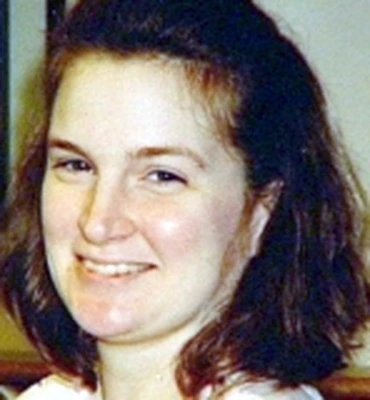
Amy Billig was born January 9, 1957, in Oyster Bay, New York, the daughter of Nathaniel Solomon Billig, who owned an art gallery, and Susan Billig, who worked as an interior designer and art dealer. The family relocated to Coconut Grove, Florida, in May 1969, settling into a bohemian, artistically inclined community that suited Amy's own personality well. Those who knew her described a spiritual, gentle teenager, something of a flower child in the truest sense of the phrase, who filled her time with music, poetry, and volunteer work training dolphins at the Miami Seaquarium. By March 1974, Amy was seventeen years old and had built a genuinely happy life inside the close knit Coconut Grove community her family called home.
Less Than a Mile She Never Finished
On the afternoon of March 5, 1974, Amy asked her father for two dollars so she could meet friends for lunch. She changed clothes and set out on foot toward his art gallery on Commodore Plaza, a walk of less than a mile that she likely intended to shorten further by hitchhiking along the way, an entirely normal practice for a teenager in that particular community during that particular era. Construction workers in the area spotted her with her thumb out at the intersection of Poinciana Street and Main Highway, a sighting that would become the last confirmed glimpse anyone ever had of her. She never reached her father's gallery. She was never seen again.
Susan placed a call to police at six o'clock the following morning, March 6, once it became clear Amy's absence was not some innocent delay. The investigation that followed produced almost nothing in the way of physical evidence. The single meaningful item ever recovered connected to Amy's disappearance was her own Instamatic camera, discovered on March 18 near Wildwood, close to an exit along Florida's Turnpike roughly two hundred fifty miles from Miami. Photographs developed from that camera showed a light colored pickup truck and a white van, but investigators were never able to trace either vehicle to any specific owner or location.
A Theory Built Around Two Rival Motorcycle Clubs
The theory that came to dominate the case almost from the beginning centered on the Outlaws and the Pagans, two rival motorcycle clubs known to have been passing through the Coconut Grove area on March 5, 1974, en route to an annual bike festival in Daytona. Both organizations carried documented histories of violence specifically targeting women, including abduction and coerced sex work, patterns well known to investigators working organized crime and biker gang cases throughout Florida during that period. An early informant told investigators that a Pagans member had personally bragged about abducting a girl matching Amy's description, a tip serious enough that federal agents went on to question numerous bikers directly and search multiple gang owned clubhouses and rural properties specifically looking for Amy or her remains. Those raids succeeded in disrupting the gangs' broader operations in certain areas, but none of them ever turned up anything definitively connecting either club to Amy specifically.
A Cruel Hoax Sixteen Days Later
Just sixteen days after Amy vanished, on March 22, 1974, the Billig family received a ransom demand for thirty thousand dollars, accompanied by a recording of a girl's voice pleading, mama, mama, please. Susan borrowed the money and arranged a handoff at Miami's Fontainebleau Hotel, where police arrested the caller, a sixteen year old named Charles Glasser. His twin brother, Lawrence, was charged alongside him. Both twins ultimately pleaded guilty to felony extortion, and investigators confirmed neither of them had any actual connection to Amy's disappearance at all. The entire episode had been a calculated hoax targeting a grieving family already at the edge of what they could bear, adding a layer of cruelty to an investigation that hardly needed any more.
Twenty One Years of Anonymous Torment
Far worse than the Glasser brothers' hoax was what came next, and what continued for more than two decades afterward. Beginning within months of Amy's disappearance, an unidentified man calling himself Johnson began placing harassing phone calls directly to Susan, describing graphic, fictitious torture supposedly inflicted on Amy and directing explicit threats at Susan herself. Susan endured this campaign for twenty one years, suffering documented physical effects including sleep deprivation, nausea, and seizures brought on by the ongoing psychological assault, yet she refused every opportunity to change her phone number, holding onto the possibility, however slim, that some future call might actually contain real information about her daughter.
In October 1995, FBI agents finally traced one of the cellular calls to its source, identifying a forty eight year old man named Henry Johnson Blair, a twenty four year veteran of the U.S. Customs Service and father of two. Blair was convicted on two counts of stalking in March 1996 and sentenced to two years in prison. He admitted the calls had provided him with what he described as sexual pleasure, but insisted throughout that he knew nothing whatsoever about what had actually happened to Amy, attributing his behavior instead to alcohol problems and obsessive compulsive disorder. Susan later pursued and settled a five million dollar civil lawsuit against him. He never once apologized to her.
A strange coincidence complicated Blair's role in the broader case even after his stalking conviction. Roughly six weeks before Amy disappeared, she had written in her own journal about a man named Hank who had invited her to run away with him to South America, an offer she explicitly declined, describing him in her diary as crazy. Henry Johnson Blair's own nickname happened to be Hank, and a van photographed inside Amy's recovered camera turned out to be identical in color and model to a van Blair himself drove in 1974, a detail investigators found difficult to dismiss even though Blair was never formally connected to her disappearance itself and always maintained his stalking had nothing to do with any actual knowledge of what happened to her.
Leads That Led Nowhere
Over the following decades, Susan chased down an extraordinary range of additional leads personally, traveling to Washington, Oklahoma, Nevada, and even the United Kingdom, interviewing bikers, informants, and even death row inmates in her search for any credible information. In 1976, a gang member using only the name David contacted Susan claiming to recognize Amy from photographs, describing her as quiet like a mute, and demonstrating specific knowledge of her distinctive abdominal scar, details that briefly seemed promising before the lead ultimately went nowhere. In 1985, a Pennsylvania man came forward believing a missing persons flyer matched a woman named Terri Ann Warner who had died in Texas during the summer of 1974. Investigators arranged for an exhumation and dental comparison, which conclusively proved the remains were not Amy's. A Miami Herald reporter separately consulted a California psychic on an unrelated matter, only to have the psychic spontaneously volunteer, unprompted, that Amy's bones were scattered across sand beneath water, describing a lone male attacker rather than the gang theory investigators had been pursuing.
A Dying Man's Confession
The most significant development in the entire case arrived in December 1997, when a Pagans motorcycle gang member named Paul Branch, then dying, confessed to his own wife that fellow gang members had abducted Amy and brought her to a trailer clubhouse deep in the Everglades. According to Branch's account, Amy had insulted several members of the group, provoking a brutal gang rape by roughly two dozen men, followed by repeated forced drug injections that caused a fatal overdose within hours. He described her body being hastily disposed of in the surrounding swamp afterward. Lead detective Jack Calvar later stated that numerous specific details in Branch's account matched facts about the case that had never been made public, lending the confession considerable credibility, even as Calvar cautioned bluntly that investigators would never actually find a body in that particular terrain.
A Mother Who Never Stopped, and a Peace She Never Quite Found
Susan Billig's search for her daughter ultimately consumed the rest of her own life. She and Nathaniel closed their art gallery and sold personal possessions specifically to help finance the search, eventually moving into a smaller home to make the ongoing costs sustainable. Nathaniel died of lung cancer in March 1993, reportedly expressing a final wish to see his daughter once more before he passed. In 1998, twenty four years after Amy vanished, Susan finally accepted that her daughter was almost certainly dead and held a private memorial service, an act she later described as bringing her a genuine, if incomplete, sense of peace. She published a memoir, Without a Trace, The Disappearance of Amy Billig, A Mother's Search for Justice, in September 2001, documenting the full scope of her decades long search. Susan died of a heart attack on June 7, 2005, at eighty years old, after also battling lung cancer of her own. Her son Joshua later said plainly that he did not believe his mother ever truly found peace, describing the loss as a wound she carried right to her own grave. For years afterward, Joshua kept his mother's old phone line active, telling a local paper that if his sister ever managed to get it together enough to call their mother's number, she could certainly figure out how to call his instead.
The Amy Billig Meditation Garden was formally dedicated in Coconut Grove in October 2002, designed by Joshua as a permanent, physical space for a community that had spent decades holding onto Amy's memory alongside her own family.
More Than Fifty Years Without an Answer
Amy Billig's disappearance remains formally unsolved and technically open with Miami police more than fifty years later, one of the most enduring and thoroughly chronicled missing persons cases in Florida history, covered across multiple documentaries and two separate appearances on Unsolved Mysteries. No body has ever been recovered, no arrest has ever been made specifically in connection with her disappearance, and the specific truth behind Paul Branch's deathbed account has never been independently verified beyond the coincidental details investigators found so unusually convincing. Amy would be sixty nine years old today. What remains instead is a shorter than half mile stretch of road she never finished walking, and a family that spent every subsequent year of its own existence trying, and ultimately failing, to close the distance between that unfinished walk and an actual answer.
Sources
- The Charley Project: Amy Billig
- Wikipedia: Disappearance of Amy Billig
- Skip Boring: Without a Trace in Coconut Grove, The 30-Year Hunt for Amy Billig