The Disappearance of Tammy Sue Rothganger: A Cold Case, a Hidden Witness, and a Killer Who Almost Got Away
On the morning of May 16, 1984, a fifteen-year-old girl named Tammy Sue Rothganger walked out of her home in Eldon, Missouri, and never came back. Her house sat directly across the street from Eldon High School, a short walk by any measure, and yet she never made it through the front doors. Within hours, she had vanished without a trace. Her body has never been recovered. And for over three decades, the man who killed her walked free, or close enough to it, slipping through the cracks of a justice system that struggled time and again to hold him accountable.
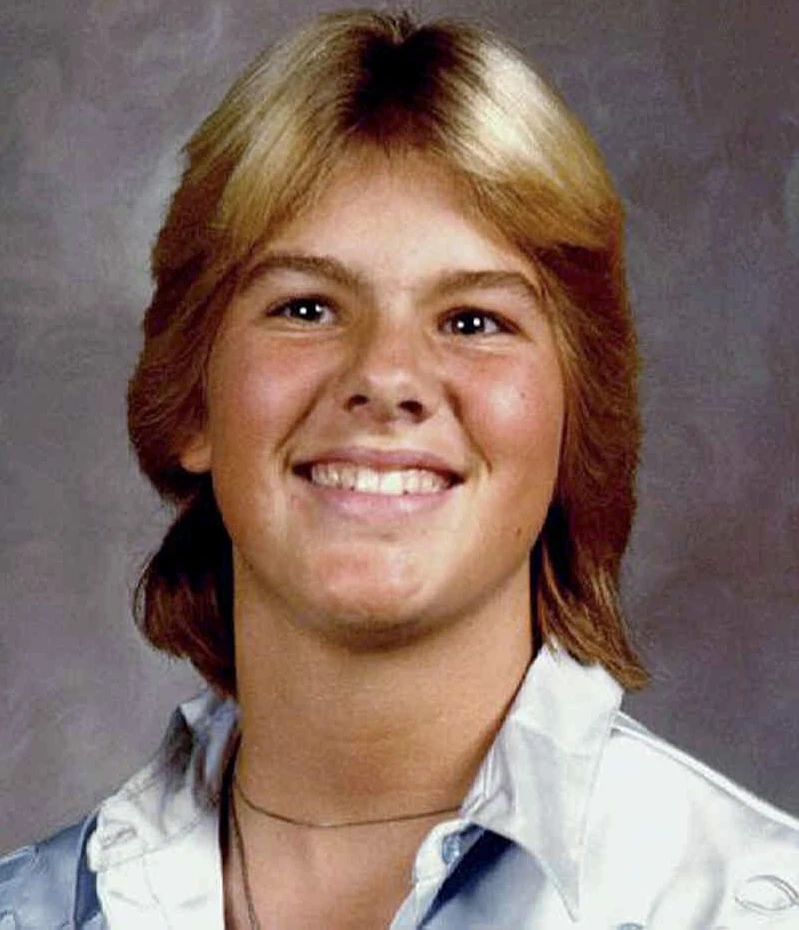
Tammy was born on August 10, 1968. She was a sophomore at Eldon High School, standing 5'7" and weighing around 140 pounds, with sandy blonde-brown hair and brown eyes. She had a scar on her left arm and a tattoo of the letter "R" in the same spot, along with a few small moles on her cheeks and chin. On that last morning, she was wearing a sweatshirt, Nike shoes, and a chain necklace bearing an arrowhead pendant, along with a leather wristband. She was, by every account, an ordinary teenager on an ordinary school morning. What happened to her was anything but ordinary.
The Last Morning
Witnesses placed Tammy near a Bass Pro Shop convenience store at the intersection of Highway 54 and 52 that morning, walking with a friend named Theresa. As the two girls moved away from the store, Theresa reported seeing a car pull up and the driver call out Tammy's name. Tammy got into the back seat of the vehicle, told her friend she would be back, and that was the last time anyone who knew her as a living person would see her again. She was reported missing that same afternoon.
The man behind the wheel was Martin Dean Priest, known to those around him as Marty. He was, at the time, the live-in boyfriend of Tammy's mother, Sandra Kuchan. He had been living in their home for several months before Tammy disappeared. Investigators quickly zeroed in on Priest as a suspect, but he offered an explanation. He claimed he had spotted Tammy outside the school, that she told him she was planning to skip class and meet friends at Rock Island Park, and that he simply offered her a ride and dropped her off there. He maintained that version of events for decades.
What the investigators did not yet know was that Priest had a passenger in the car that morning: his thirteen-year-old nephew, David Nicholas, who was friends with Tammy and had a crush on her. David saw everything. And he said nothing for over thirty years.
A Predator with a Pattern
To understand what happened to Tammy, it helps to understand who Martin Priest was long before he ever moved in with her mother. In 1980, four years before Tammy's disappearance, Priest had been convicted of second-degree murder in Nevada, Missouri, in the death of Tonya Lee Lewis, a thirteen-year-old girl whose mother he also knew. Her body was found drowned in a farm pond two days after she went missing. Priest was sentenced to twenty-five years in prison. He served three. His conviction was overturned on appeal in September 1983, when the Missouri Court of Appeals, Western District, ruled that it could not be determined exactly how Lewis had died, and freed him.
Nine months after that release, Tammy Rothganger disappeared.
Former Sedgwick County Sheriff's investigator Danny Bardezbain, who would later become consumed by the Priest cases, described what he believed was a clear pattern. Priest would find a single mother, build a relationship with her, and then target her daughter. He called it Priest's MO across multiple victims, and investigators in both Missouri and Kansas came to share that view. Bardezbain would later say that this case haunted him to the point that he lay awake at night, driven by the certainty that Priest was a serial killer who needed to be stopped before he could hurt anyone else.
And Priest did not slow down after Tammy. Within months of her disappearance, he had made his way to Wichita, Kansas, where fifteen-year-old Katrina Cheely vanished from her home on November 16, 1984. Her body was found three months later in a culvert, and investigators linked Priest to her death as well. He had befriended her mother, following the same pattern. Then, on Christmas Day 1984, Priest was implicated in the murders of twenty-five-year-old William Mayhugh and thirty-three-year-old Freida Bayliff. Mayhugh was shot and found face-down in a floodway; Bayliff was discovered in her apartment days later. Priest was tried three times for those murders. The first two juries deadlocked. At the third trial, he was acquitted in Bayliff's death but convicted of murdering Mayhugh and sentenced to life in prison. He was later charged with the Cheely murder while already incarcerated, and a jury acquitted him of that as well.
By the time Priest had cycled through this string of charges, acquittals, and one sustained conviction, he had been connected to five deaths across two states. He walked away from four of them. He remained in a Kansas prison for the Mayhugh murder, where he became eligible for parole multiple times, and was denied each time.
A Witness Breaks Thirty Years of Silence
The case against Priest for Tammy's murder appeared, for a long time, to be unwinnable. There was no body. Priest had always denied any involvement beyond giving her a ride. Investigators continued to circle, Bardezbain and others conducting searches and pressing for answers, but nothing concrete emerged. In late 1988, a fresh clue led authorities to drain a pond in Nevada, Missouri, but the search turned up nothing. Remains found in Clay County, Missouri, around the same time were tested against Tammy's DNA profile and came back negative.
Then, years later, David Nicholas's mother died. And David finally told the truth.
What David described was methodical and brutal. According to his testimony at trial, he was riding in the car with Priest when they spotted Tammy smoking outside the school. Priest pulled over, and David convinced his friend to get in. She seemed nervous. At one point during the drive, when they stopped and Tammy tried to run, David talked her back to the car, believing, as he would later tell the jury, that she would be safe as long as they did what Priest said. He was wrong.
At some point during the drive, Priest dropped something on the floorboard near Tammy and asked her to pick it up. When she bent down to retrieve it, he struck her on the back of the head with a wrench. She lost consciousness. Priest then raped her in the backseat of the car. David tried to intervene and was struck by Priest as well. Tammy regained consciousness at some point and said "no," and tried to get away, but Priest strangled her to death.
With Tammy's body in the vehicle, Priest drove through back roads near the Bagnell Dam area, getting lost several times, before eventually arriving at the home of David's mother. They brought Tammy's body inside and placed it in a back bedroom. Family members discovered her there. David's older brother, Michael Nicholas, later testified that their mother screamed and yelled at Priest when she found out what had happened. No one called the police. A decision was made to conceal what had occurred, and Tammy's body was later moved and hidden elsewhere. Despite extensive subsequent searches, her remains have never been located. Investigators believe she was buried on farmland in Miller County.
The Long Road to Justice
On January 4, 2016, nearly thirty-two years after Tammy disappeared, the Miller County Prosecutor filed capital murder charges against Martin Priest. He was still in prison in Kansas at the time, serving his life sentence for the Mayhugh murder. The charges were the direct result of David Nicholas coming forward with the account he had carried in silence since he was thirteen years old.
Priest's trial was ultimately moved from Miller County to Laclede County on a change of venue. It lasted two and a half days. Priest took the stand and denied having raped or killed Tammy. But the jury had David Nicholas's testimony, delivered from the stand by a man who had lived with this knowledge for decades. At one point during the trial, David was shown a photograph of Tammy, and he broke down in tears.
The jury deliberated for roughly ninety minutes. On October 11, 2018, thirty-four years after Tammy Rothganger was murdered, Martin Dean Priest was found guilty of first-degree murder. The state had waived the death penalty prior to trial. On November 6, 2018, Judge Kenneth Hayden sentenced Priest to life in prison for the murder. Because he was already serving a life sentence in Kansas for the Mayhugh murder, and would not be eligible for parole in Kansas for twenty-five years, the Missouri sentence would only begin to run if and when he was ever released from Kansas custody.
No charges were filed against any members of the Nicholas family for their role in concealing Tammy's death.
What Remains Unresolved
Tammy Sue Rothganger's remains have never been found. Her family has waited not only for justice, which arrived decades late, but for the chance to bring her home and lay her to rest, which has not come. Martin Priest reportedly led investigators to a location where he said he had buried her body, but nothing was recovered. Whether this was misdirection, a lapse in memory, or deliberate obstruction, no one can say for certain.
The question of whether Priest is a serial killer, rather than simply a man convicted of two murders, is one that law enforcement in both Missouri and Kansas have answered for themselves, even if the courts did not. Investigators believe he targeted young teenage girls specifically and systematically, and that the pattern of befriending their mothers was not coincidence but method. Five deaths. Two convictions that held. One man who, for a time, appeared capable of slipping out of the grasp of the law almost indefinitely.
What ultimately brought him to account for Tammy's death was not forensic technology, not a DNA breakthrough, and not a confession. It was a boy, now a man, who had spent thirty years trying to protect his family and finally decided that the truth mattered more. David Nicholas was thirteen when Martin Priest made him complicit in the worst moment of his life. He was in his mid-forties when he walked into a courtroom and told a jury what he had seen.
For Tammy's family, the verdict brought what one might call a modicum of justice, though the word feels inadequate. A fifteen-year-old girl who never made it to her first morning class is still missing. Her killer is still alive, behind bars, but alive. And somewhere in Miller County, Missouri, the answers to the questions that matter most remain buried, still waiting to be found.
Sources
- The Charley Project: Tammy Sue Rothganger
- LakeExpo: A Lake-Area Teen Was Murdered 34 Years Ago
- LakeExpo: Martin Priest Found Guilty of Capital Murder
- LakeExpo: Murderer or Serial Killer? Martin Priest's Troubling History
- KRCG: Investigating Suspected Serial Killer Marty Priest
- KRCG: Martin Priest Sentenced for First-Degree Murder
- KOMU: Killer Convicted in Decades-Old Murder of Eldon Teenager
- KTVO: Martin Priest Sentenced for First-Degree Murder
- Serial Dispatches: Martin Dean Priest
- Fox 2: Trial in 1984 Missouri Teenager's Death Moved to New County
- True Crime Write-Up: Tammy Sue Rothganger (rcccmcc.com)